9 Area Rug Ideas That Anchor a Living Room Without Overwhelming It
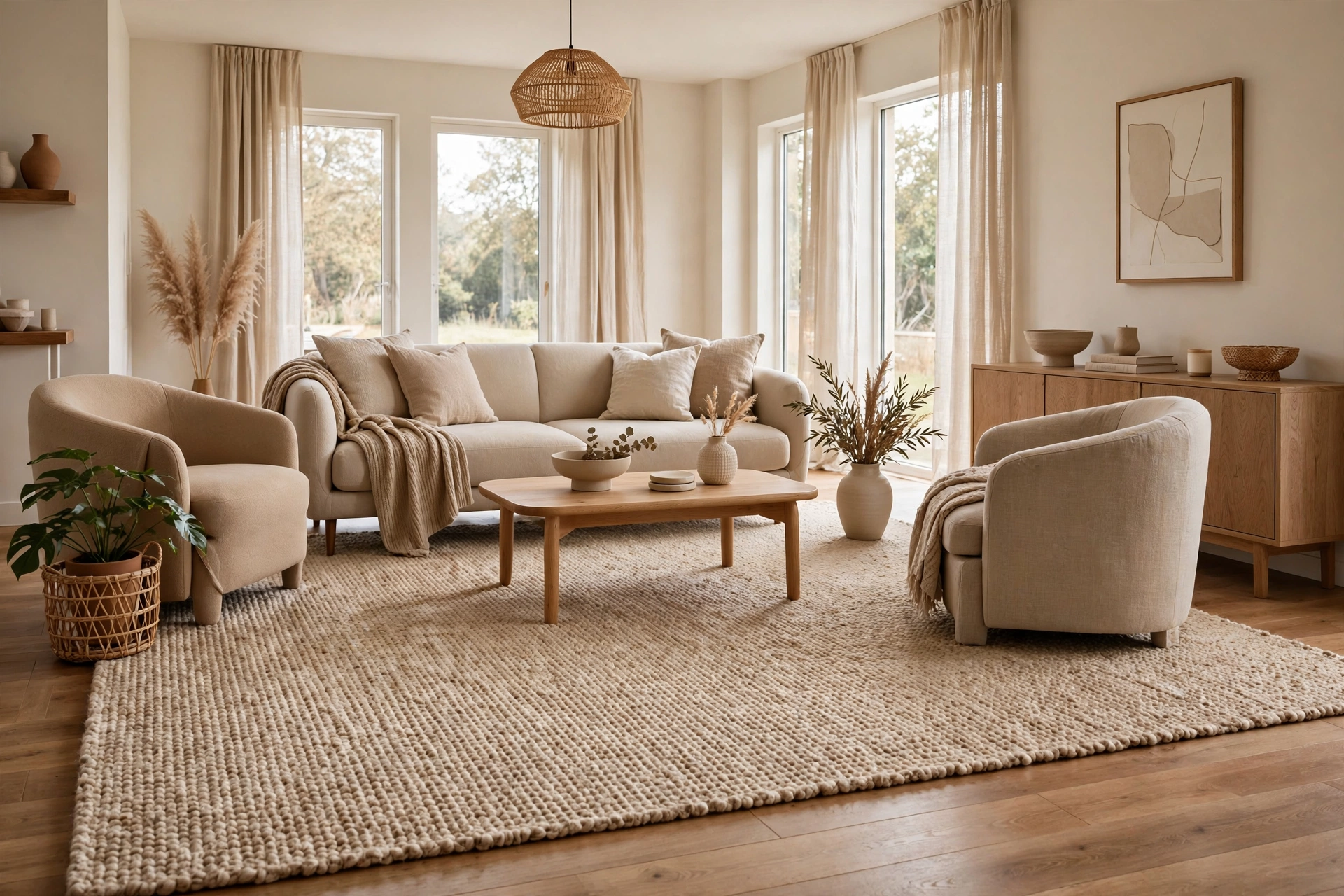
A living room can have a good sofa, good light and furniture you genuinely like, and still feel strangely unfinished. The pieces float. The coffee table sits by itself, the chairs drift, and nothing quite explains what belongs together. More often than not, the missing piece is not another accessory — it is the rug underneath everything, doing the quiet job of holding the seating group in one place.
Anchoring is that job. A well-chosen area rug draws a soft border around your conversation area, tells every piece of furniture where it belongs, and gives the room a centre of gravity. Done badly, though, the same rug can shout over everything else, chop the floor into awkward islands, or shrink the room it was meant to settle.
The nine ideas below are about balance: rugs big enough, textured enough and coloured carefully enough to ground a living room firmly — without taking it over. Each one is a current, much-loved direction in rug design, translated into placement and sizing advice you can actually use.
The 3 anchoring rules behind every idea below:
- Size first, pattern second. A rug anchors only when the furniture sits on it. If the sofa and chairs are gathered around a small rug instead of on it, no pattern, however beautiful, will make the group feel connected.
- Let one thing lead. Either the rug carries the colour and pattern, or the furniture and cushions do. When the rug, the sofa fabric and the artwork all compete at the same volume, the room feels busy instead of grounded.
- Leave a frame of floor. Roughly 8–18 inches of bare floor between the rug’s edge and the walls keeps the room breathing. A rug that almost touches every wall reads as carpet; a rug with a border reads as a deliberate island.
1. Go Oversized in a Warm Neutral Texture
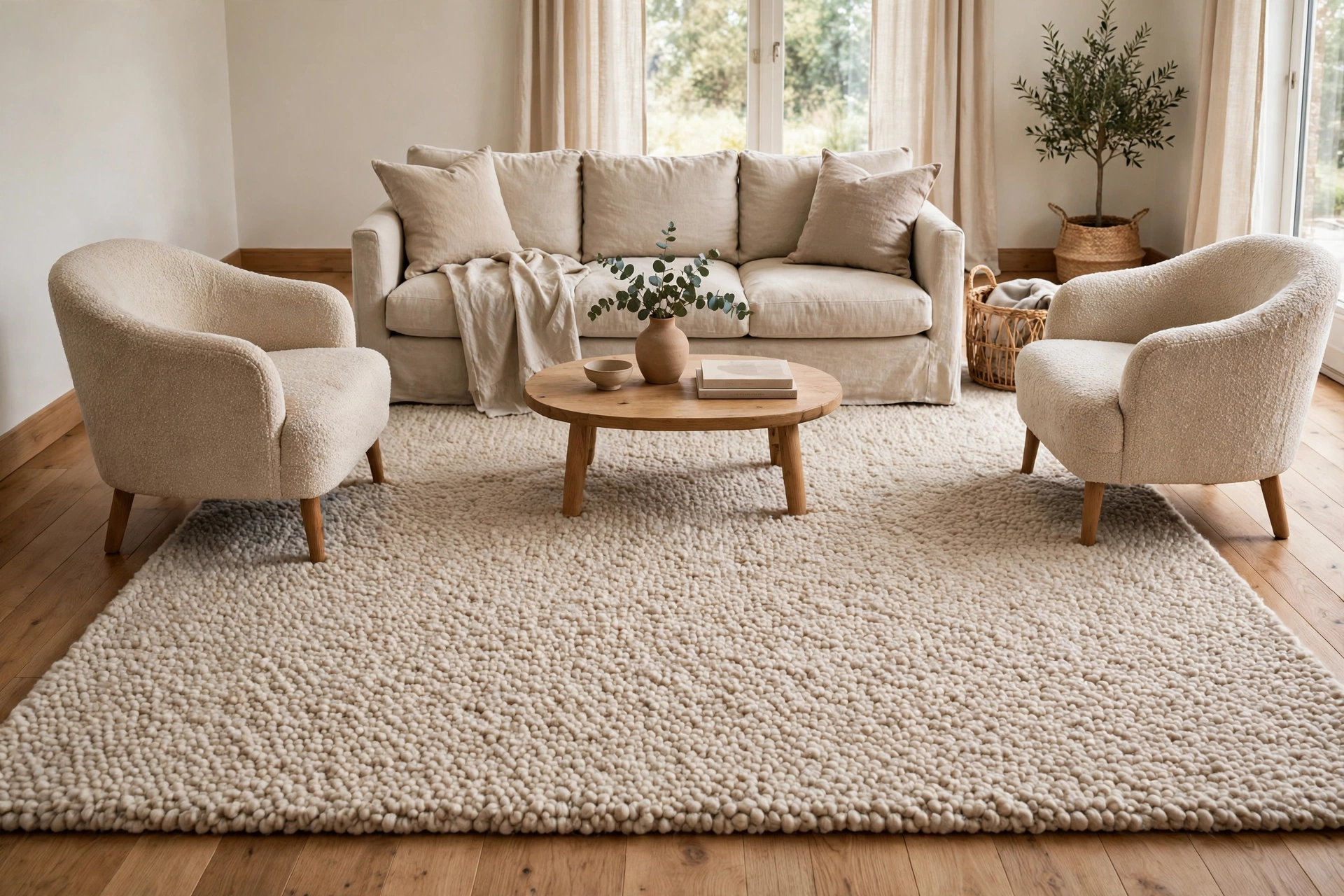
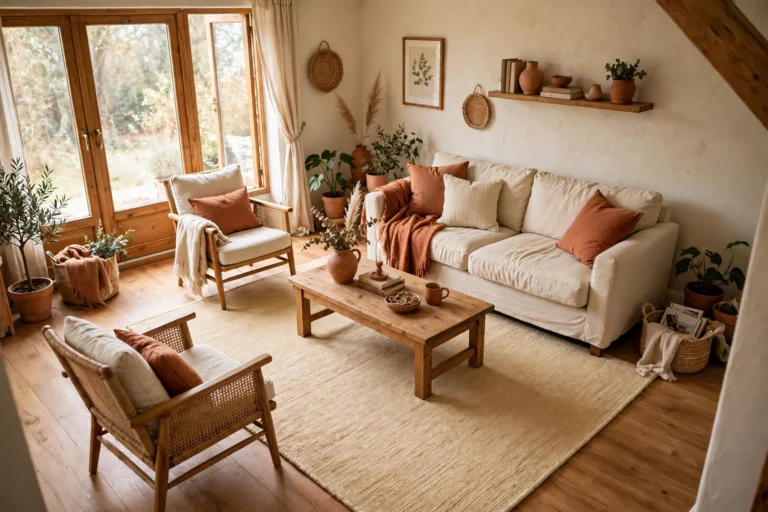
The most reliable anchor of all is also the least dramatic: one large rug, in a warm neutral, with enough texture to keep it interesting. The current direction is away from flat, cool grey and toward oatmeal, camel, mushroom and soft brown tones, woven with visible texture — boucle-style loops, a subtle high-low pile, or deliberate slubs in the yarn. Colour stays quiet, but the surface does the work, catching light differently as you cross the room.
Size is what makes it anchor rather than decorate. Aim for the layout designers reach for first: all the furniture legs on the rug, with 12–18 inches of rug still visible beyond the sofa and chairs. In most living rooms that means a 9×12, not the 8×10 you first had in mind. The seating stops looking like separate pieces parked on a floor and starts reading as one settled arrangement.
Tip: Tape the 9×12 outline on your floor before ordering and live with it for a day. If the taped edge lands closer than about 8 inches to a wall, step down a size — the frame of bare floor is part of the look.
2. Layer a Vintage Rug Over a Natural Base

Layering solves the oldest area rug problem: the beautiful vintage rug you love is too small — or too expensive in a large size — to anchor the room on its own. Put a big, plain natural-fibre rug underneath first. Jute, sisal or a simple wool flatweave in a 9×12 gives you the full footprint, the texture and the floor protection, usually for far less than one large patterned rug.
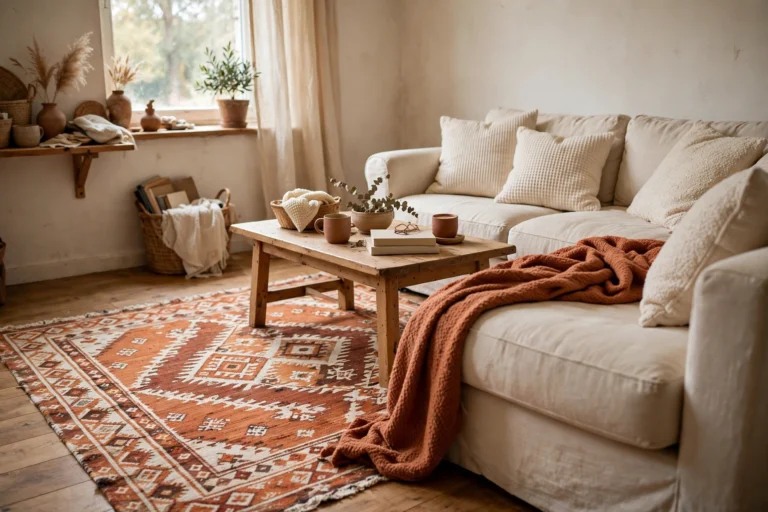
Then centre the smaller, characterful rug on top, under the coffee table, where your eye actually lands. A faded Persian, a Turkish Oushak or a worn tribal pattern brings the colour and history; the quiet base brings the scale. Together they read as one generous, deliberate anchor with a collected, layered centre — the seating group sits across both, which is exactly what ties it together.
Tip: Keep the layers close in tone even when the patterns differ. A warm jute base under a warm, faded top rug looks intentional; a cool grey base under a rust-red vintage rug looks like two separate decisions.
3. Let a Faded Vintage Persian Carry the Colour
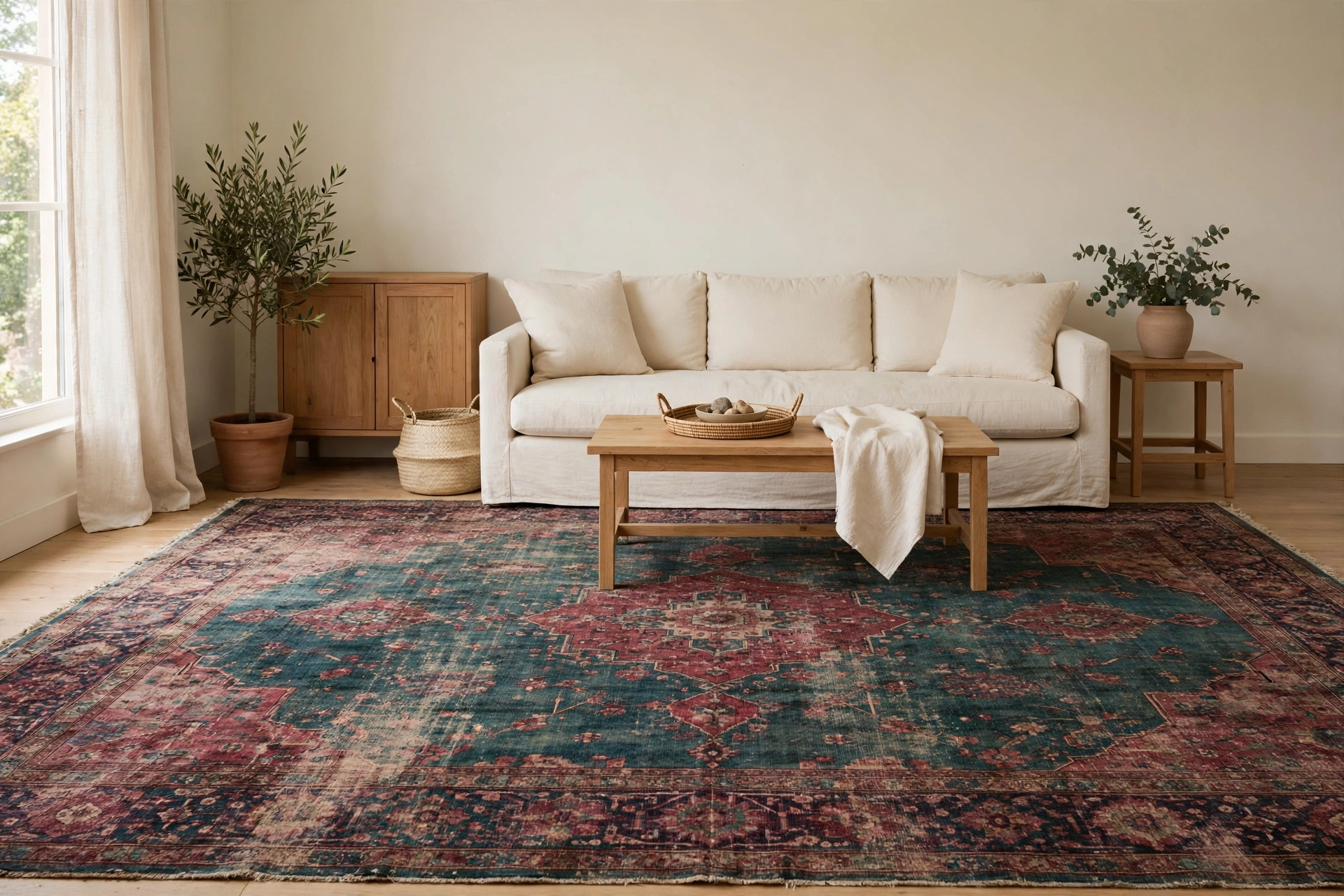
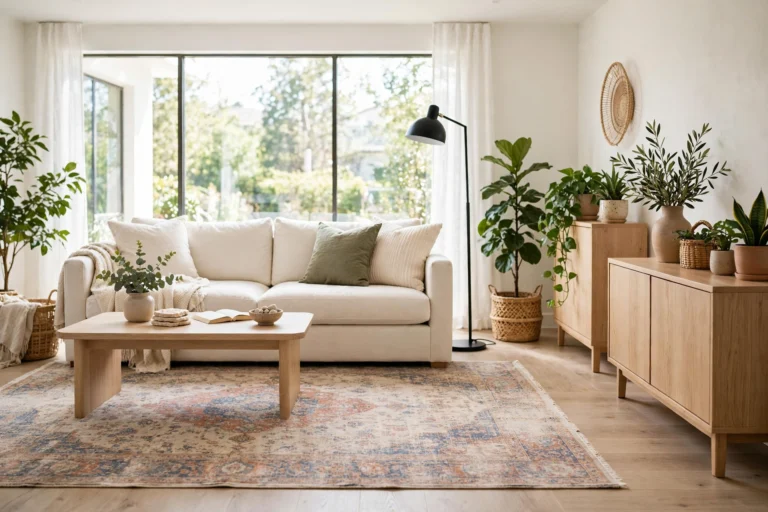
A vintage or vintage-look Persian rug is the one patterned anchor that rarely overwhelms, because time has already turned its volume down. The traditional medallion and border patterns arrive pre-softened — burgundy faded toward rose, deep teal toward slate, indigo toward denim. In a room of plain upholstery, that muted pattern becomes the entire colour story in a single piece, grounding the seating while the furniture stays calm around it.
This works best as the room’s only strong pattern. Keep the sofa and chairs in solid colours pulled from the rug — cream, warm white, or one of its softer tones — and let cushions pick up just one or two of its deeper shades. Modern washable and printed versions have made this look far more practical than a fragile antique, so it is no longer reserved for formal rooms nobody sits in.
Tip: Judge a Persian-style rug by its faded colours, not its brightest ones. The soft, washed-out tones are what will actually sit next to your sofa every day, so match your upholstery to those.
4. Use Texture as the Pattern With a High-Low Pile

If pattern makes you nervous but plain rugs bore you, the current answer is a rug whose pattern is built from pile height instead of colour. High-low rugs carve lines, arcs and simple geometric shapes into the surface — raised loops beside flat-woven ground, or sheared channels beside plush rows — all in one single colour. From across the room it reads as a calm, solid anchor; from the sofa, it has all the detail you could want.
Because the colour never changes, this style anchors without adding a single new shade to manage. It suits rooms that already have colour in their art, cushions or shelving, and it hides everyday wear gracefully, since the varied pile disguises footprints and vacuum marks far better than a flat, uniform surface. Wool and wool-blend versions hold the sculpted effect longest.
Tip: Run your hand across a sample before buying. The carved lines should feel clearly different in height — if the contrast is barely there in your hand, it will disappear entirely under a coffee table.
5. Try a Soft Geometric Colour-Block Rug
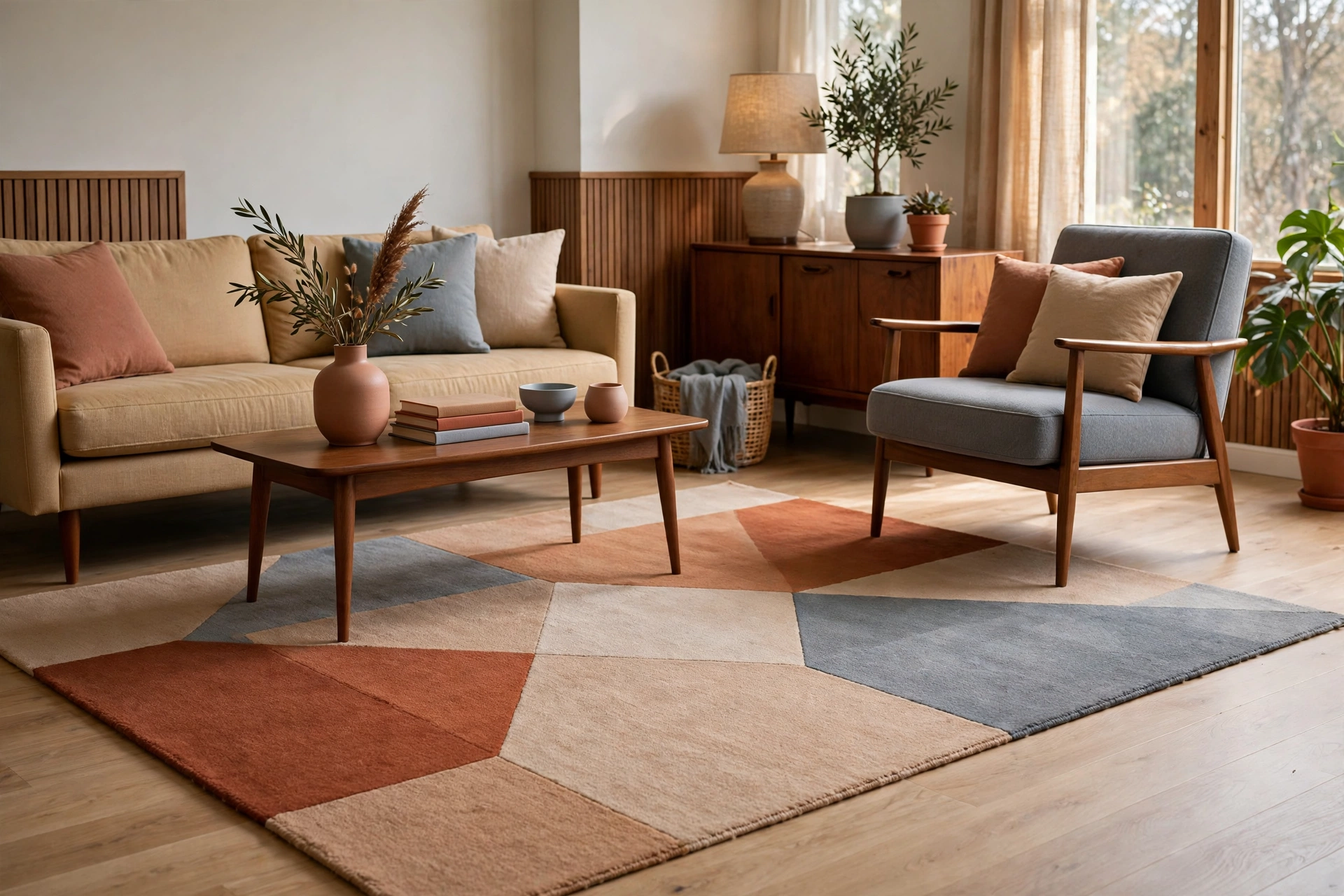
Geometric rugs are back, but in a softer register than the sharp black-and-white versions of a decade ago. The current take uses large, simple shapes — half-circles, wide rectangles, a single bold curve — colour-blocked in muted, earthy combinations: terracotta with sand, slate with cream, clay with olive. The shapes are big enough to feel calm, and the palette is borrowed from the room rather than imposed on it.
A rug like this anchors by giving the seating group a clear, confident outline, and it is the right choice when the rest of the room is very plain and needs one organised focal point. Keep furniture simple and solid-coloured on top of it, and repeat exactly one of the rug’s colours in a cushion or throw — that single repeat is what stops a bold geometry from feeling like it landed from another house.
Tip: Count the colours before you buy: three is plenty. A geometric rug with four or more competing colours is the one most likely to overwhelm, no matter how good the shapes are.
6. Soften the Room With a Round Rug
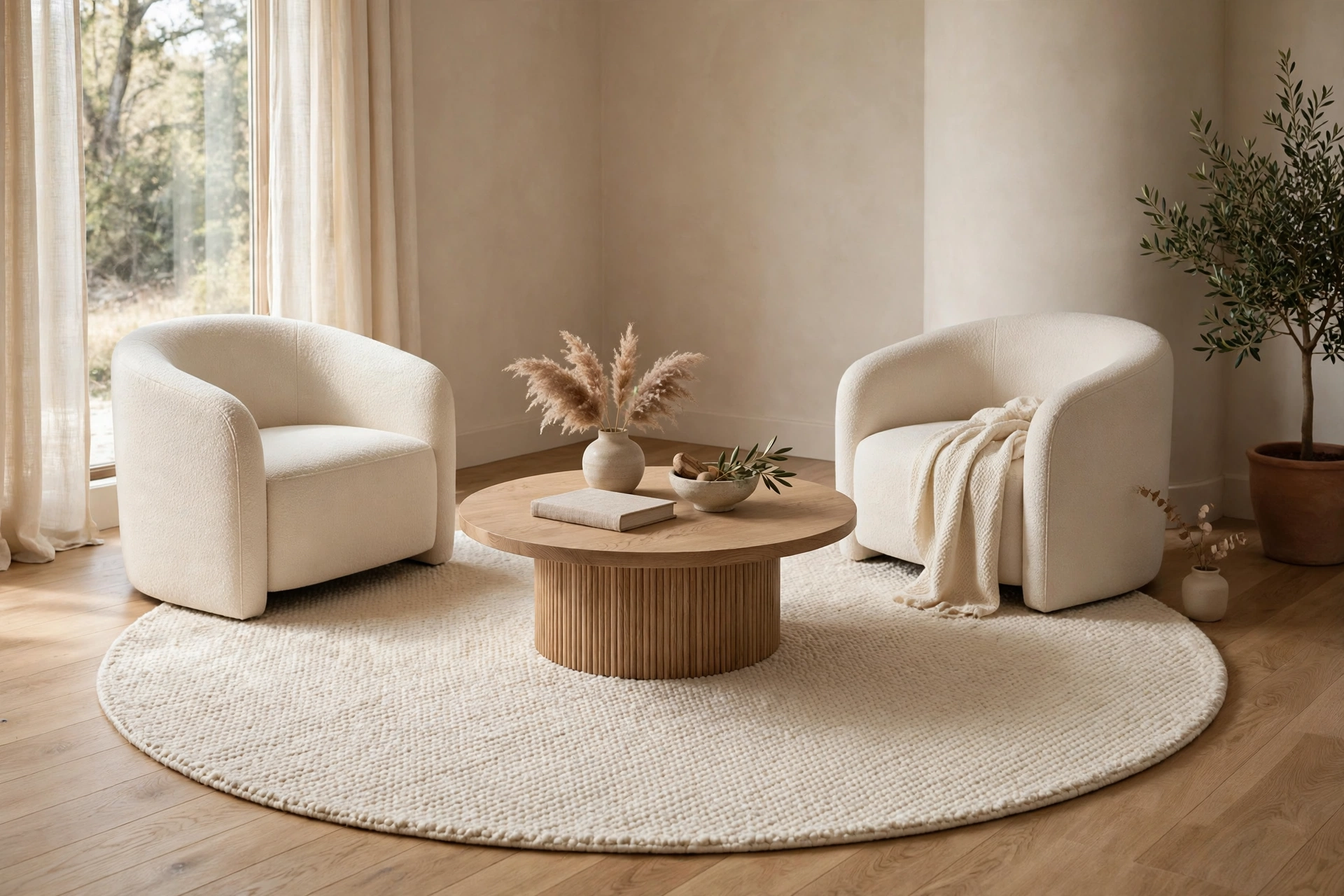
Not every living room is a grid, and not every anchor needs corners. A round area rug suits the rooms rectangles fight against: a seating corner, a bay window arrangement, a curved or low-slung sofa, or a small living room where a rectangular rug’s corners would crowd the walls. The circle gathers the furniture into a soft island and removes every sharp edge from the arrangement at once.
Placement is what makes it work. Centre the round rug on the coffee table, not on the room — the table sits in the middle, and the front legs of the sofa and chairs meet the rug’s edge around it. The rug needs to be large enough that those front legs actually touch it; a small circle floating alone under a table, with all the seating off it, anchors nothing.
Tip: As a guide, choose a diameter at least a foot wider than your coffee table on every side — for most seating groups that means an 8-foot round rug rather than a 6-foot one.
7. Bridge an Open Plan With a Fluid Abstract Rug
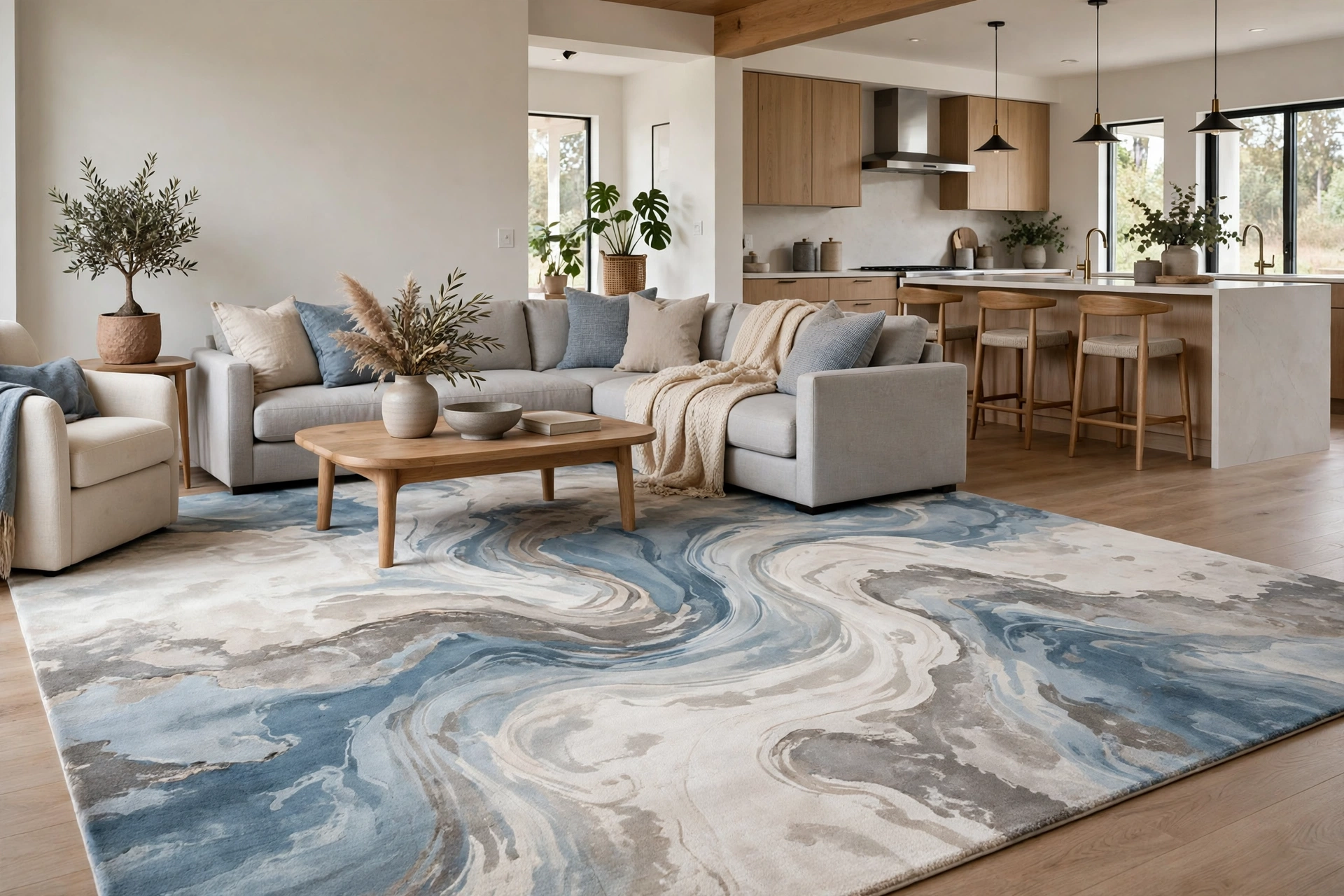
Open-plan rooms have the opposite problem from small ones: too much floor, and no walls to tell the living area where it ends. A large abstract rug is built for this. Its painterly, free-flowing pattern — soft swirls and striations like watercolour or stone veining, in dusty blue, warm white and greys — has no border and no single focal point, so it defines a zone without building a visual fence across the room.
Because the pattern is non-directional, it also forgives real life. It does not need to line up with anything, it bridges the gap between a sofa zone and the dining space beyond it, and its movement disguises crumbs, pet hair and everyday marks between cleans. Keep the colours within the palette the two zones already share, and the rug becomes the thread that quietly stitches them together.
Tip: In an open plan, size the rug to the seating, not the whole space — it should end where the living zone ends. A rug that creeps halfway under the dining table blurs the very zones you are trying to create.
8. Ground Light Furniture With a Chunky Natural Weave
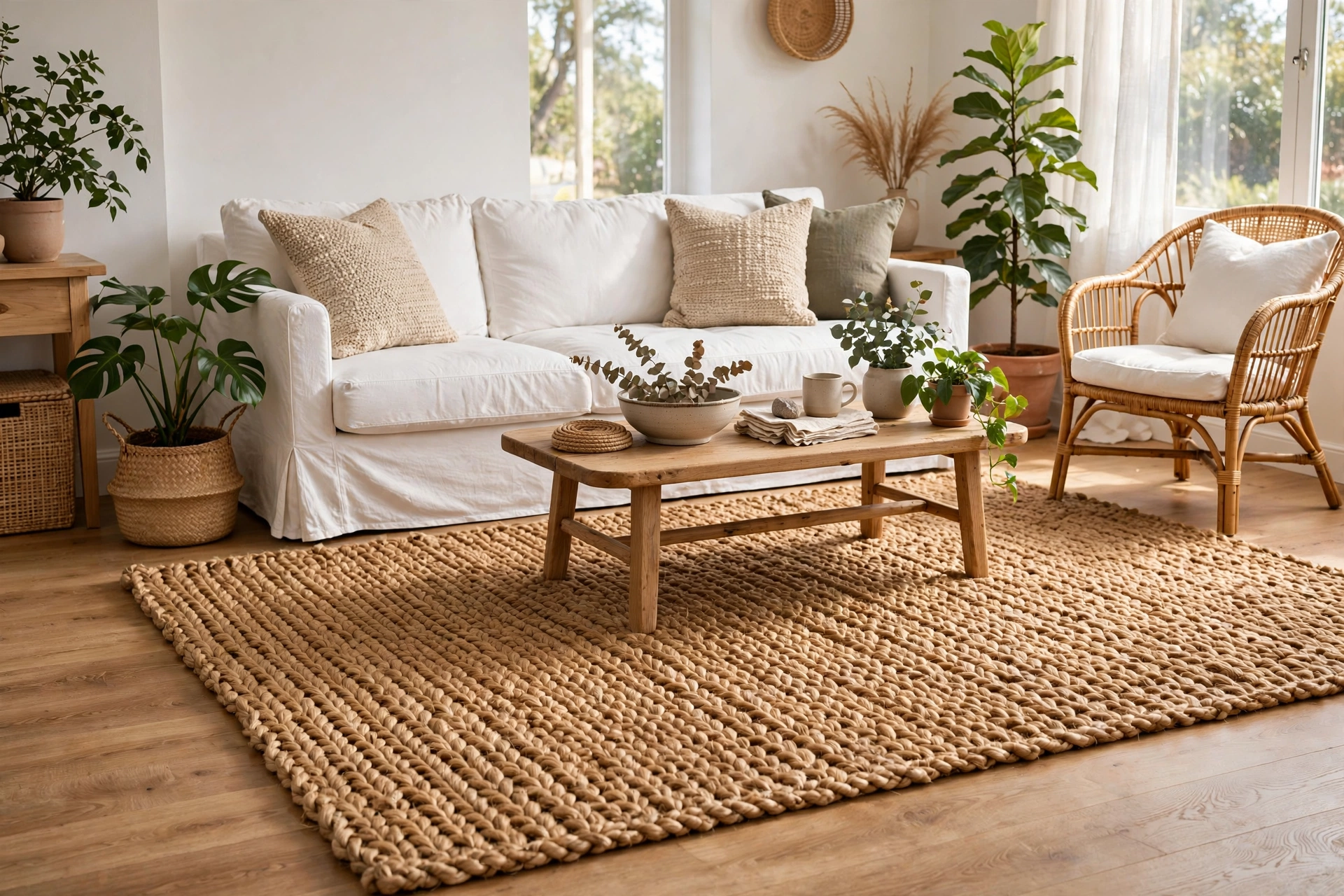
A room full of pale, lightweight furniture — a white slipcovered sofa, a rattan chair, light wood — can look as though it might drift away. A chunky natural-fibre rug is the ballast. Hand-woven jute or a jute-wool blend in a warm honey tone has real visual weight: thick, nubby and unmistakably earthy, it holds light furniture down and gives a bright room the grounded, organic base it needs.
Used on its own at full size, this is a different move from layering. One generous natural rug under the whole seating group keeps the palette simple and lets texture do everything. It is also a forgiving anchor for busy households in one specific way — its varied, flecked surface shows very little. Save it for living rooms rather than dining spaces, though: natural fibres dislike spills and are hard to deep-clean.
Tip: Natural rugs shed and can feel rough in the first weeks. A felt or rubber-backed pad underneath stops the fibres marking wood floors, and regular vacuuming on suction-only settles the shedding fastest.
9. Anchor With a Washable Rug You Can Actually Live On

For many homes the anchor has failed before it starts, because the “good” rug is too precious to live on — feet get kept off it, drinks get banned, and the seating group quietly migrates elsewhere. A large washable rug removes that problem. Current washable designs have moved well past thin, shiny prints: low-pile, muted traditional and Persian-style patterns that look settled and substantial, then go in the wash when real life happens.
The anchoring rules do not change just because the rug is practical. Buy it at full seating-group size — washable rugs come in genuine 8×10 and 9×12 sizes, so there is no need to shrink — keep the pattern muted so it grounds rather than shouts, and use the proper pad, since many washable rugs are sold as a two-part system with a gripping base. A rug the whole household can actually use is the one that truly holds the room together.
Tip: Check the folded size against your washing machine before ordering the largest sizes. A 9×12 usually needs a large-capacity machine or a laundromat trip — worth knowing before it is on your floor.
Before You Buy: 5 Rules That Save Regret
- Measure the seating group, not the room. Your rug size comes from the furniture it must hold: sofa length plus chairs, with legs on. When in doubt between two sizes, the larger one anchors and the smaller one floats — tape both outlines and compare.
- Decide the layout before the design. All legs on the rug (usually 9×12 or larger), front legs only (often 8×10), or a round rug centred on the table. Each layout sets a minimum size, and no pattern can rescue a rug that is too small for its layout.
- Pull colours from what you already own. A rug should repeat tones from your sofa, curtains, wood and art — not introduce a whole new palette. Take phone photos of the room with you, and judge rugs against those, not against a showroom.
- Always use a pad. A felt or felt-rubber pad stops slipping, adds the cushion that makes a thin rug feel substantial, protects the floor underneath, and keeps the rug’s edges lying flat — a curled edge undoes the anchored look instantly.
- Match the fibre to the household. Wool for long life and natural stain resistance in calm homes; low-pile washable synthetics where kids, pets and drinks actually live; jute and sisal only in dry, low-spill seating areas.
Frequently Asked Questions
What size area rug is best for a living room?
For most living rooms, an 8×10 is the minimum that anchors properly, and a 9×12 is the size that most often gets it right — it lets the front legs, and usually all legs, of the sofa and chairs sit on the rug. A 5×7 works only for a small, tight seating group where every front leg still lands on it.
Should all the furniture legs be on the rug?
All legs on is the most settled, generous look, and worth it in a larger room. Front legs only is the practical standard in most homes and anchors just as convincingly, as long as every seat in the group follows the same rule. The layout to avoid is a mix by accident — one chair on, one chair completely off.
What colour rug anchors a room without overwhelming it?
A warm neutral — oatmeal, camel, soft brown or warm white — in a texture you can see is the safest anchor, because it grounds without adding a new colour to manage. If you want colour, take it muted and faded rather than saturated and bright: a washed burgundy or dusty blue pattern anchors, while the same colours at full strength tend to take over.
How do I stop a large rug from making the room feel smaller?
Keep a visible frame of floor — roughly 8–18 inches — between the rug and the walls, choose lighter or tone-on-tone designs for smaller rooms, and avoid high-contrast borders that draw a hard outline. A rug that connects the furniture while leaving the room’s edges visible usually makes a space feel more organised, not smaller.
The Bottom Line
Anchoring a living room is mostly a sizing decision and only partly a style one. Get the rug big enough to hold the seating, let it be the one voice that leads — in texture, in a faded pattern, or in one soft geometry — and leave a frame of floor around it, and almost any of the nine directions above will settle a room without overwhelming it. Start with the tape measure and the taped outline; the right design is much easier to choose once the right size is on the floor.
Save this list for your next room refresh, and follow Decor Velora for 3 fresh home decor ideas every day — rugs, small apartment decor, mirrors, curtains and cozy room makeovers.