21 Rug Ideas That Instantly Make a Room Feel Warmer and More Collected
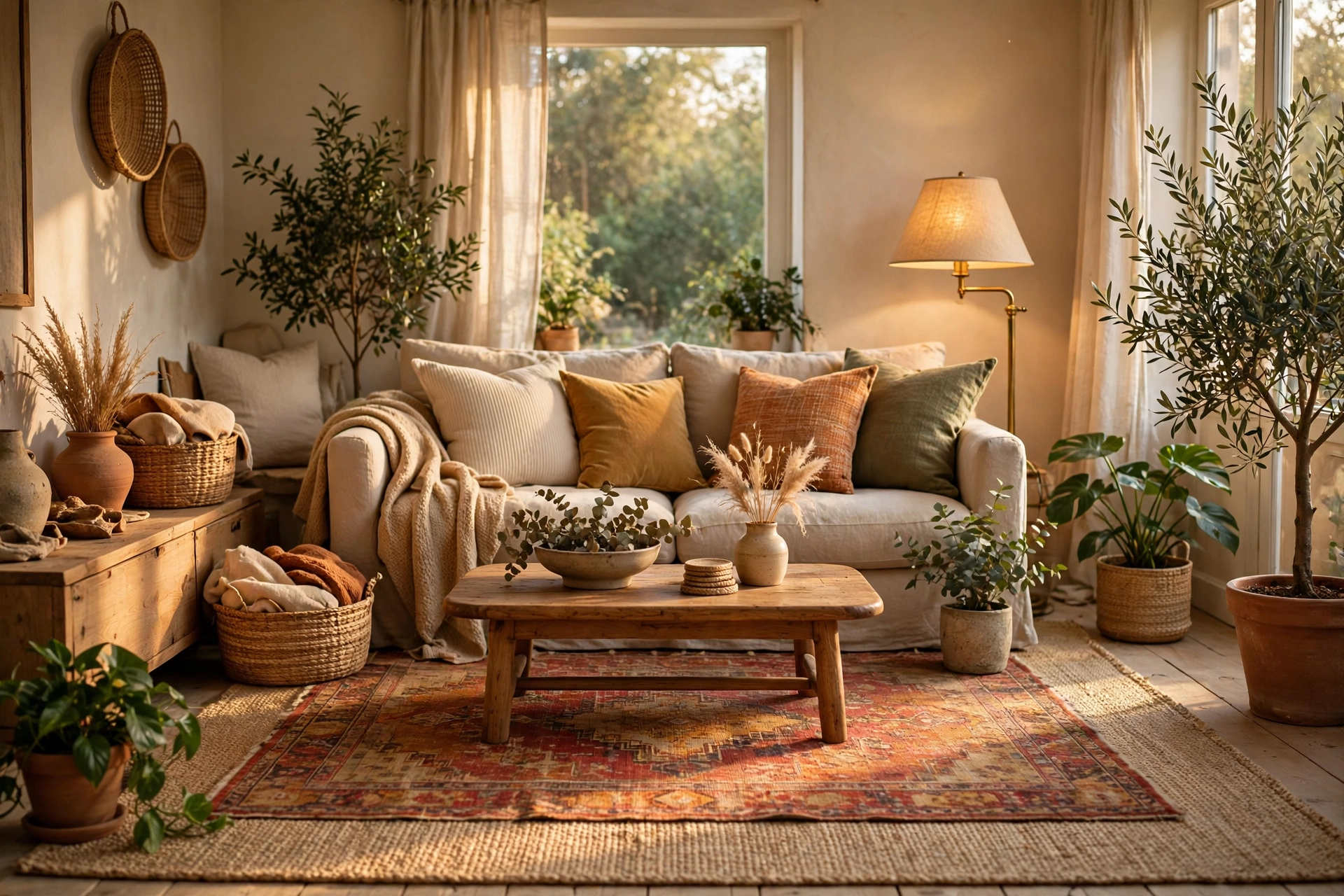
There is a reason designers reach for a rug before they change anything else in a room. Bare floors make a space feel echoey, unfinished and a little cold — even when the furniture is beautiful. The right rug does the opposite: it softens sound, warms the floor underfoot, and pulls scattered furniture into one intentional, collected grouping.
The good news? You don’t need a renovation or a huge budget. Below are 21 rug ideas — from layered vintage pieces to washable kitchen heroes — that work in real homes, real rentals and real life. Each one includes where it works best and the styling tip that makes it look deliberate instead of accidental.
The 3 rules that make almost every rug below work:
- Size up. A rug that is too small is the #1 reason a room looks unfinished. When in doubt, go one size bigger.
- Front legs on. In living rooms and bedrooms, at least the front legs of your main furniture should sit on the rug.
- Always use a rug pad. It stops slipping, adds cushion, and quietly makes even a budget rug feel expensive.
1. Layer a Vintage Persian Rug Over a Natural Base
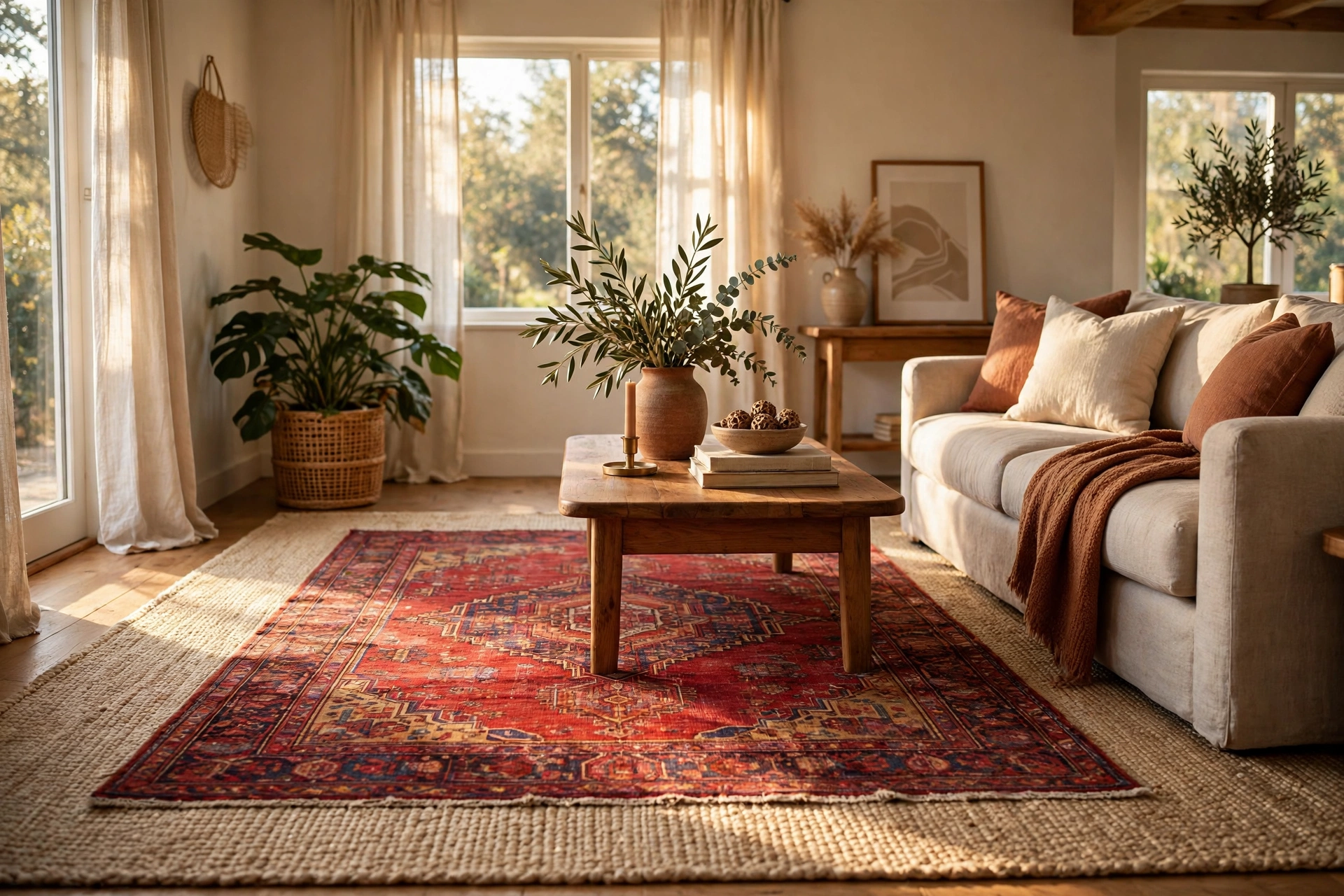
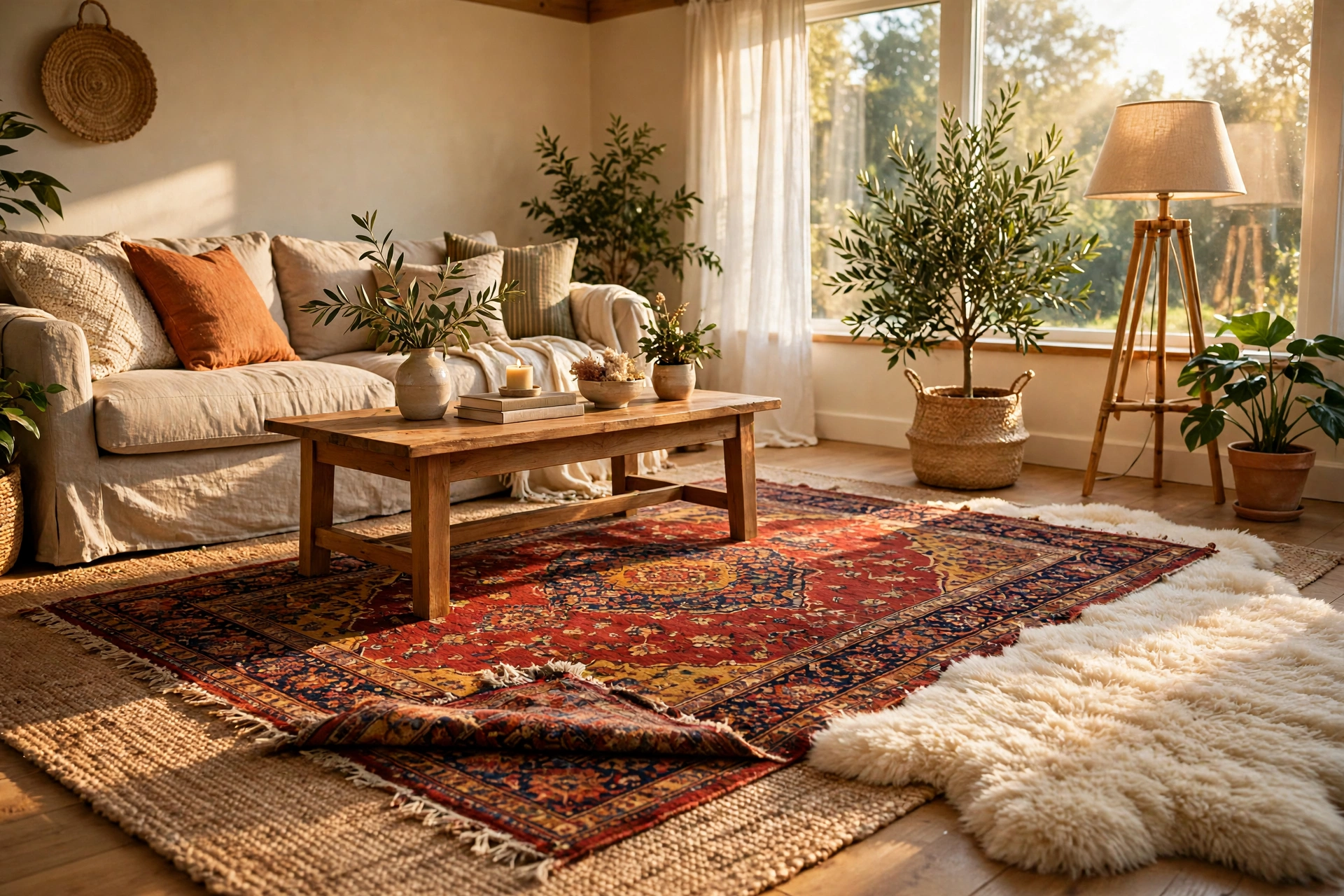
Layering is the single fastest way to make a room look collected — like it came together over time, not in one shopping trip. Start with a large, inexpensive natural-fiber rug (jute or sisal) that fills the space, then layer a smaller vintage or Persian-style rug on top for color and pattern. This trick also solves two problems at once: vintage rugs are often sold in odd sizes, and a big statement rug can be pricey. The neutral base gives you the coverage; the vintage layer gives you the soul. Works beautifully in living rooms and bedrooms.
Styling tip: Keep about 12–18 inches of the base rug visible on all sides so the layering reads as intentional.
2. Go Oversized and Anchor the Whole Room
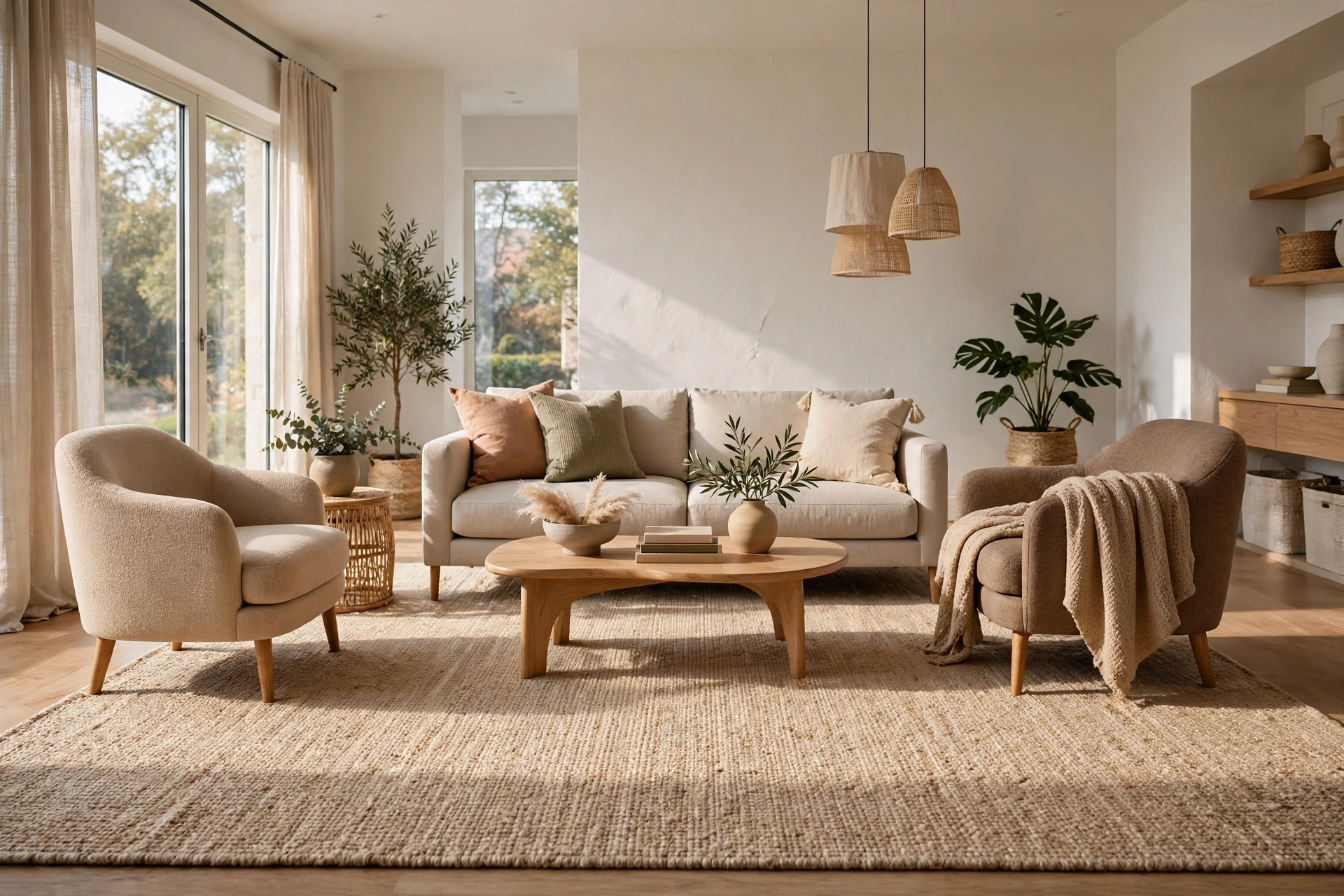
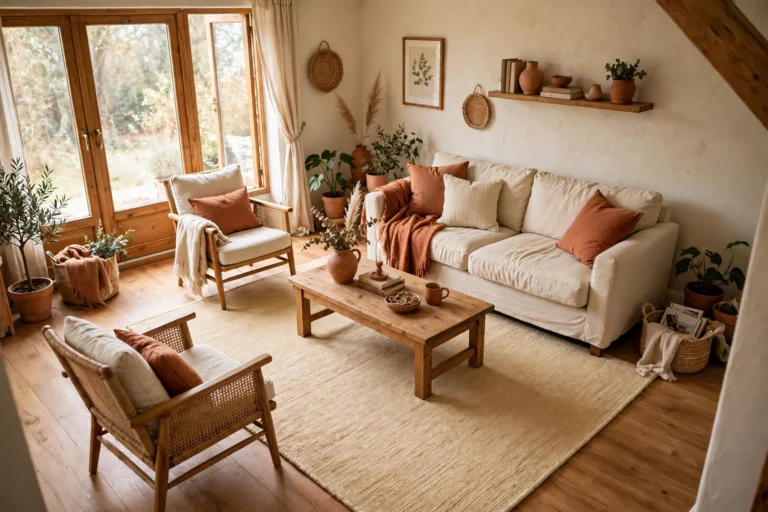
If your furniture currently floats in the middle of the room, the rug is probably too small. An oversized rug — one big enough for all four legs of the sofa and chairs to sit on — instantly grounds the seating area and makes the whole room feel calmer and more generous. This is the anchor move designers use in open-plan spaces, where one large rug quietly tells everyone this is the living area. Choose a warm, textured neutral if you want the furniture and art to stay the stars.
Styling tip: Leave a consistent border of bare floor (roughly 8–12 inches) between the rug edge and the walls.
3. Warm Everything Up With a Deep Burgundy Rug
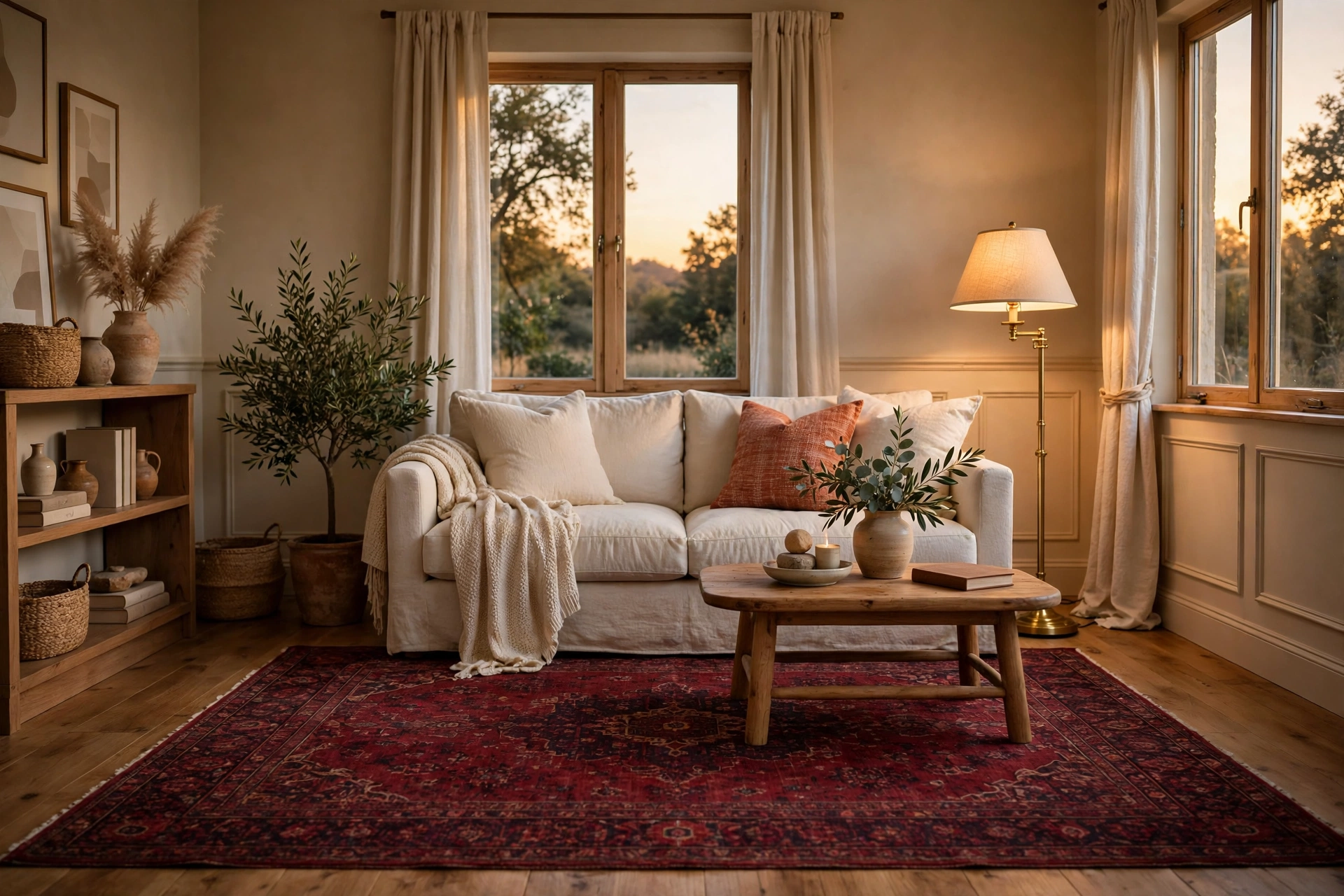
Burgundy is having a real moment — and for good reason. Deep red rugs radiate warmth like nothing else, and they have a hidden superpower: they make cream, beige and light wood furniture look richer by contrast. A burgundy rug turns a plain neutral living room into a moody, evening-ready space without painting a single wall. It is also wonderfully forgiving of everyday life, since its busy, deep tones hide a multitude of crumbs and paw prints.
Styling tip: Pull one or two burgundy accents elsewhere — a cushion, a throw, a book stack — so the color feels woven through the room.
4. Sink Into a Plush Shag Rug in the Bedroom
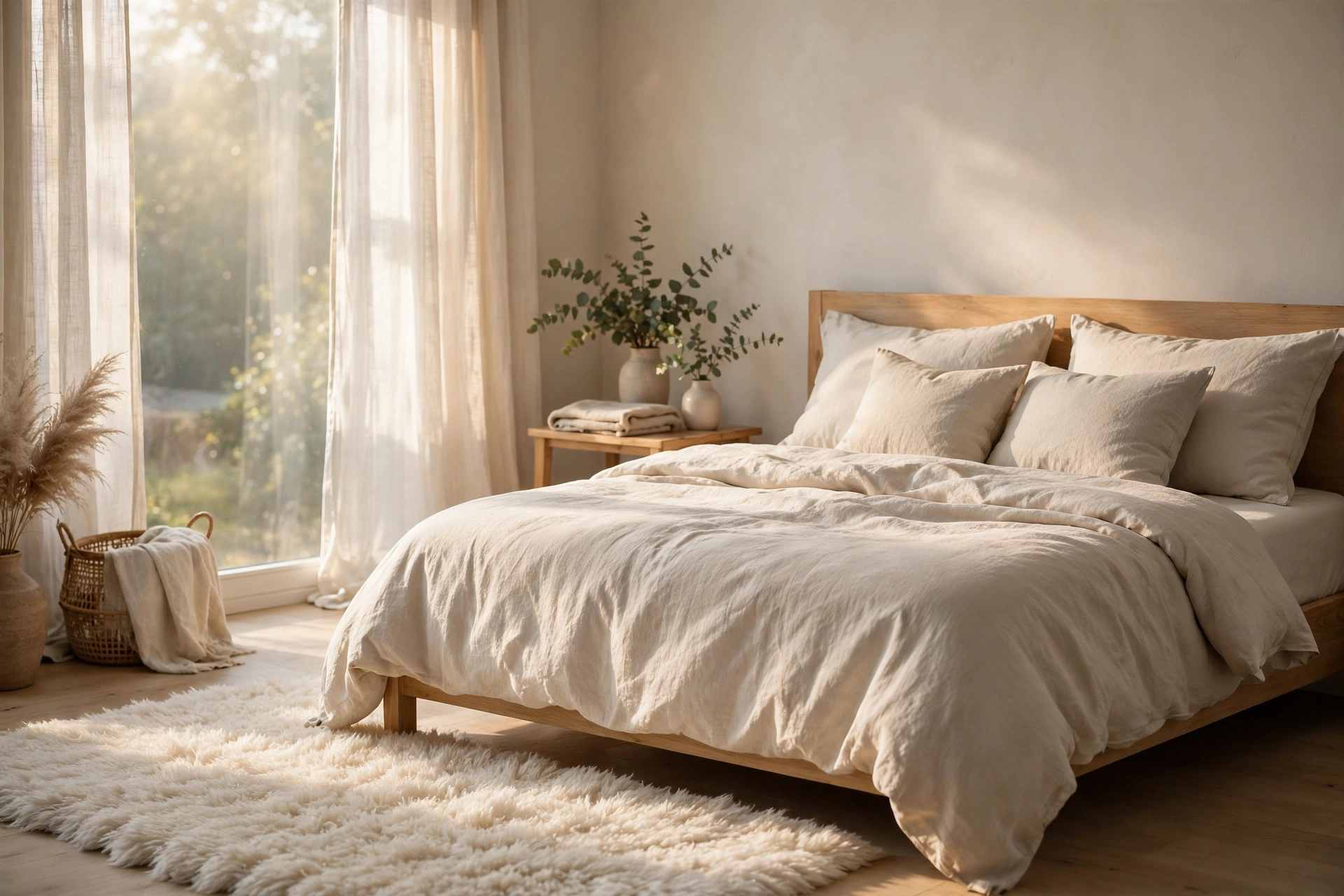
A bedroom should feel soft the second your feet touch the floor, and nothing delivers that like a plush, high-pile shag rug. Place it beside or under the bed so the first and last steps of your day land on something warm instead of cold flooring. Ivory and warm white shag rugs also bounce light around, keeping the room feeling calm and spa-like rather than heavy. If a full-room shag feels like too much maintenance, use a smaller one just on your side of the bed.
Styling tip: Keep shag out of high-traffic paths and door swings — it is a barefoot luxury, not a hallway workhorse.
5. Bring the Outdoors In With a Natural Jute Rug
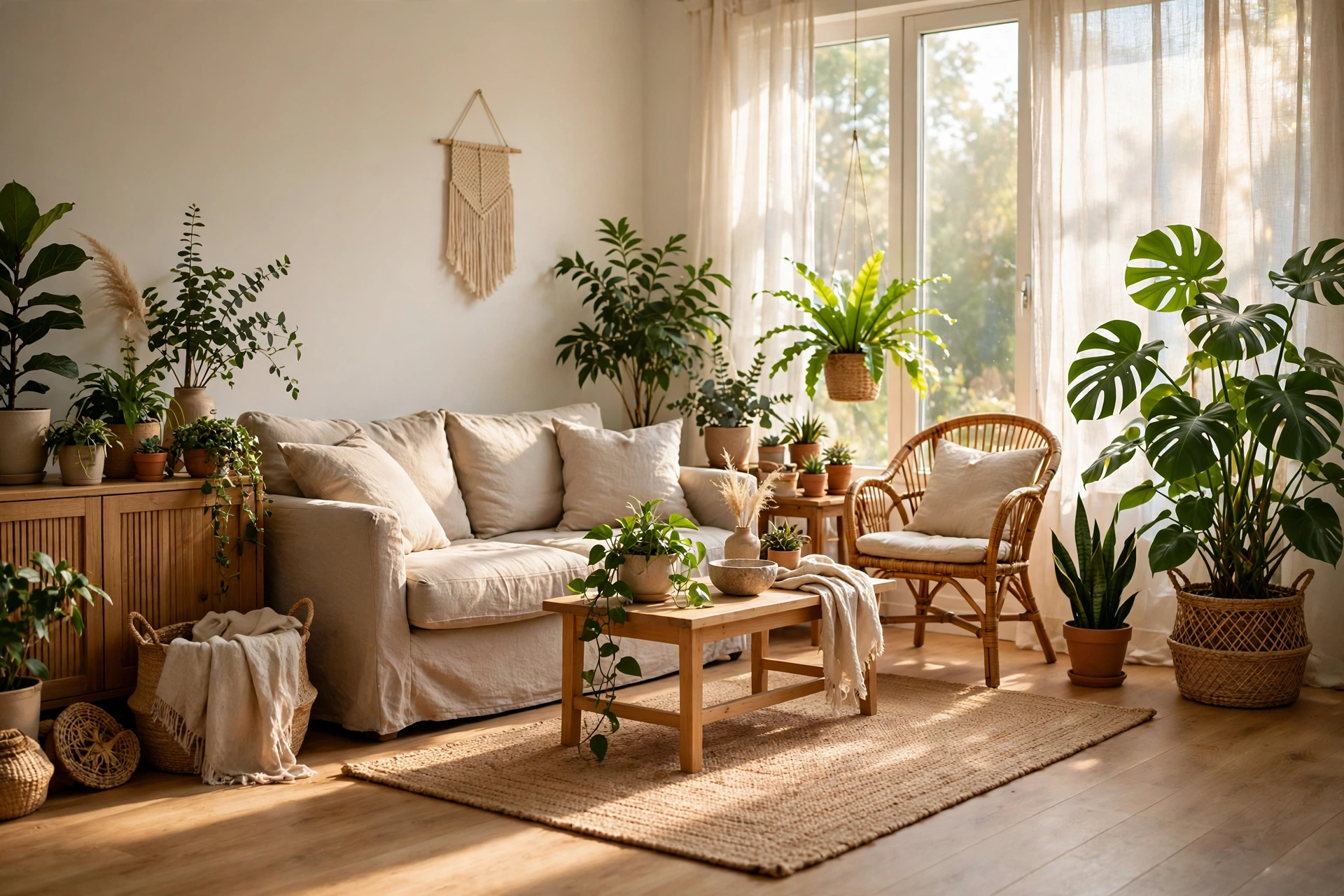
Jute rugs are the quiet overachievers of the rug world. Their nubby, handwoven texture adds instant earthiness, they pair with literally every style from coastal to modern farmhouse, and they are one of the most affordable ways to cover a large area. On Pinterest, jute shows up again and again in the most-saved living rooms and bedrooms — usually layered with plants, linen and light wood for that relaxed, sun-warmed look. Jute is also tough: it handles dining rooms and entryways better than most natural fibers.
Styling tip: Jute and water don’t mix, so enjoy it in dry rooms and skip it in bathrooms and mud-prone mudrooms.
6. Add Soft Geometry With a Moroccan Trellis Rug
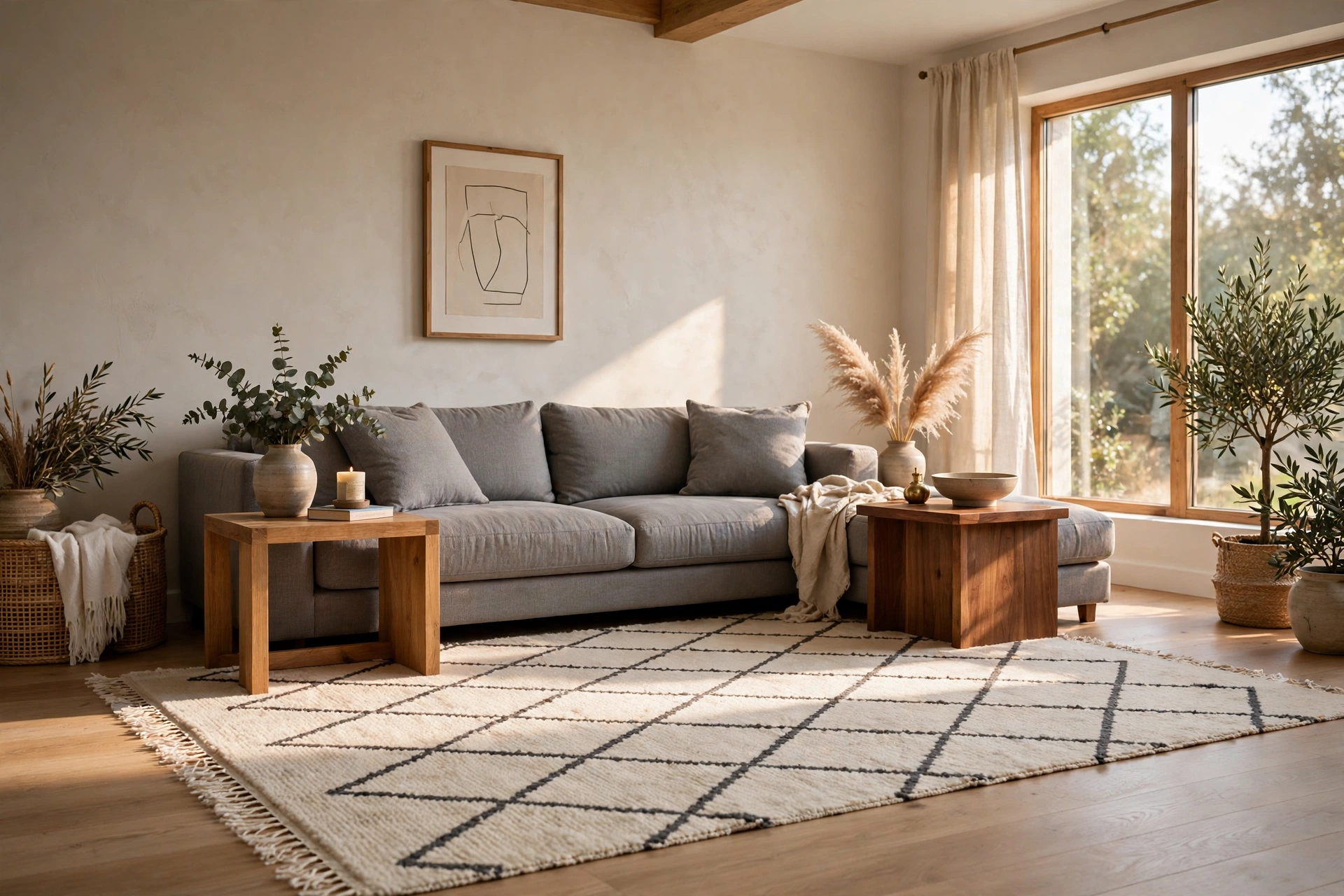
The classic Moroccan look — an ivory or cream base with simple charcoal or brown trellis lines — has stayed popular for years because it threads a perfect needle: pattern without noise. It brightens a room like a white rug would, but the hand-drawn-style lines forgive footprints and everyday wear far better. It suits modern, Scandinavian and boho rooms equally well, and its plush pile versions are some of the coziest rugs you can put in a family living room.
Styling tip: Let the trellis lines run parallel to your sofa for the most orderly, calming effect.
7. Soften the Corners With a Round Rug
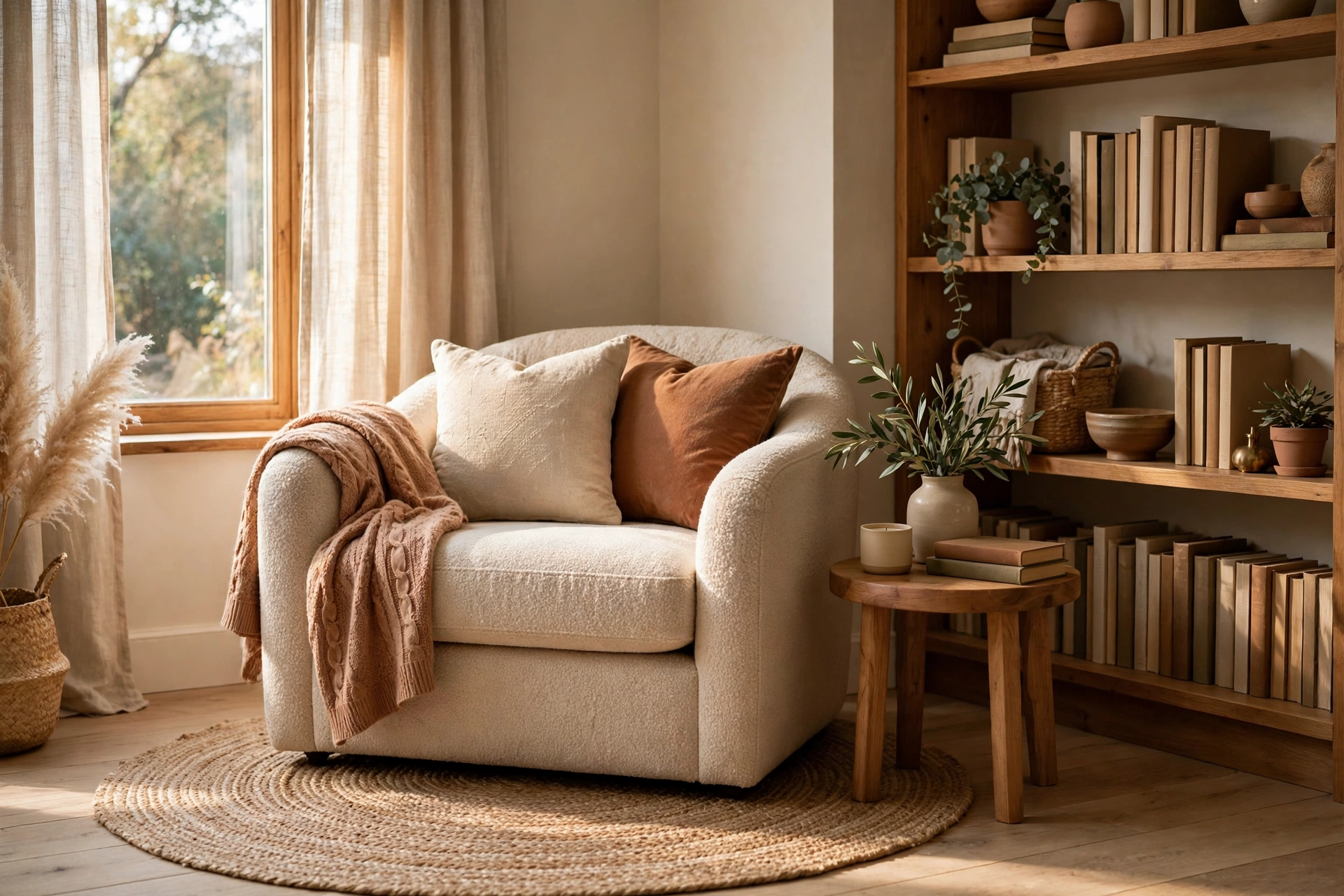
Most rooms are all straight lines and sharp corners — walls, sofas, tables, shelves. A round rug breaks that grid in the best way. It is the perfect anchor for a reading nook (armchair + small table + lamp), softens the feel of an entryway, and makes small or awkward corners suddenly look designed. Round rugs also work beautifully under a round dining table or in a nursery, where the gentle shape suits the room’s mood.
Styling tip: Size a round rug so at least the front of the chair or table legs rest on it — a too-small circle looks lost.
8. Roll Out a Runner in the Hallway or Entryway
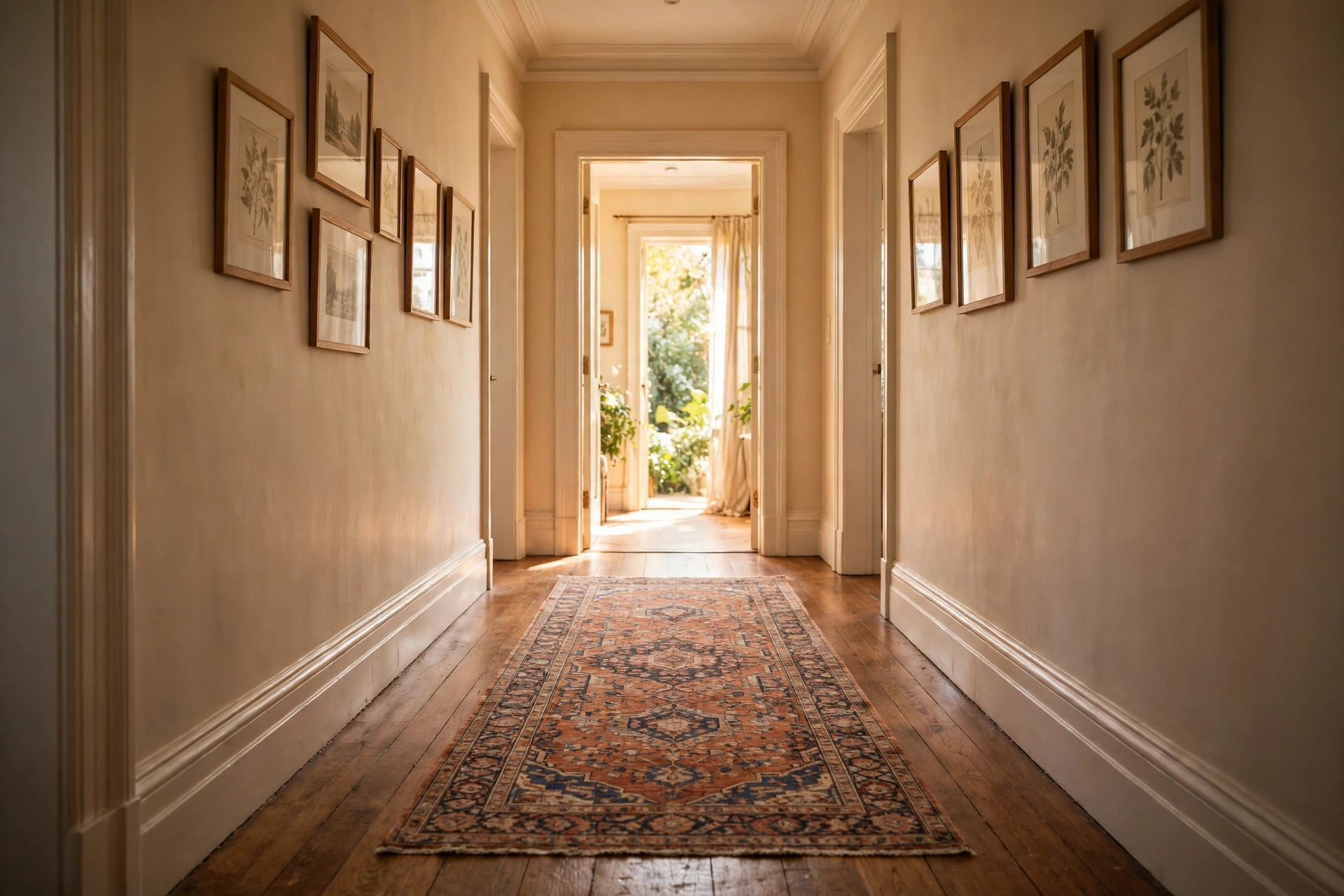
Hallways and entryways are the most neglected spaces in most homes — and the easiest win. A runner warms up cold floors, absorbs the echo, protects high-traffic wood or tile, and gives guests a designed first impression before they even reach the living room. Vintage-style and botanical-pattern runners are especially popular right now, because their busy patterns shrug off the dirt that entryways collect. Leave a few inches of floor showing on each side so the runner looks fitted, not squeezed in.
Styling tip: A rug pad is non-negotiable here — runners on hard floors shift the most.
9. Make a Statement With a Checkered Rug
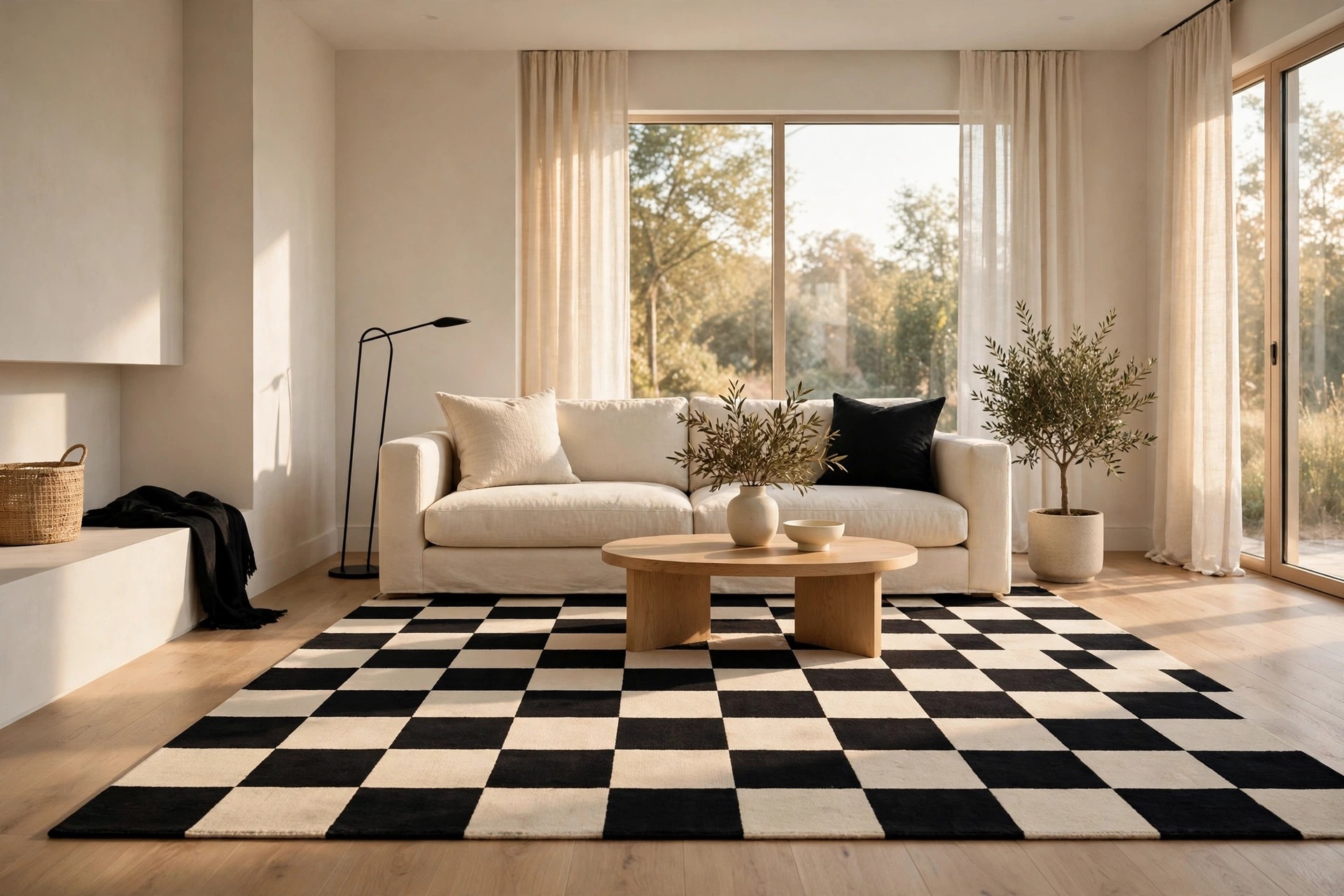
Checkered rugs are the graphic statement that still somehow goes with everything. The black-and-cream checkerboard is the most popular version — it adds the high contrast that stylists use to wake up a beige room, while the simple two-tone palette keeps it from fighting with your furniture. It reads modern in a minimal space, playful in a dorm or studio, and surprisingly classic under vintage wood furniture. If full checkerboard feels bold, start smaller: a checkered runner or bath mat gives you the look with less commitment.
Styling tip: Keep the rest of the room’s patterns minimal so the checks stay the hero.
10. Choose a Washable Rug Where Life Actually Happens
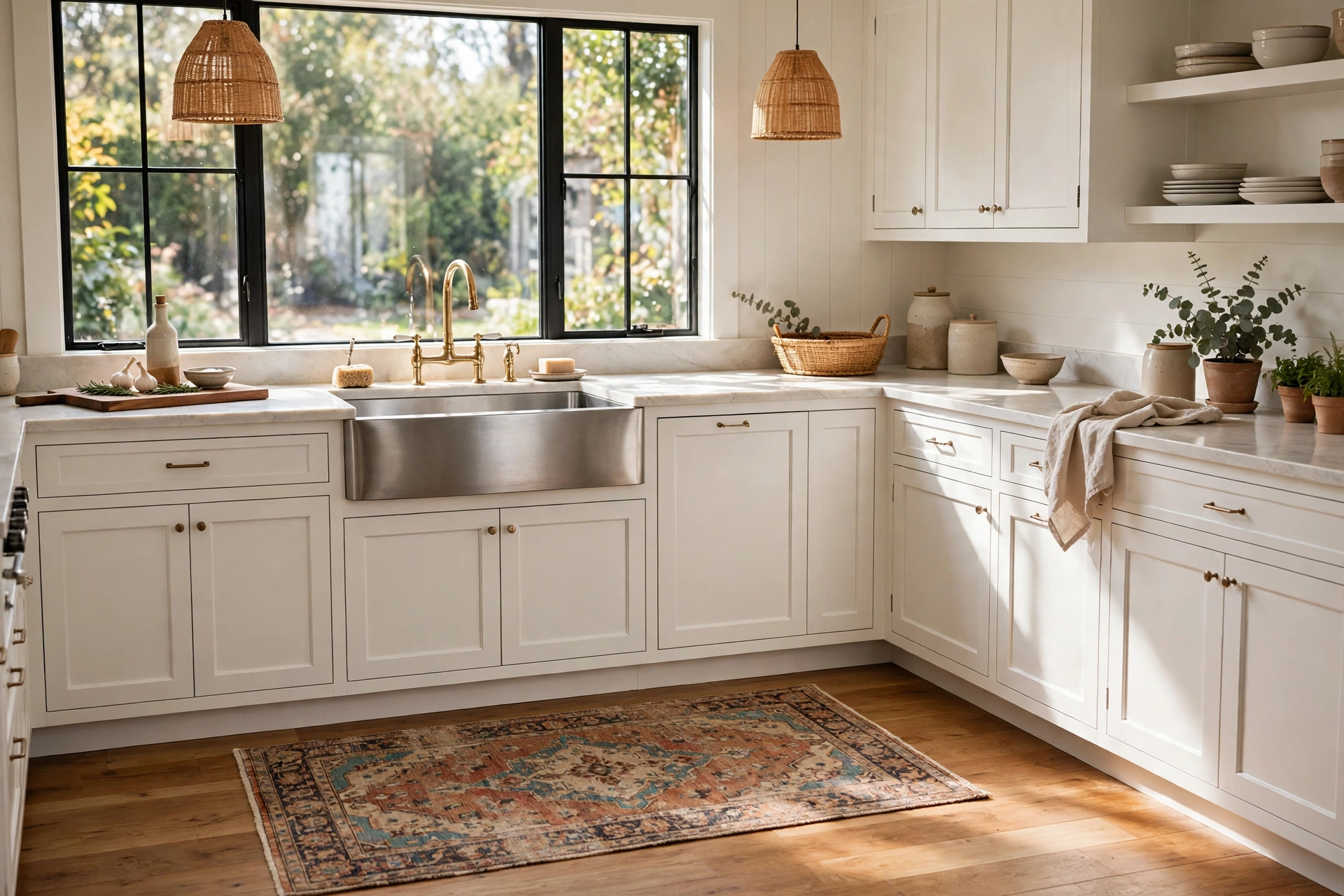
The best rug is the one you are not afraid to live on. Machine-washable rugs have completely changed kitchens, dining rooms, kids’ spaces and pet households: spills, muddy paws and mystery stains stop being emergencies. Modern washable rugs come in genuinely pretty vintage-inspired prints, so you no longer have to choose between style and sanity. Use one in front of the kitchen sink, under the dining table, or anywhere a nice rug would make you nervous.
Styling tip: Washable rugs are thin by design — pair yours with a cushioned pad for comfort underfoot.
11. Ground the Dining Room With a Flatweave Rug
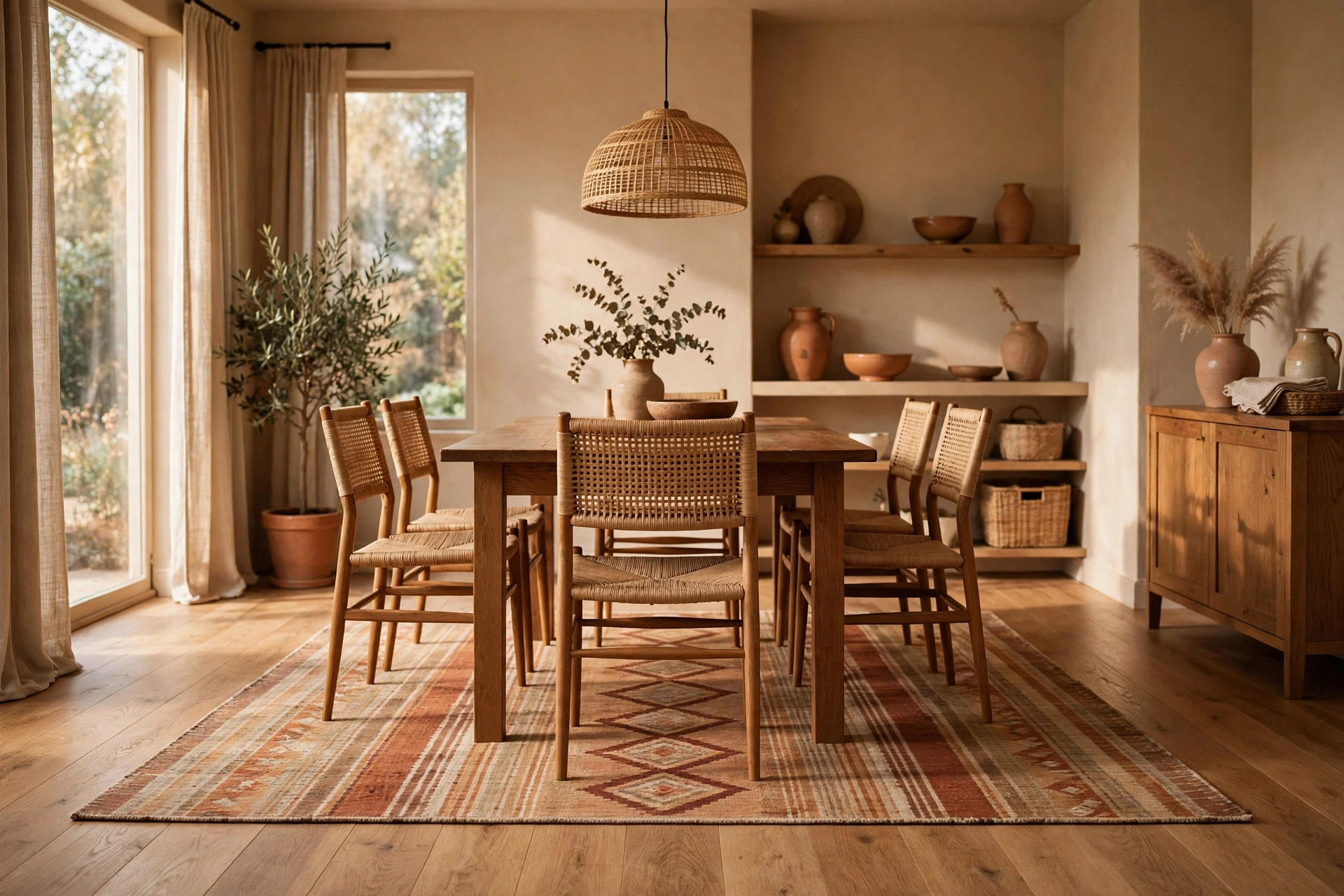
A rug under the dining table does three jobs: it defines the dining zone in open-plan homes, it muffles chair noise, and it adds the color or pattern most dining rooms are missing. The key is the weave. A low-pile flatweave lets chairs slide in and out without catching, and it is far easier to rescue from spaghetti night than a plush rug. Extend the rug at least 24 inches beyond the table on all sides so chairs stay on the rug even when pulled out.
Styling tip: Pattern is your friend here — it camouflages crumbs between cleanings.
12. Layer a Cowhide for Instant Character
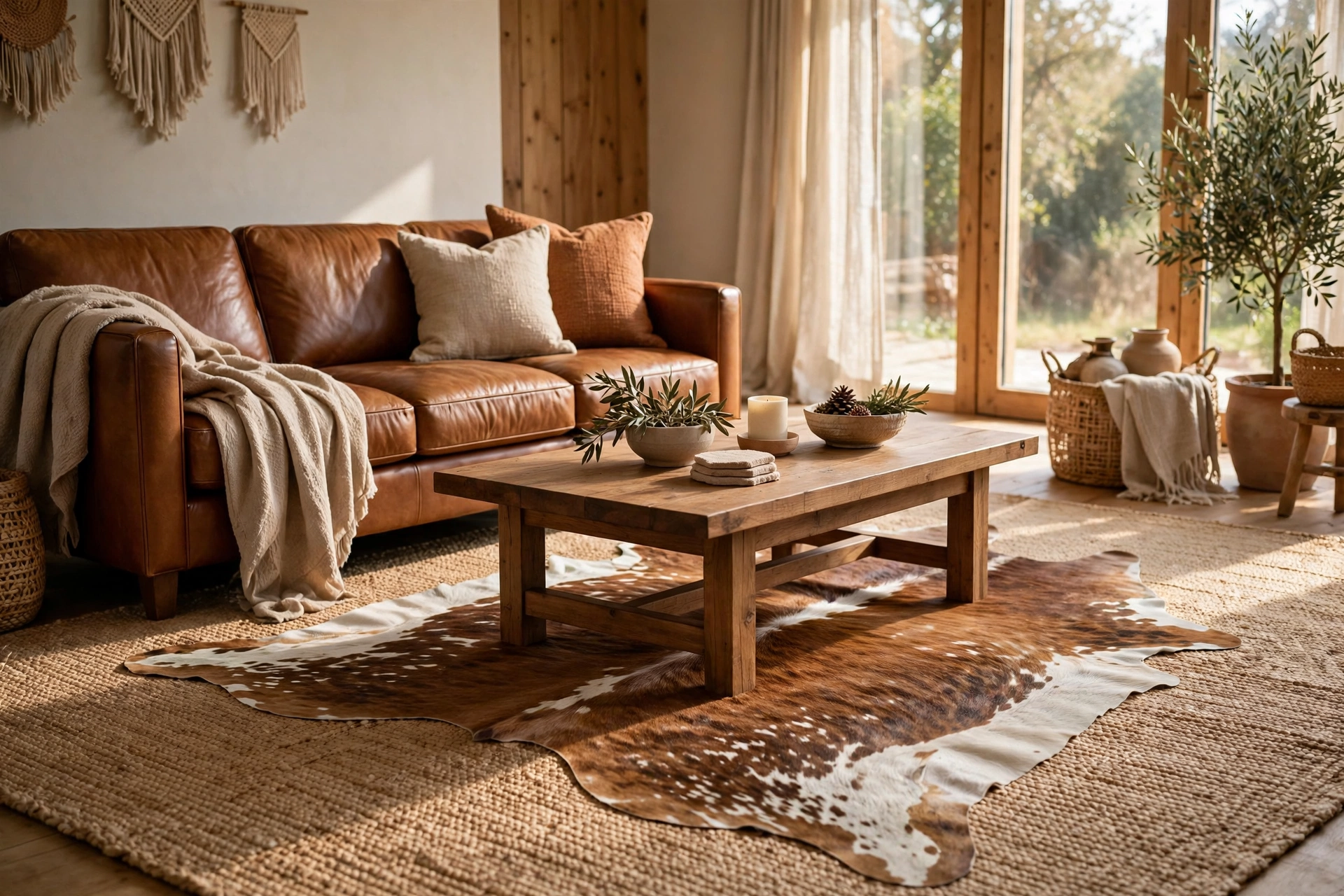
Few things add collected character faster than a cowhide (real or faux) tossed at an angle over a larger base rug. Its organic, irregular shape breaks up all the rectangles in a room, and the natural markings mean no two look alike. Cowhide is also famously practical: it is durable, naturally stain-resistant, and thin enough to layer without a bulky step-up. Try it under a coffee table, angled in front of a fireplace, or defining a reading corner.
Styling tip: Angle is everything — a cowhide placed perfectly straight looks like a mistake; a casual diagonal looks like a designer did it.
13. Try a Sculptural Tufted Rug With a Wavy Pattern
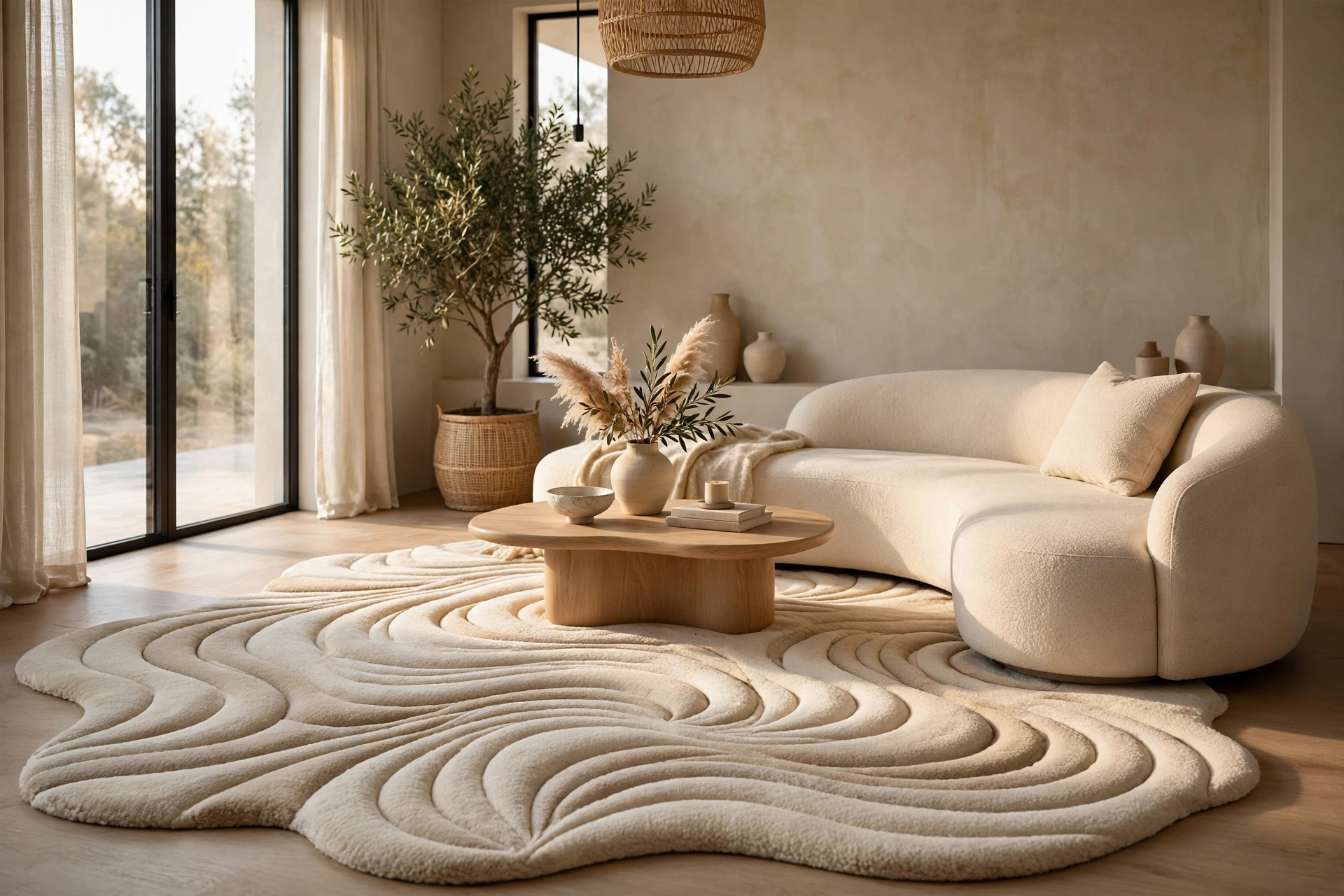
Hand-tufted rugs with wavy lines, scalloped edges and sculptural, high-low texture are everywhere on Pinterest right now — and they are the easiest way to make a room look current. The patterns are soft and abstract rather than loud, so they add movement and artistry without demanding that everything else in the room match. In cream, beige and warm neutral tones, a tufted wave rug feels like a piece of floor art that also happens to be wonderfully soft.
Styling tip: Keep furniture simple around a sculptural rug — let the texture be the conversation piece.
14. Stretch a Small Room With Stripes
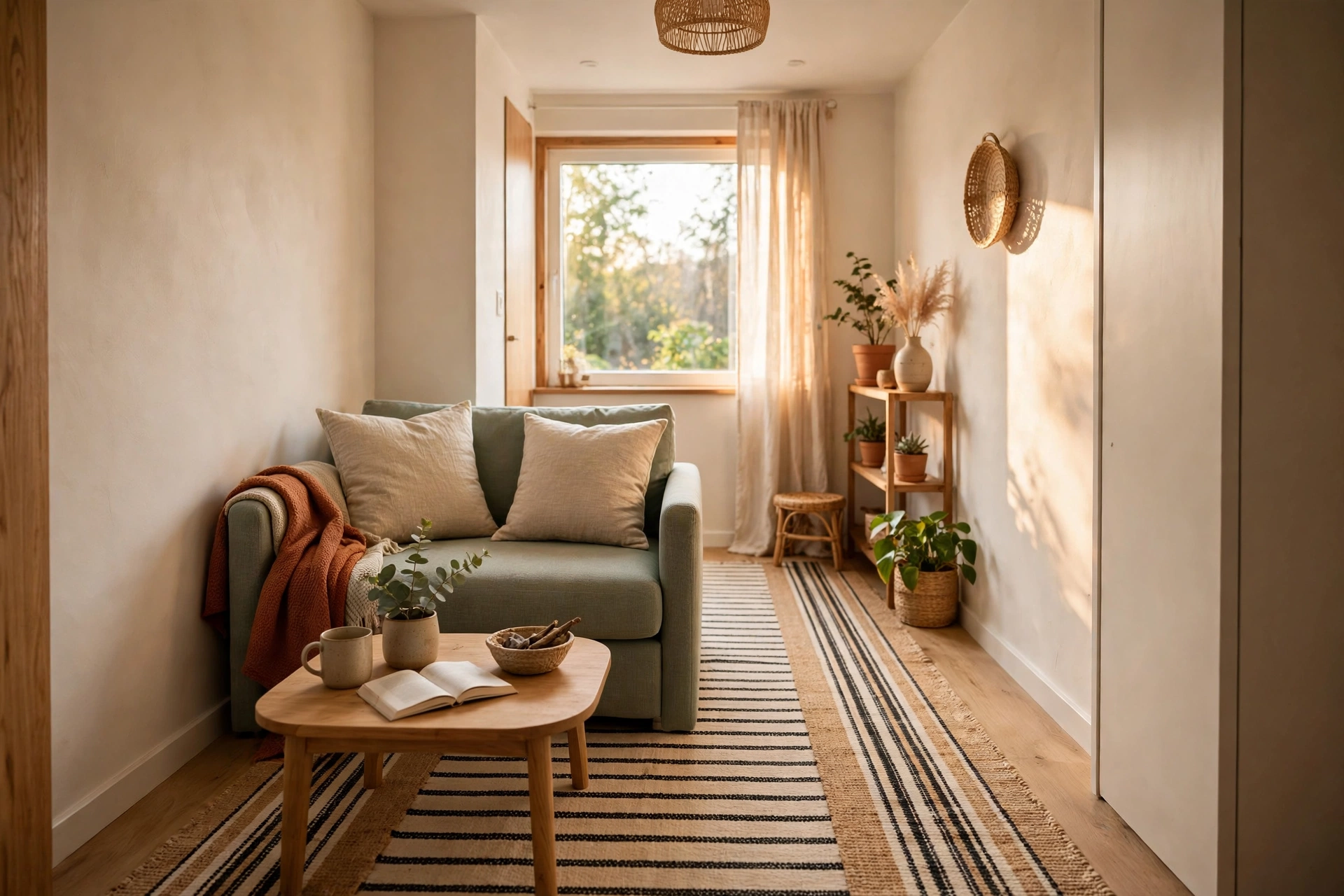
Stripes are the oldest visual trick in the book, and they work on floors just as well as on walls. Run a striped rug lengthwise in a small or narrow room and the space instantly reads longer; run the stripes across a long, thin room and it feels wider instead. Classic black-and-white or navy-and-cream stripes also bring a crisp, tailored energy that pairs well with casual furniture. For a softer take, look for tonal stripes — two close shades of beige or grey woven together.
Styling tip: The wider the stripe, the calmer the effect; thin, busy stripes can feel energetic in a small space.
15. Go Moody With a Deep Green Rug
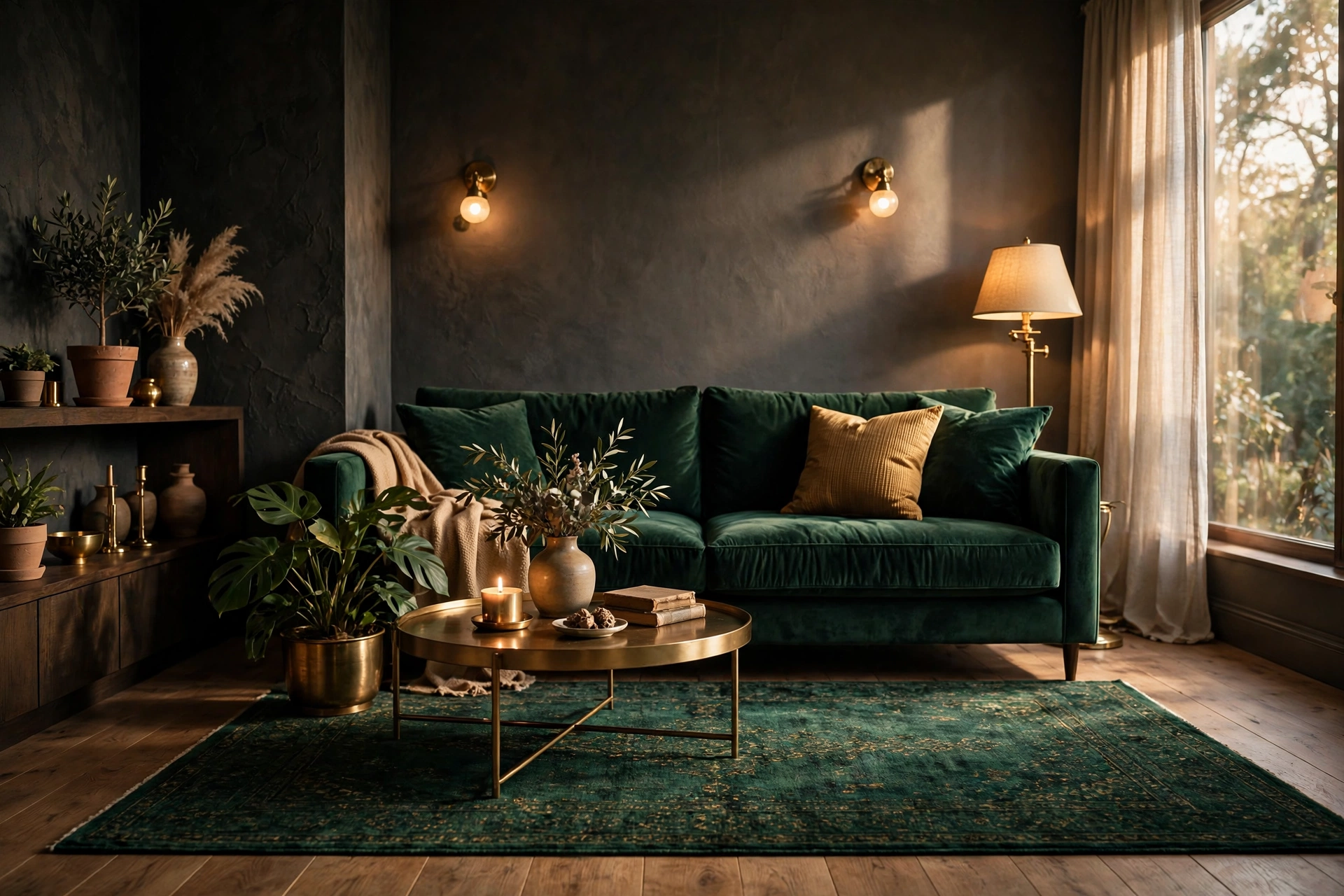
If burgundy is not your color, deep green is the other shade dominating saved living rooms right now — olive, forest and emerald rugs bring the same cocooning warmth with a fresh, nature-inspired feel. Green is surprisingly easy to live with: it behaves almost like a neutral next to wood, leather, brass and cream, and it makes houseplants look like a deliberate part of the design. A deep green rug is a particularly smart move in a room that gets lots of natural light, where the color shifts beautifully through the day.
Styling tip: Echo the green in one plant or cushion, then let brass or warm wood accents finish the palette.
16. Keep It Calm With a Warm Neutral Wool Rug
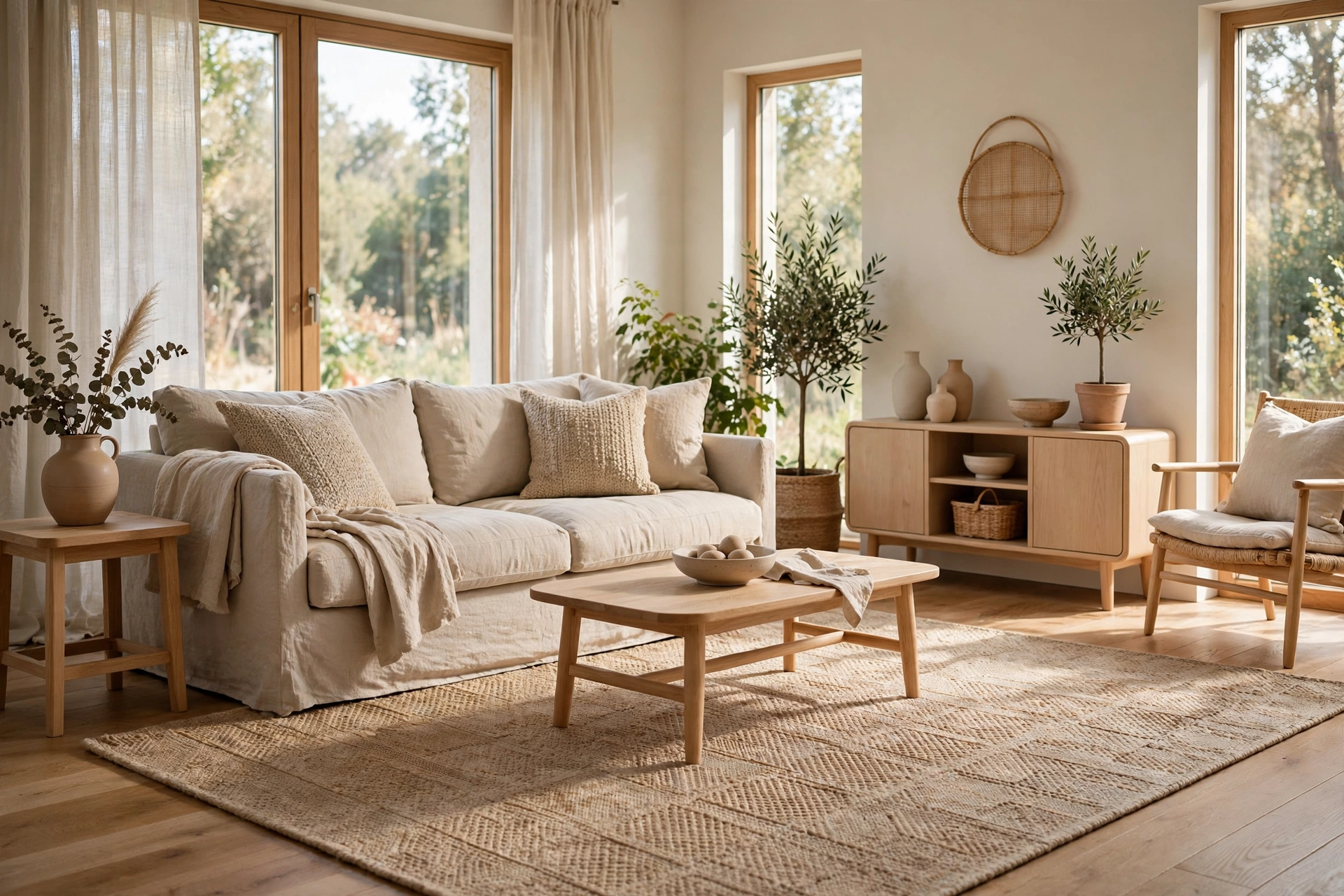
Not every rug needs to make a statement. A warm neutral wool rug — think oatmeal, sand, soft taupe with a visible woven texture — is the backbone of the calm, layered rooms everyone is saving. Wool is the premium natural choice for a reason: it is soft, durable, naturally stain-resistant and it regulates the feel of a room in every season. The secret is texture. A flat, printed beige rug can look dull; a chunky weave, subtle border or high-low pattern in the same color looks quietly luxurious.
Styling tip: In an all-neutral room, mix at least three textures (wool rug + linen sofa + wood) so calm never turns into boring.
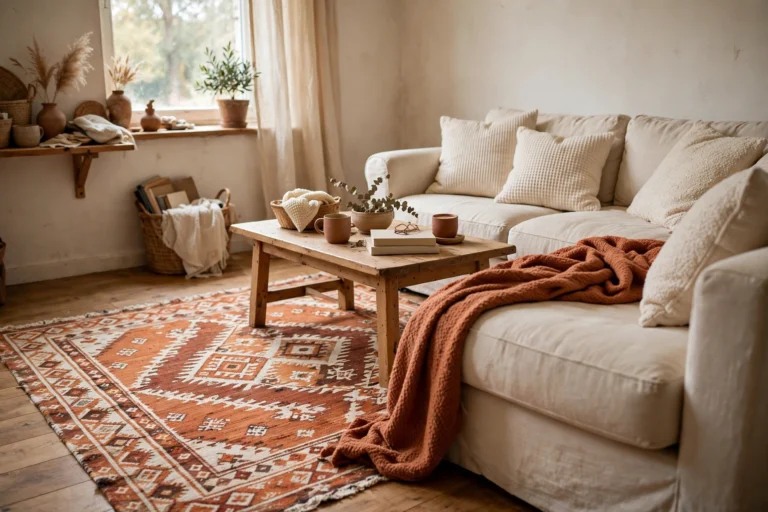
17. Lean Into Boho Pattern and Tassels
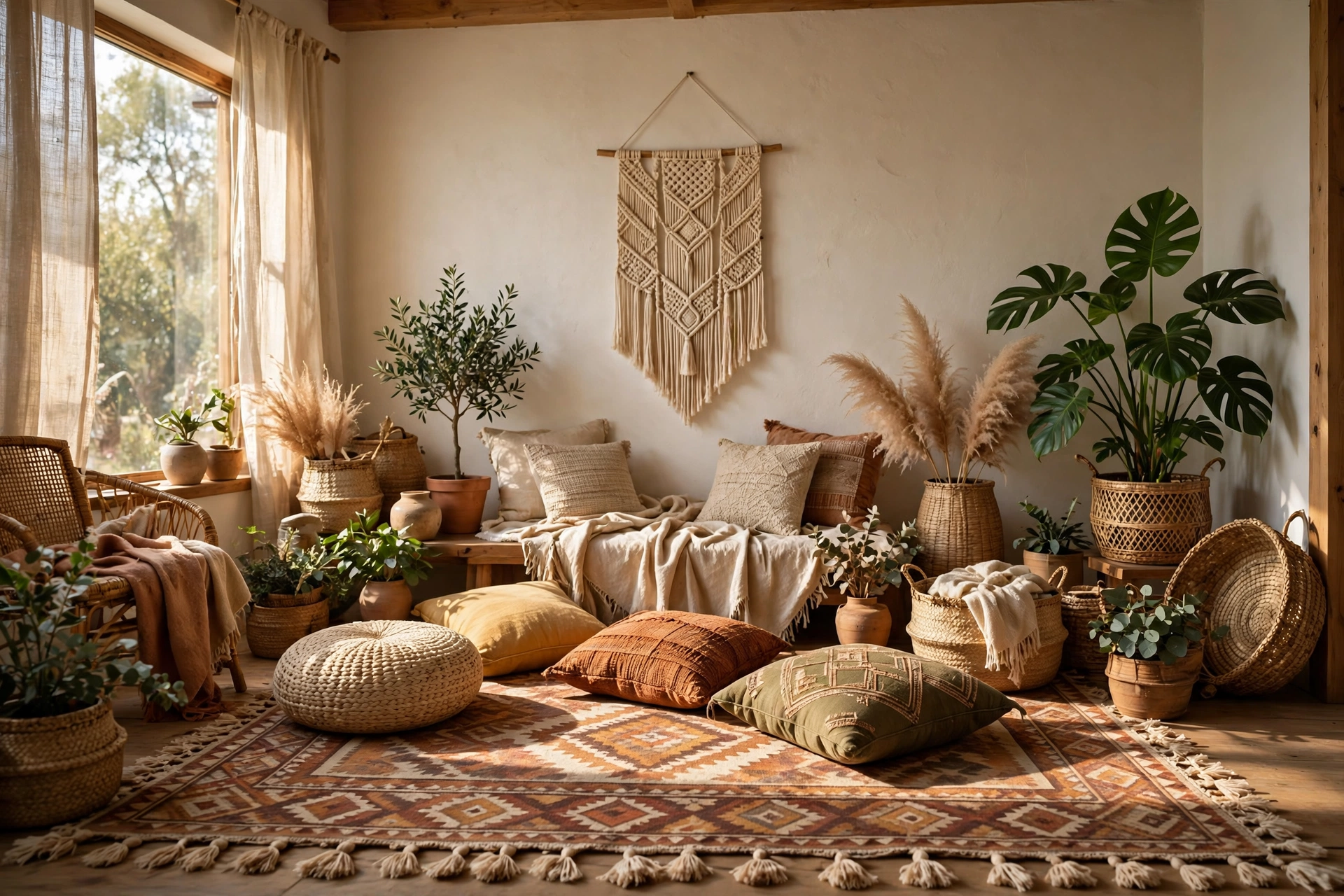
A boho rug is permission to relax. Layered global patterns, warm earthy colors and playful tassels or fringe instantly make a room feel personal and lived-in rather than staged. Boho rugs are also the most forgiving style for real life: the busy patterns hide wear, and the look actually improves when you add mismatched cushions, floor pillows and plants around it. This is the style to choose for rental living rooms, creative studios and any space where perfect is not the goal — warm and welcoming is.
Styling tip: Pick two or three colors from the rug and repeat them in your cushions and throws for an effortless, pulled-together mix.
18. Wake Up Better With a Rug Under the Bed
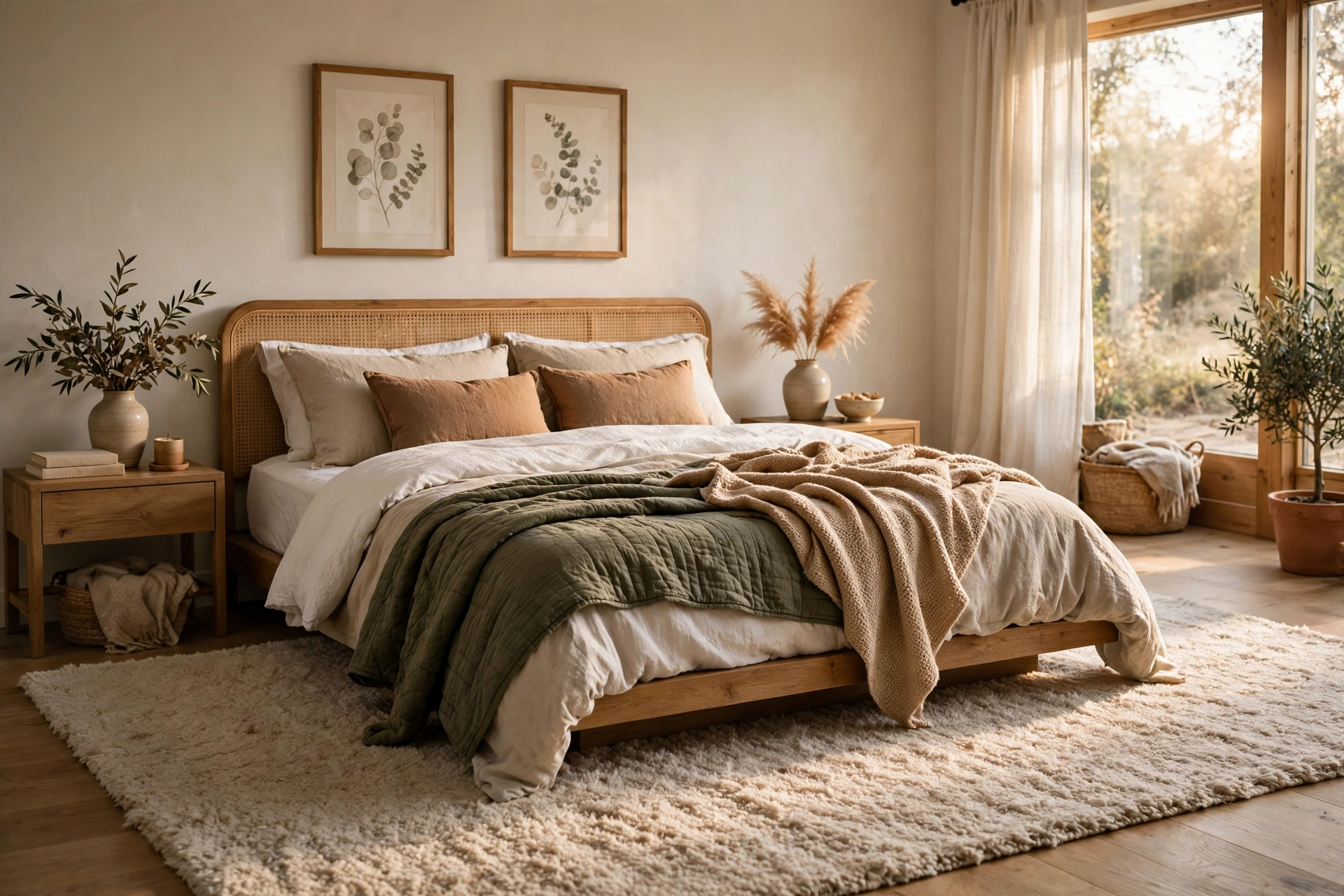
Placing a large rug under the bed — extending generously on both sides and at the foot — is the placement upgrade that makes bedrooms feel like boutique hotels. It frames the bed as the room’s anchor, gives you a warm landing on both sides, and visually enlarges the whole room. For a queen bed, an 8×10 rug placed horizontally under the lower two-thirds of the bed is the classic formula; a 9×12 lets nightstands sit on the rug too for the most finished look.
Styling tip: Leave the top third of the bed off the rug (near the headboard wall) — it saves money on size and looks deliberate.
19. Let One Colorful Rug Run the Whole Room
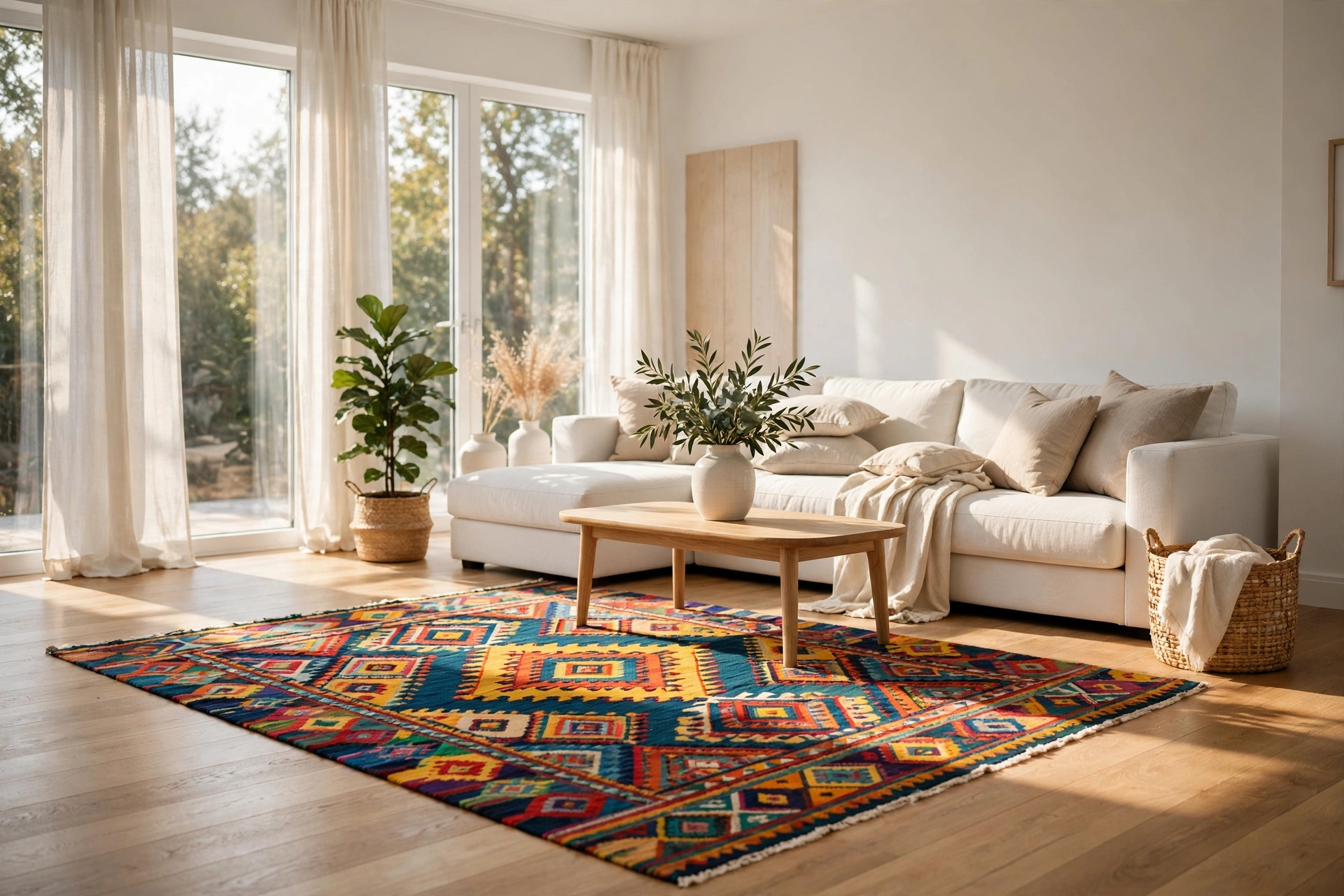
Here is the stylist’s shortcut for a room that feels designed: keep the walls, sofa and curtains calm, and let one colorful rug set the entire palette. A vibrant floral, botanical or Persian-style rug gives you a ready-made color scheme — pull two or three of its shades into your cushions, art and throws, and suddenly everything looks intentional. Blue-and-cream rugs are the safest bold choice (they flatter wood and white beautifully), while multi-color vintage rugs are the most forgiving of all.
Styling tip: Decorating from the rug is far easier than hunting for a rug to match existing decor — if you are starting fresh, buy the rug first.
20. Take the Coziness Outside With a Patio Rug
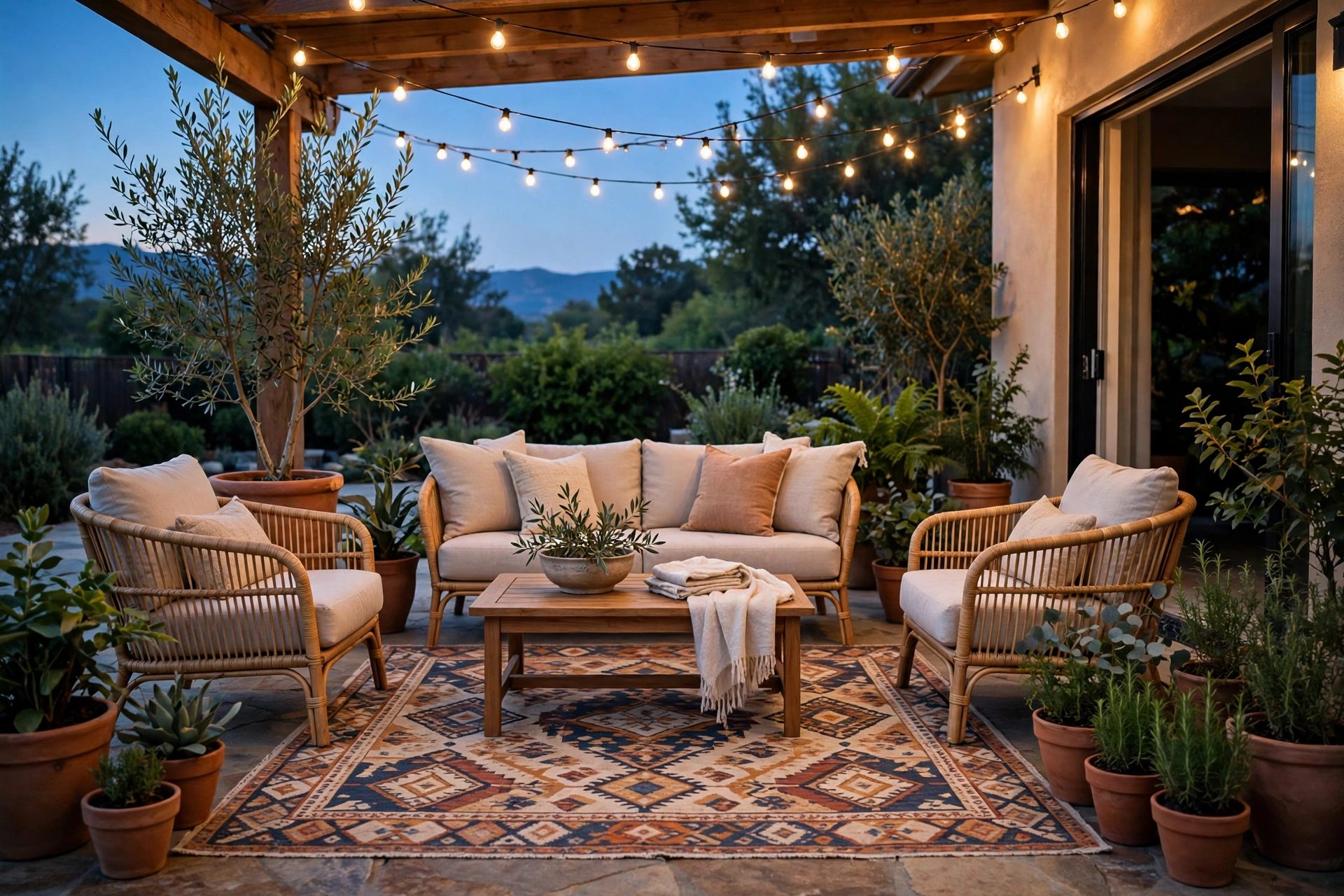
An outdoor rug is what turns a patio or balcony from some chairs outside into an actual outdoor room. It defines the seating zone, feels better than hot concrete or decking under bare feet, and brings indoor-level pattern and color to a space that usually has none. Modern outdoor rugs are made from weather-ready fibers that shrug off rain, sun and hosing-down. Add string lights, a couple of potted plants and a side table, and you have the cheapest extra room you will ever add to a home.
Styling tip: Choose a rug big enough for the front legs of all your outdoor seating — the same anchoring rule applies outside.
21. Soften the Nursery With a Low-Pile Rug
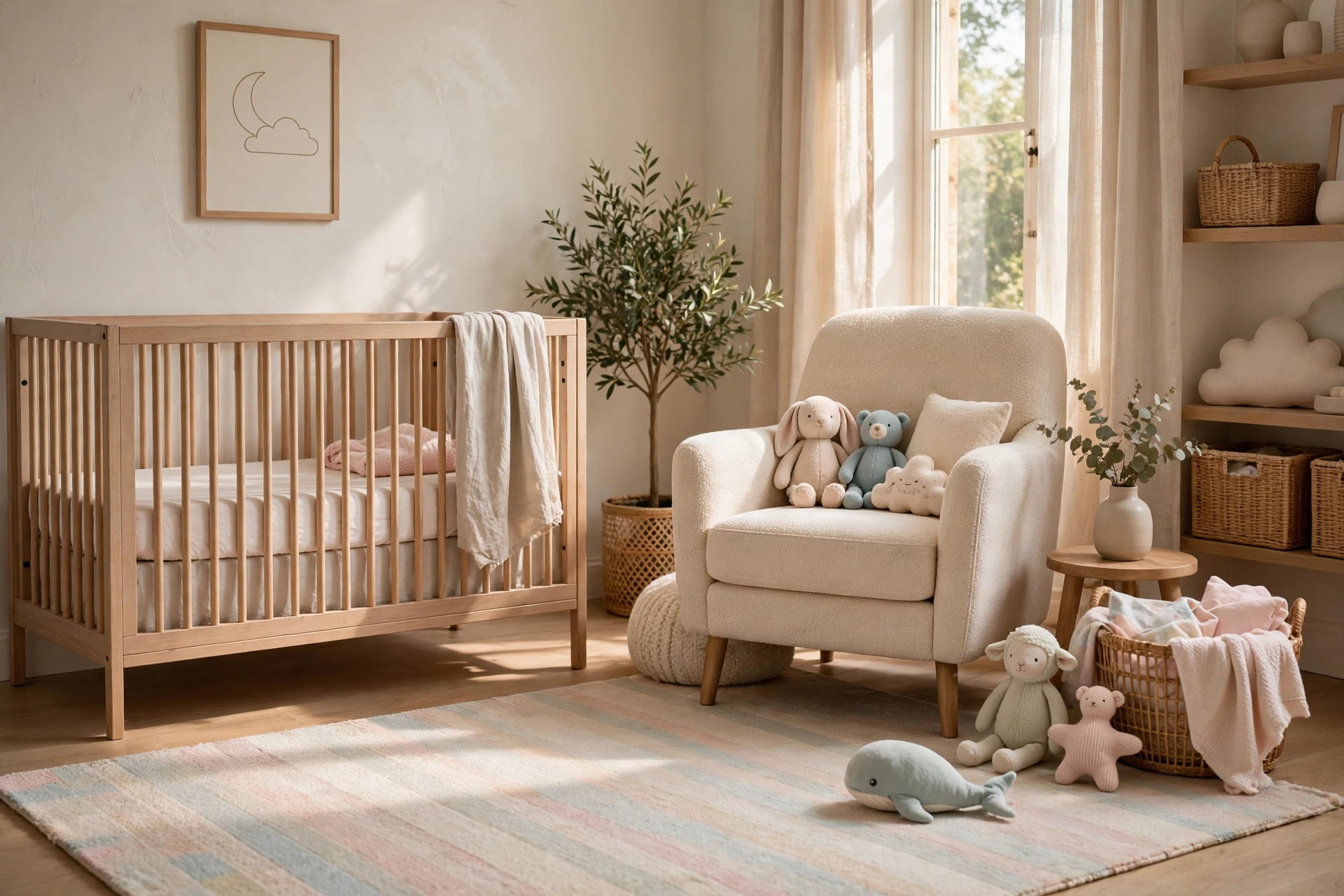
A nursery rug has a real job to do: it is a tummy-time mat, a crawling track, a midnight-feeding comfort and a sound softener for nap time, all in one. Low-pile is the practical sweet spot — soft enough for babies, firm enough for tiny knees and easy to vacuum (or choose washable for true peace of mind). Gentle pastels, soft rainbows and subtle animal or botanical prints keep the room calm while still feeling playful, and a generous size gives the room room to grow into toddlerhood.
Styling tip: Place the rug so it extends in front of the crib and nursing chair — that’s where you will actually stand and sit at 3 a.m.
Before You Buy: 5 Rug Rules That Save Regret
- Measure, then tape it out. Use painter’s tape on the floor in the rug’s exact size before ordering. Living with the outline for a day prevents the most common rug mistake — buying too small.
- Match the pile to the room. Flatweave and low-pile for dining rooms, kitchens and under doors; plush and high-pile for bedrooms and cozy living rooms.
- Think about who lives on it. Kids, pets or heavy foot traffic? Choose washable, patterned or vintage-style rugs that forgive daily life.
- Buy the pad. A good rug pad prevents slipping, adds softness, protects your floors and extends the rug’s life.
- Let the rug lead the palette. If you fall in love with a patterned rug, build the room’s cushions and throws around its colors — not the other way around.
Frequently Asked Questions
What kind of rug makes a room feel warmer?
Warmth comes from three things: warm colors (burgundy, rust, deep green, warm neutrals), visible texture (wool, jute, woven or high-low pile) and enough size to actually cover cold flooring. A plush or layered rug in warm tones will always beat a small, flat, cool-grey one.
What size rug should I get for my living room?
Start with 8×10 for most living rooms and 9×12 for larger or open-plan spaces. At minimum, the front legs of your sofa and chairs should sit on the rug; all four legs on is even better.
Are layered rugs still in style?
Yes — layering a patterned or vintage rug over a larger natural-fiber base is one of the most consistent looks across top home decor blogs and Pinterest right now. It is also practical: you get big coverage plus a smaller, characterful rug on top.
What is the easiest rug to clean?
Machine-washable low-pile rugs are the easiest by far, followed by flatweaves you can shake out and spot-clean. Vintage-style patterns in deep colors are the most forgiving between washes.
The Bottom Line
A warmer, more collected room rarely needs new furniture — it needs the right rug under the furniture you already have. Start with the idea above that fits your room and your life (layered and vintage if you want character, washable if you want peace of mind, oversized and neutral if you want calm), size it generously, and let it lead the rest of the room.
Save this list for your next room refresh, and follow Decor Velora for 3 fresh home decor ideas every day — rugs, small apartment decor, mirrors, curtains and cozy room makeovers.