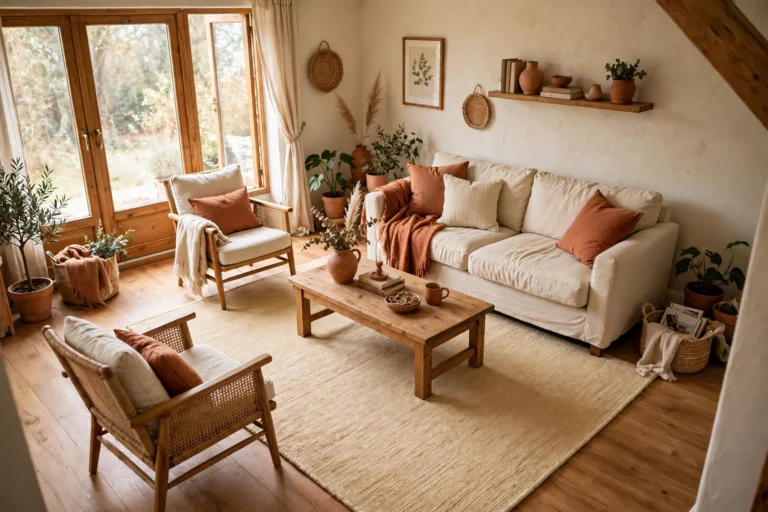
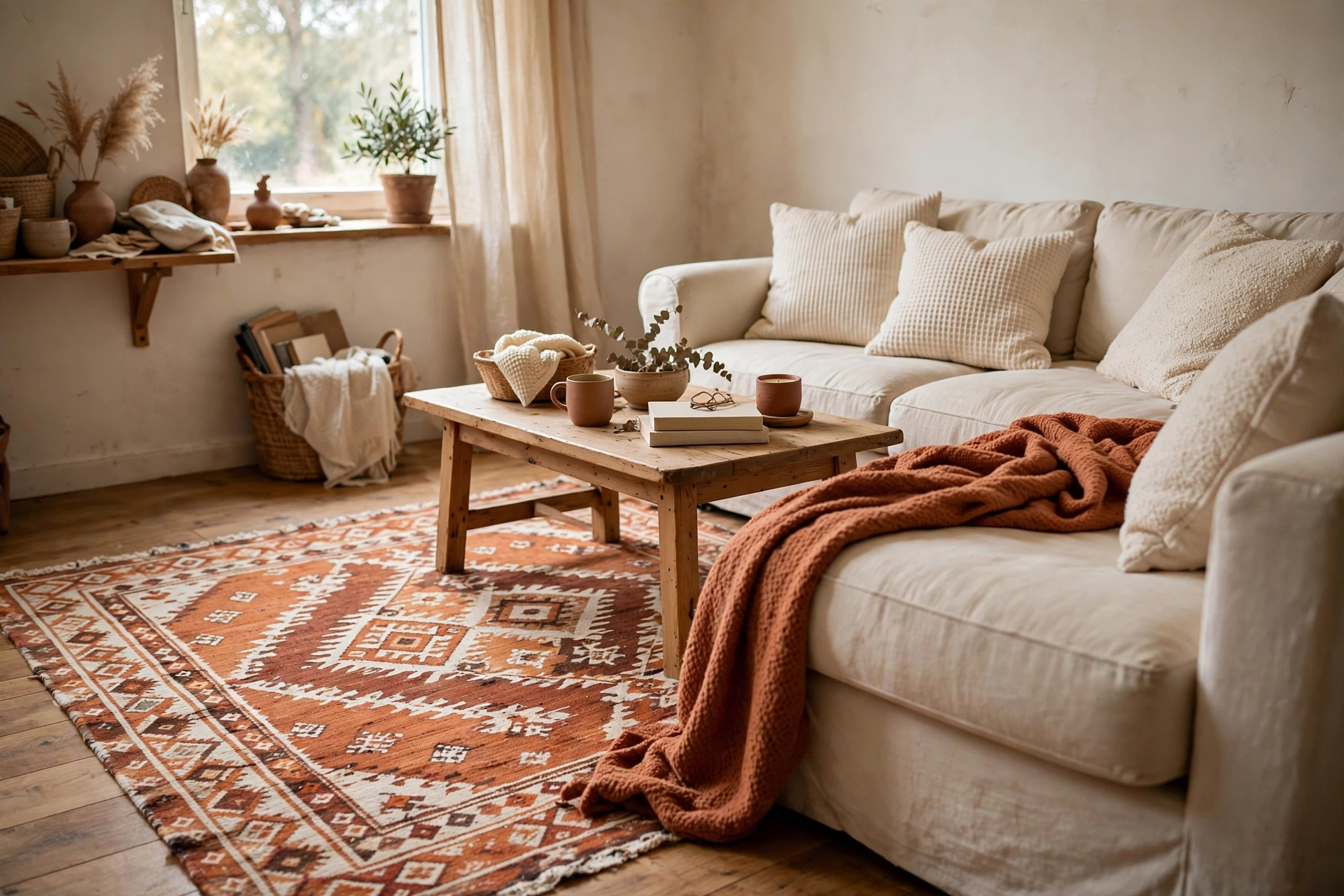
Rug Ideas on a Budget: 9 Affordable Ways to Warm Up Your Floors
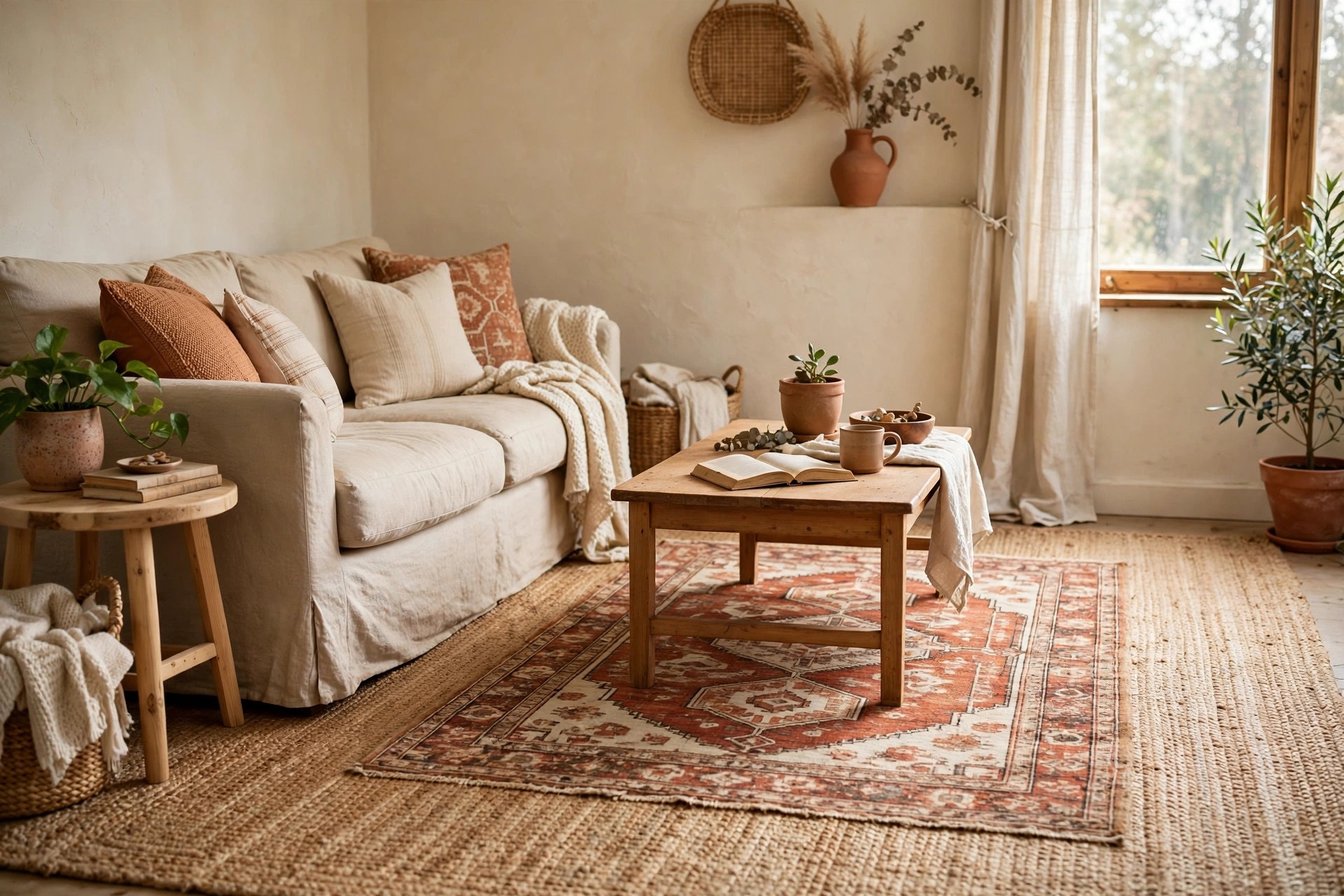
Rugs have a way of looking expensive even when a room is otherwise simple. They add colour, pattern and softness in one move, which is exactly why a large one can also take up most of a decorating budget before you have bought anything else.
Warming up your floors does not have to work that way. The nine strategies below are about methods, not product picks — where a rug comes from, how much floor you actually need to cover, and what it costs to own over a few years. Change one of those three things, and the price changes with it.
The 3 budget rules behind every idea below:
- Size is the price. Square footage drives cost more than brand — dropping one size, or covering only where feet and furniture actually sit, is the single biggest saving.
- Buy for cost-per-year, not sticker price. A washable, patterned, low-pile rug on a cheap pad that lasts 3–5 years beats an ultra-cheap plain rug replaced every year; busy patterns and mid-tones hide dirt and wear longest.
- Count the total cost. Pad, binding, delivery, return shipping and cleaning can erase a bargain — a slightly pricier rug with free returns and no cleaning bill can be cheaper overall.
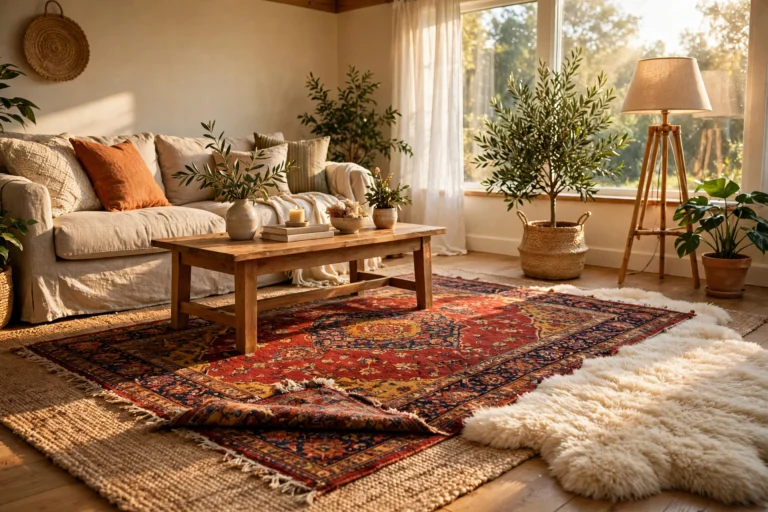
1. Layer a Small Pretty Rug Over a Big Cheap Base
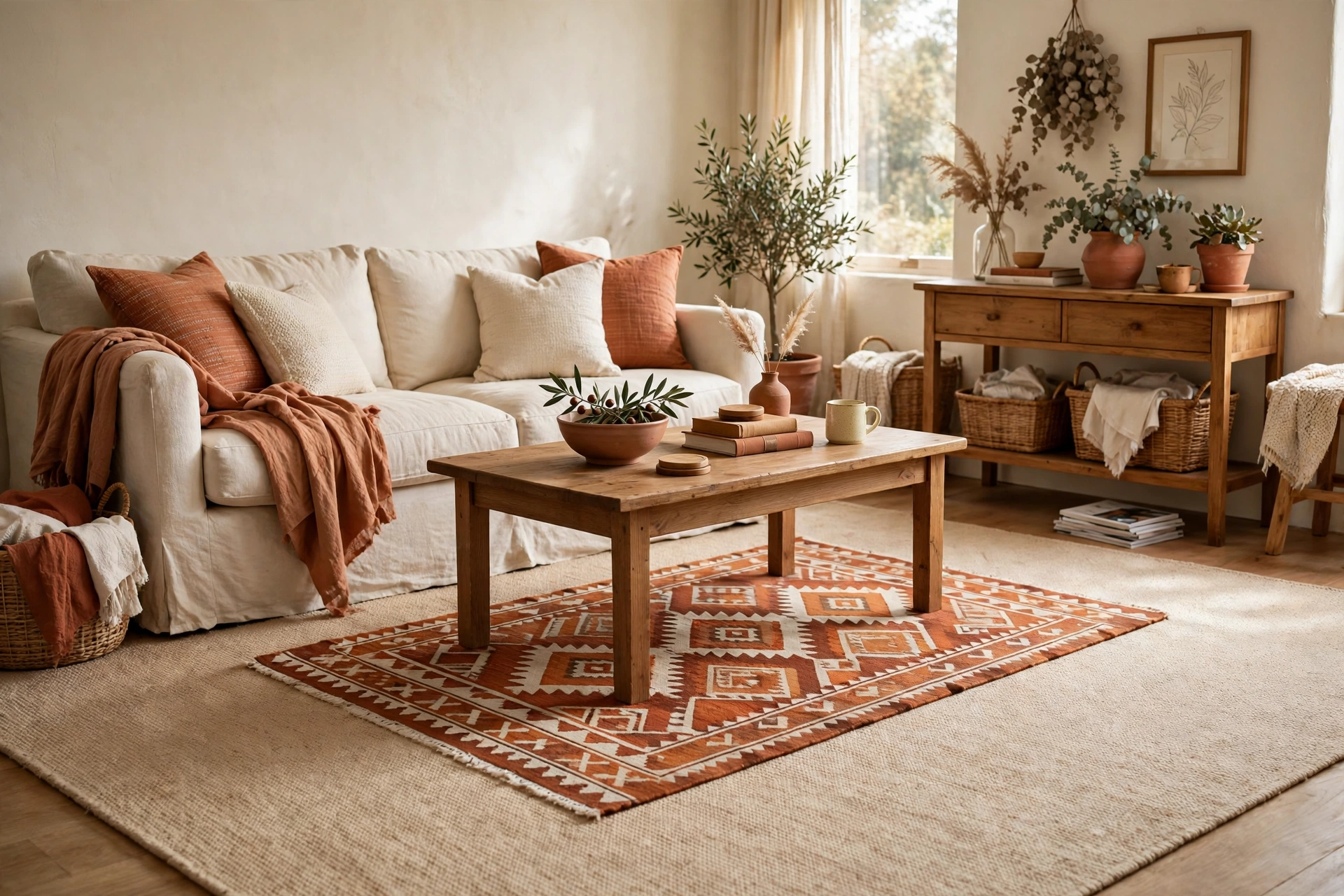
Start with coverage, then add character. A large, plain base rug in a natural or neutral material gives you the warmth and floor protection of a big rug without the big-rug price. At discount stores, a large base like this often lands around $30–$50, especially in a simple flat weave with no pattern to pay for.
Then spend your real money only where your eye actually lands: a small patterned or vintage-style rug layered on top, centred under the coffee table or at the foot of the bed. You get the finished, collected look of one large statement rug for far less, because most of the square footage was bought as cheaply as possible.
Budget tip: Buy the base one size larger than you think you need and keep the top rug small — extra plain coverage is cheap, extra patterned coverage is not.
2. Hunt Down a Thrifted Vintage Wool Rug
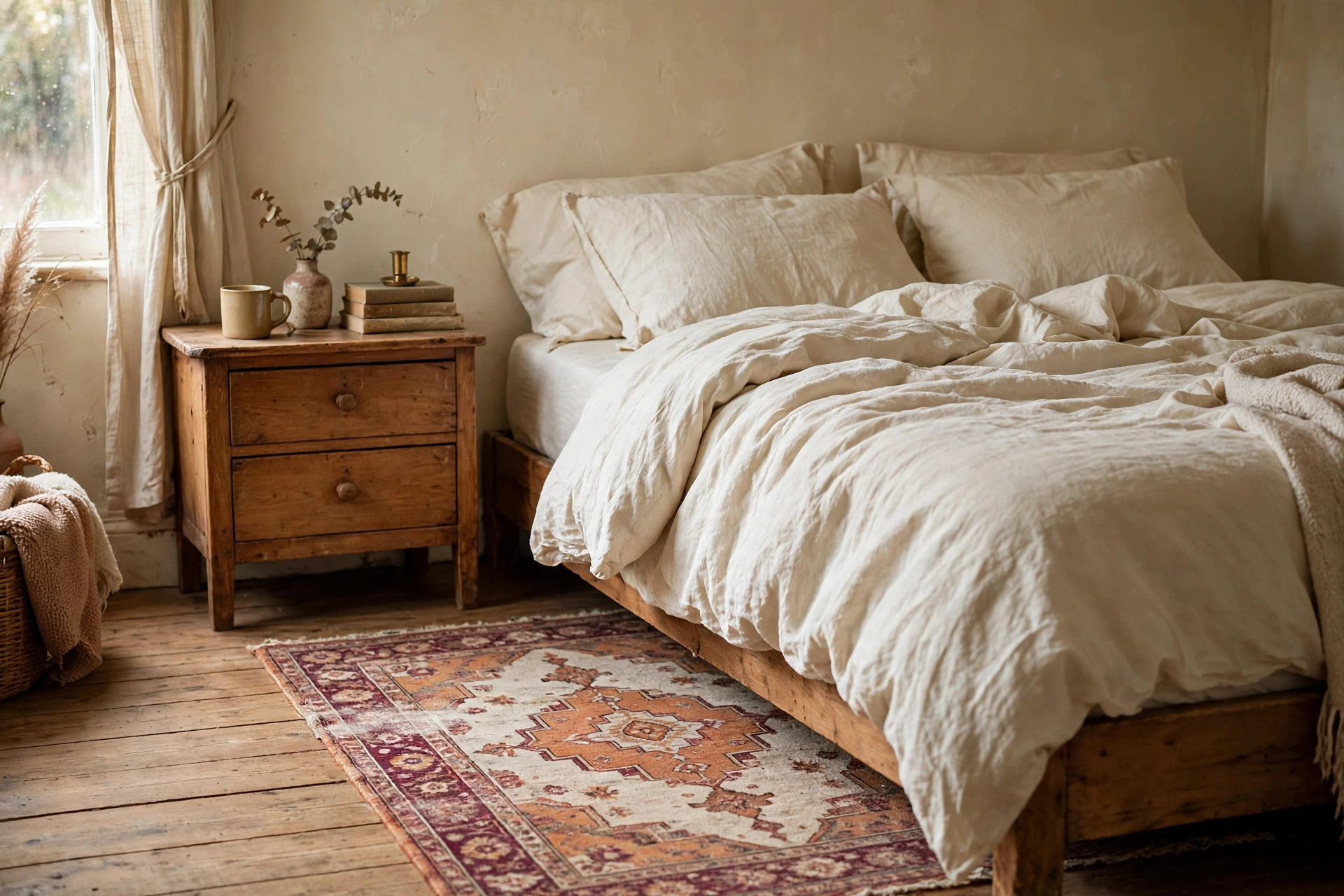
Thrift stores, Facebook Marketplace, estate sales and Habitat ReStores are full of rugs that were built to last and then simply went out of fashion in someone else’s home. Wool and Persian-style pieces turn up regularly for a fraction of their original retail price, and small vintage rugs sometimes go for $20 or less secondhand.
That matters because good wool can outlast several brand-new ultra-cheap synthetics. You are not just paying less today — you are buying years of use that a thin, low-cost new rug may never give you. Check listings often, move quickly on good ones, and stay flexible about exact colour.
Budget tip: Inspect before you pay — check the back and edges for moth damage, sniff for strong odours, and look for heavy stains — then set aside a little of your savings for one proper deep clean at the start.
3. Turn a Carpet Remnant Into a Custom Rug
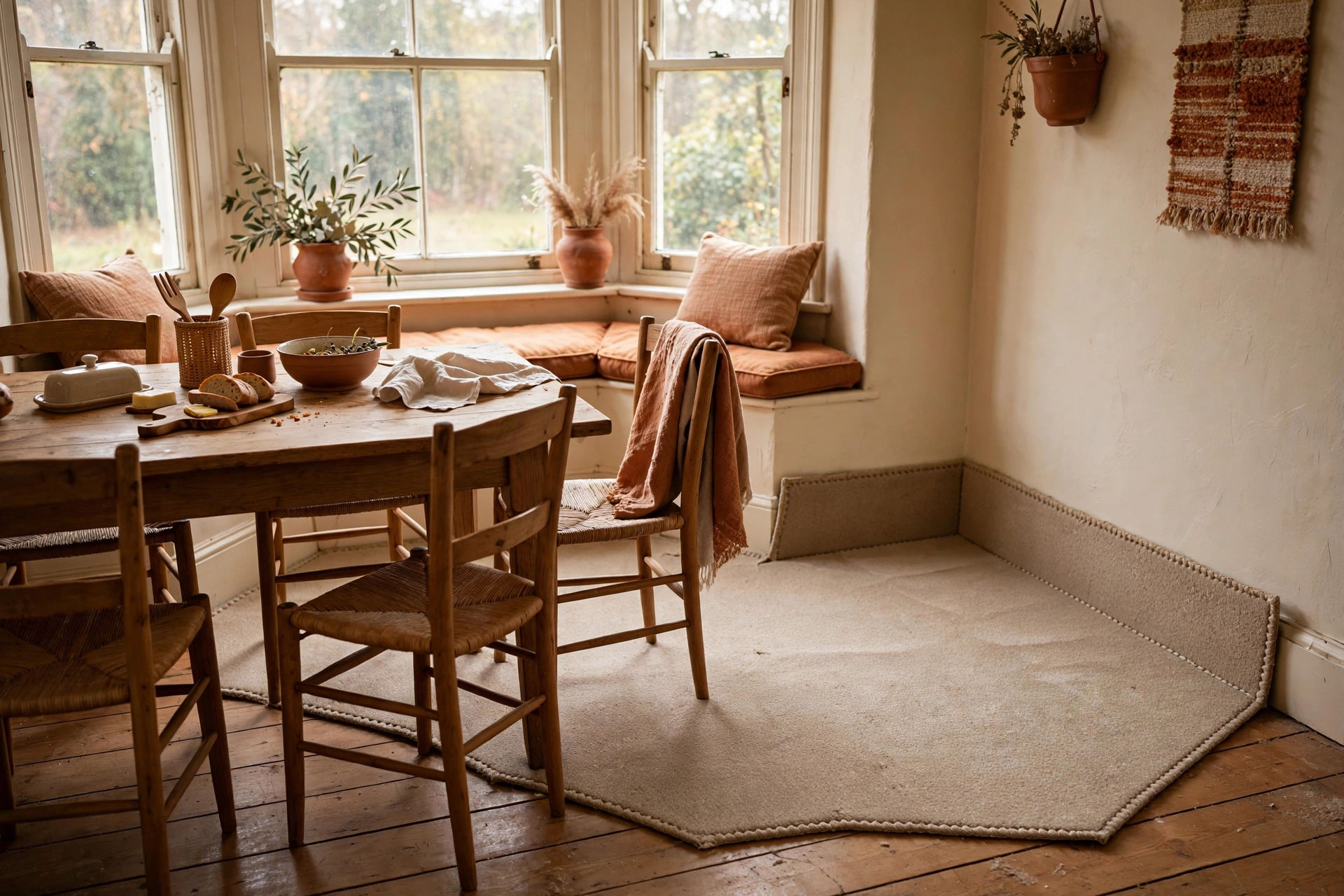
Carpet shops are left with roll-ends after bigger jobs, and those remnants are usually sold at a steep discount — often cited around 50% off, sometimes close to $1 per square foot. Because it is leftover stock, the shop would rather sell it cheaply than store it, and that is where your saving comes from.
A remnant can be cut to your exact size, which is gold in an odd-shaped room, under a dining table, or in a basement where standard rug sizes never quite fit. Have the edges bound or serged for a finished look, or use binding tape yourself on a straight-edged piece for a simpler DIY version.
Budget tip: Get the binding quote before you buy — professional binding can run about $4–$6 per linear foot, so smaller remnants are where the maths works best.
4. Build Your Rug From Carpet Tiles
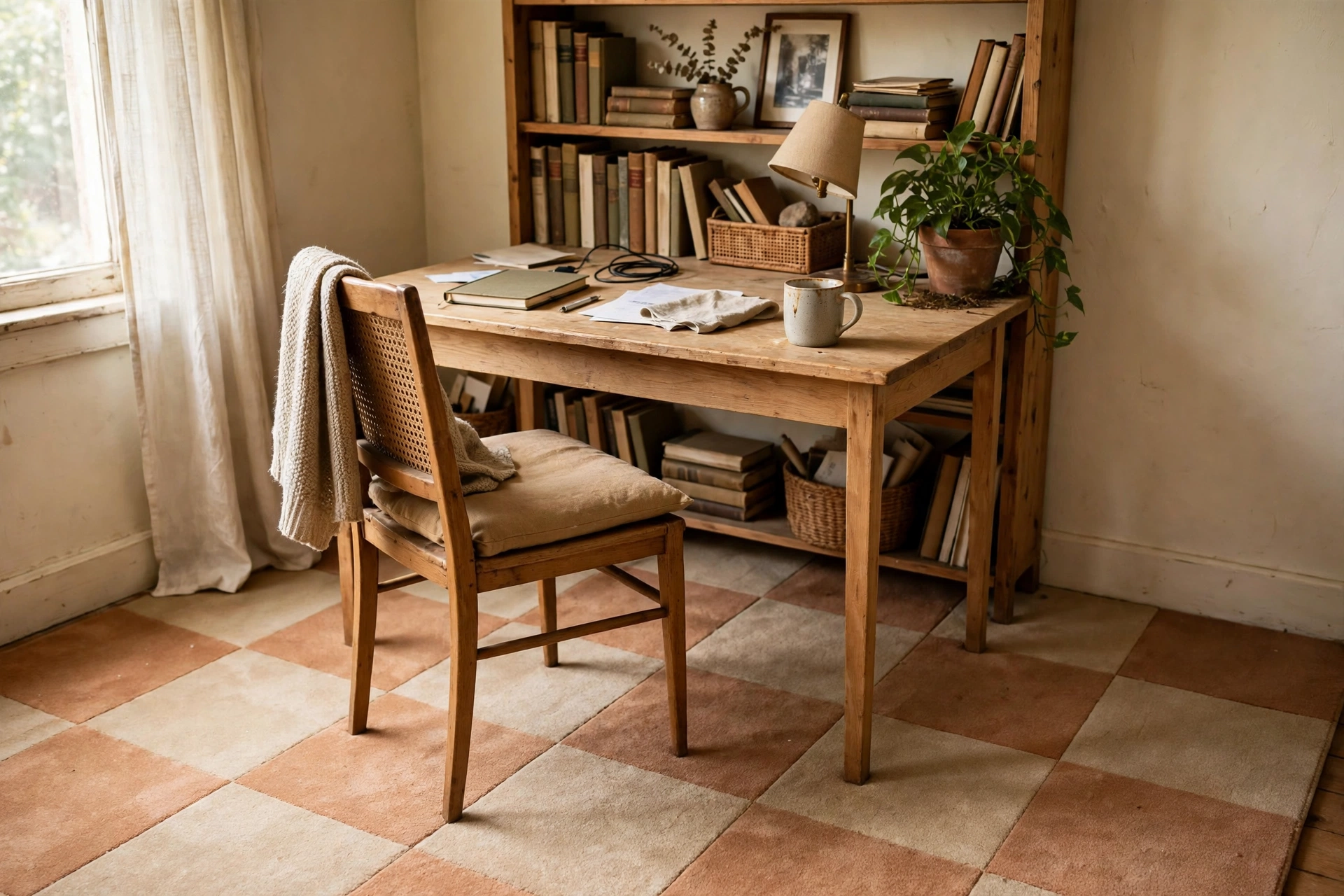
Carpet tiles let you buy a rug by the square foot instead of by the finished piece. Budget-to-mid tiles are often cited around $1–$6 per square foot, so you pay only for the area you actually cover — no paying for a full 8×10 when the space between your desk and the wall is all that needs softening.
You also save on fitting. Tiles lay down one at a time with no installer, no delivery of a bulky roll, and no special tools for a basic rectangle. Use one colour for a quiet look, or mix two tones in a simple alternating pattern if you find a clearance box.
Budget tip: Buy a few spare tiles from the same box while they are available — when one tile gets stained, you replace that tile instead of replacing the whole rug.
5. Use Runners Where a Full Rug Isn’t Needed
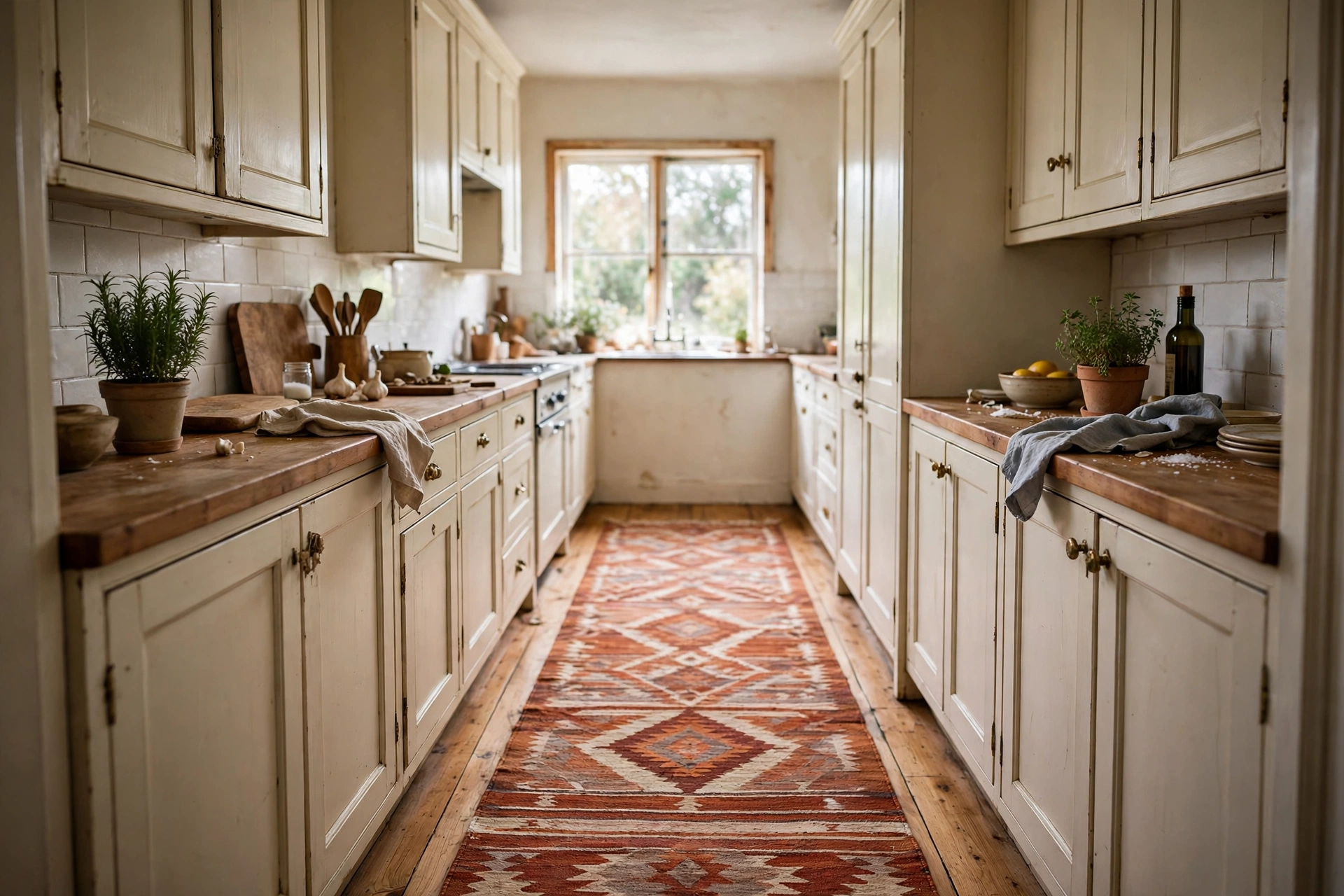
Not every cold floor needs a full rug. In a kitchen, hallway or entryway, your feet follow a narrow path, and a runner covers exactly that path for a fraction of the material — and a fraction of the cost — of a room-sized rug. A matched pair of runners beside a bed does the same job for your first steps in the morning.
There is a second saving hiding in the size. Small rugs are cheaper to wash, quicker to shake out, and easier to replace if one truly wears out. Washable runners are commonly cited around $15–$30, which makes it realistic to own one for the kitchen and one for the door.
Budget tip: Measure the walkway, not the room — if a runner leaves a border of floor on each side, that is enough, and you avoid paying for width nobody stands on.
6. Size Down on Purpose and Anchor With the Front Legs
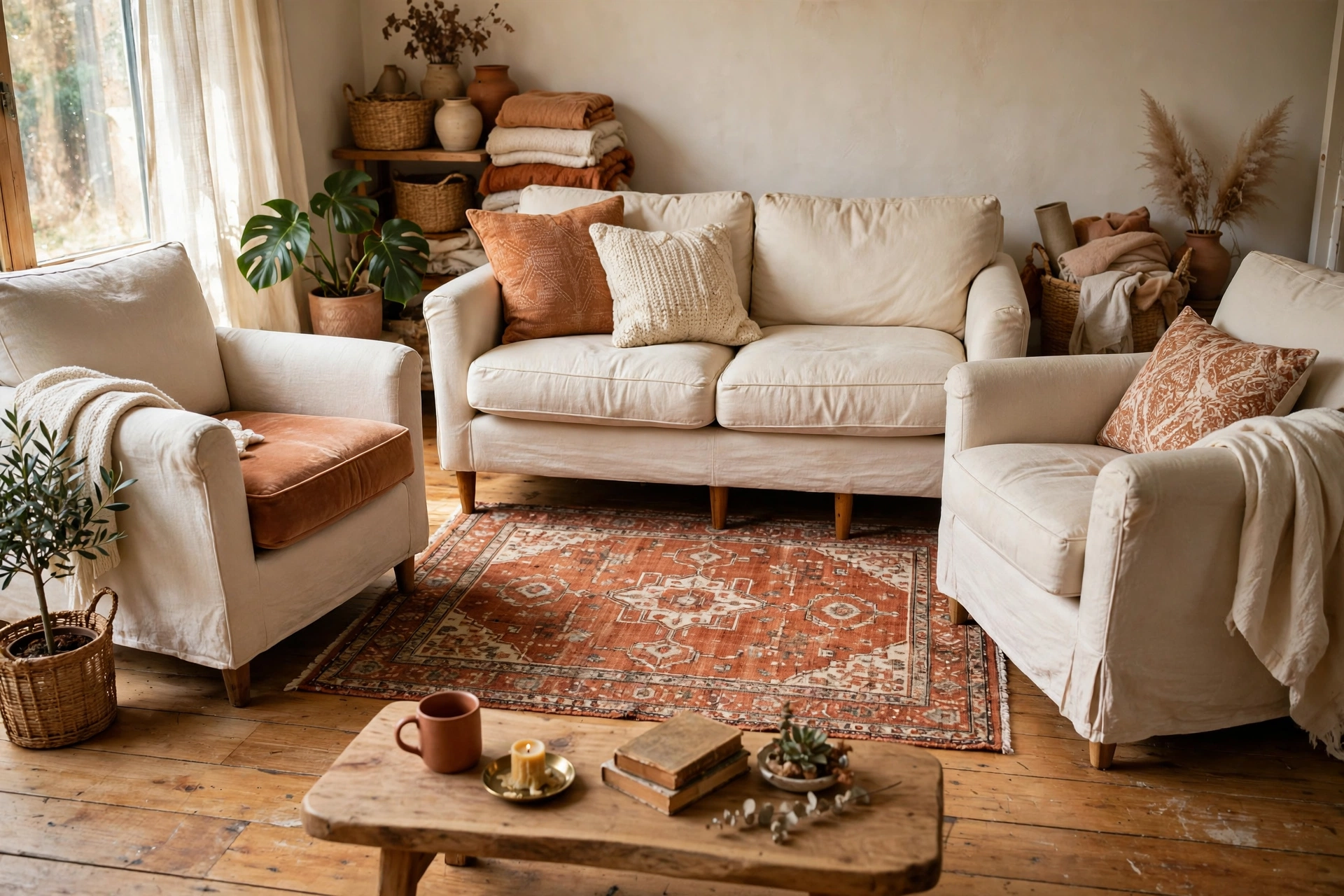
Rug prices do not creep up gently — they jump at every size step. An 8×10 or 9×12 can cost far more than the 5×7 or 6×9 next to it, even in the exact same design. Choosing the smaller size on purpose is one of the fastest ways to cut the bill without changing the look of the room very much.
The trick is placement. Slide the smaller rug under the front legs of your sofa and chairs, and the furniture anchors it so the seating area still reads as one connected group. Under a bed, position the rug so it covers the visible landing zones on each side, not the hidden middle nobody sees or stands on.
Budget tip: Tape the smaller outline on your floor and live with it for a day — if your feet and furniture legs stay inside it, you do not need the next size up.
7. Pick a Washable Rug and Skip the Cleaning Bills
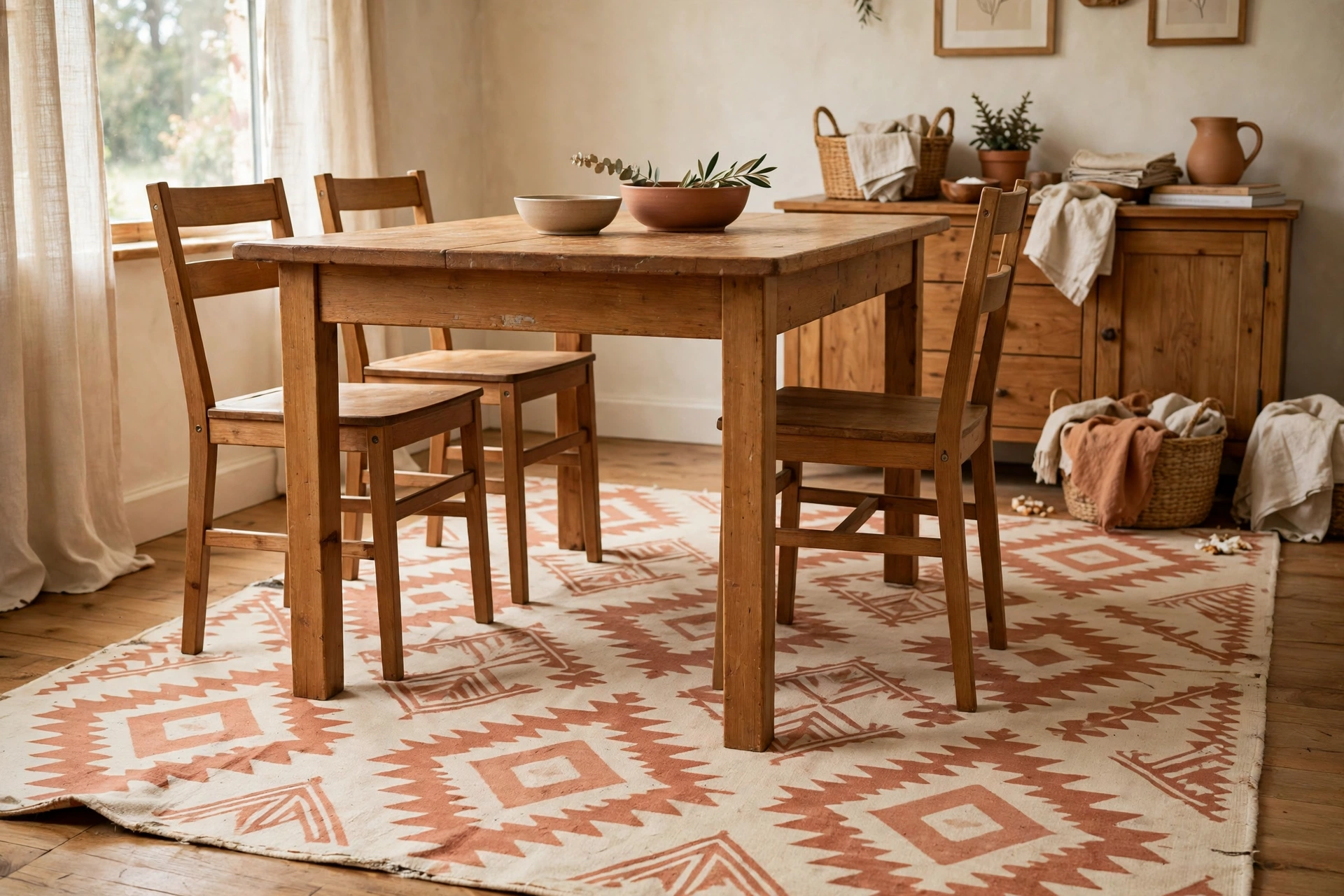
Some rugs are cheap to buy and expensive to own. One professional clean, or one pet accident or juice spill that never quite comes out, and a bargain rug becomes a replacement rug. Low-pile machine-washable synthetics, commonly cited around $30–$150, save their money after you bring them home.
When a mess happens, you wash the rug instead of paying for cleaning or shopping for a new one. That makes this style especially practical under a dining table, inside an entryway, or anywhere kids and pets actually live. Low pile also helps here — it traps less dirt and fits in a machine more easily than a thick rug.
Budget tip: Before ordering, check the rug’s folded size against your washing machine — a washable rug only saves money if you can truly wash it at home or cheaply nearby.
8. Rotate the Rugs You Already Own (Cost: $0)
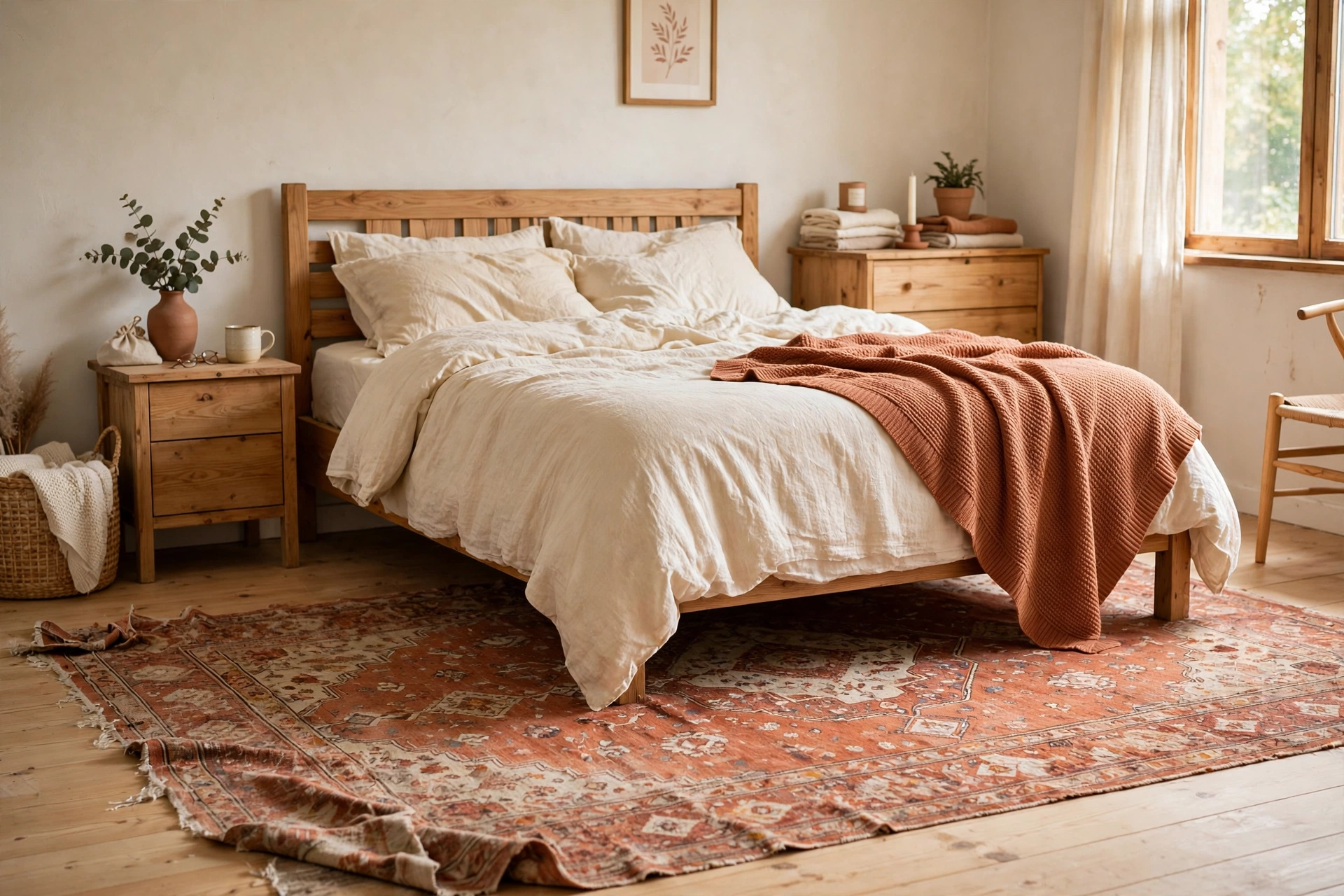
The cheapest rug is the one already in your house. If your bedroom rug feels tired and your living room rug feels stale, swap them before you buy anything. A rug reads completely differently against new furniture, new light and a new wall colour, so the swap can give both rooms a small refresh for exactly nothing.
Rotation also protects what you own. Turning any rug 180 degrees from time to time spreads sunlight and foot traffic across both ends, instead of letting one edge fade and flatten while the other stays new. Even wear means a longer life, and a longer life means buying less often.
Budget tip: Do this first, then wait a week — if a room still feels cold after the swap, you will know exactly which single rug is actually worth spending on.
9. Paint Your Own Pattern on a Cheap Flatweave
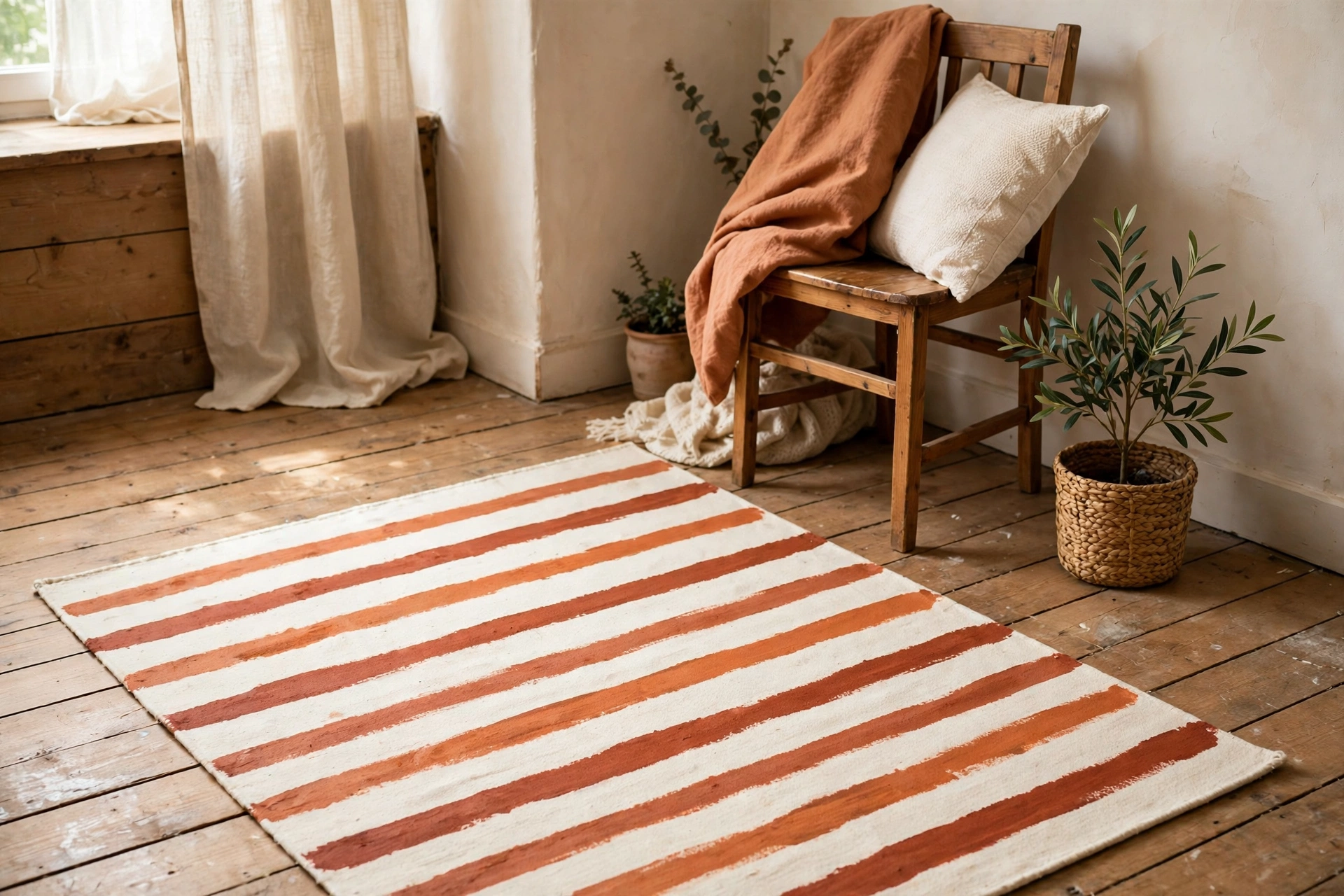
A plain rug is cheap partly because nobody paid a designer. If you add the pattern yourself, you keep the low price and lose the plain look. Start with an inexpensive flatweave or a hardware-store canvas drop cloth — a 6×9 drop cloth is around $10 — and stencil or tape off simple stripes or a basic geometric design.
Finished painted-cloth rug projects are often cited under $20–$30 including supplies, which is hard for any store-bought patterned rug to match. Keep the design simple and the colours close to colours already in the room, and the result looks planned rather than homemade.
Budget tip: Finish raw edges with iron-on hem or binding tape instead of sewing — it costs little, keeps the cloth from fraying, and makes the piece read as a rug, not a drop cloth.
Before You Buy: 5 Budget Rules That Save Regret
- Time it — deepest discounts recur in January and July clearance and holiday weekends; discounters routinely run 60–80%-off events, but check whether a clearance rug is final-sale (returning a big rug can cost more than you saved).
- Shop clearance first — shop clearance, open-box, returns and discontinued lines first, and ask local carpet shops for their remnant corner; stay flexible on exact size/color.
- Stick to standard sizes — standard sizes (5×7, 8×10, standard runners) are cheapest per square foot; custom, round and oversized carry a premium. Tape the outline on the floor before ordering.
- Always budget a pad — budget roughly $15–$40 for a pad: grip, cushion, floor protection (deposit-friendly for renters) and longer rug life.
- Match fiber to the mess — polypropylene/polyester for stain-prone high-traffic spots; jute/sisal only in dry, low-spill areas (cheap and hard-wearing but hard to clean).
Frequently Asked Questions
Are cheap rugs worth it — how long will a budget rug last?
With a pad underneath and basic care — regular vacuuming, prompt spot cleaning and a rotation now and then — owners commonly get 3–5 years of daily use from a budget synthetic rug. Washable synthetics are often quoted around 3–7 years, which is why cost-per-year matters more than the ticket price.
Can you really machine-wash a large rug at home?
Yes, if it fits. A smaller washable rug goes in most home machines, while an 8×10 usually needs a large-capacity machine of about 4.5 cu ft or a trip to the laundromat. Wash cold, skip harsh detergents, and air-dry it flat or over a rail — dryer heat can damage backing and fibres.
Do cheap rugs still need a rug pad?
Usually, yes, on hard floors — unless the rug has proper built-in non-slip backing. A basic pad is roughly $15–$25 and adds grip so the rug stays put, a little cushion underfoot, protection for the floor beneath, and extra life for the rug itself. It is a small cost that protects the bigger one.
Can I get a decent large rug for under $150?
Yes, in low-pile synthetics, especially during a sale — under-$150 8×10 rugs are common in budget roundups. The trade-off is feel: expect a thinner, printed design rather than a thick, plush pile. In a living room or under a dining table, most people find that an easy trade for the price.
The Bottom Line
Warm floors are not really about how much you spend. They are about covering the right square footage, in the right material, from the right source — a remnant cut to fit, a thrifted wool rug with years left in it, a runner where a full rug was never needed, or a rug you already own moved to a new room. Start with the free and nearly free options, size honestly, and count the full cost before you pay, and a small budget can still make a whole home feel softer, quieter and more settled.
Save this list for your next room refresh, and follow Decor Velora for 3 fresh home decor ideas every day — rugs, small apartment decor, mirrors, curtains and cozy room makeovers.