15 Simple Rug Ideas That Make Any Room Look Pulled Together
Most rooms that feel unfinished are not missing style. They are missing connection. The sofa sits in one spot, the chairs sit in another, and everything in between feels like it is drifting. A rug in the wrong size, or pushed into the wrong place, makes that drifting feeling worse, even when the rug itself is lovely.
The good news is that you rarely need a new look to fix it. You need better placement, a size that actually reaches the furniture, and one calm surface underfoot. Many of these ideas work with a rug you already own, moved a few inches. The rest will help you buy once, correctly.
The 3 rules behind almost every idea below:
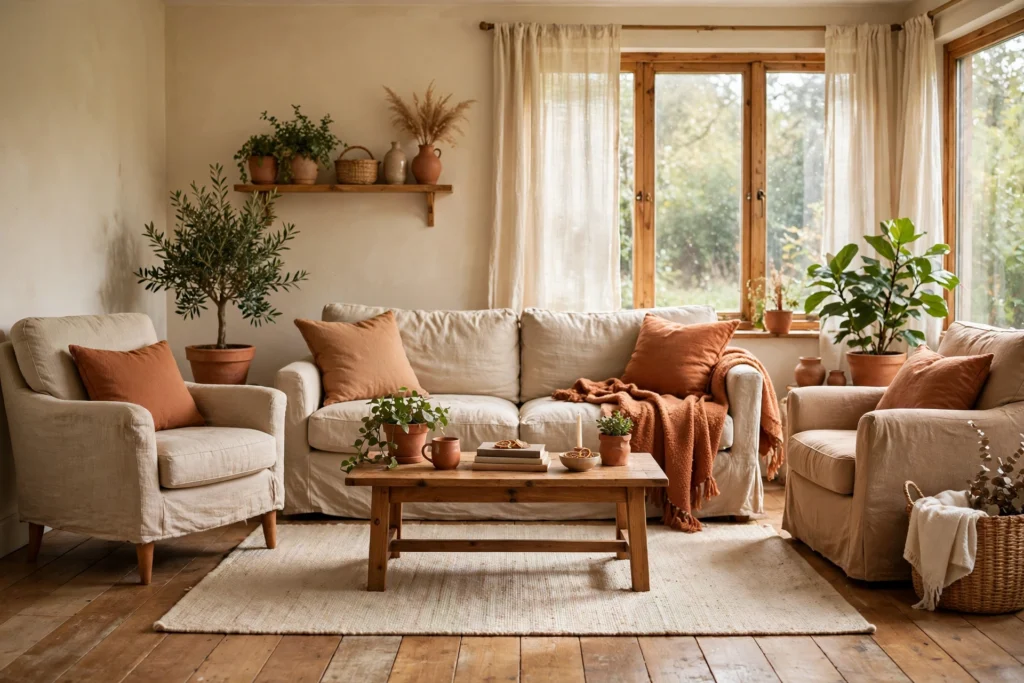
- Anchor rule. A rug must touch the furniture – at least the front legs of every main seat sit on it, a few inches in. A rug that touches nothing always looks like it is floating.
- Border rule. Never wall-to-wall, never jammed into a corner. Keep a roughly even border of bare floor (about 12-18 inches, 8-12 in small rooms) and centre the rug on the furniture, not the room.
- Tape rule. Mark the size on the floor with painter’s tape and live with it for a day before buying. Between two sizes, size up – too small is the number one rug mistake.
1. Put the Front Legs On and Call It Done
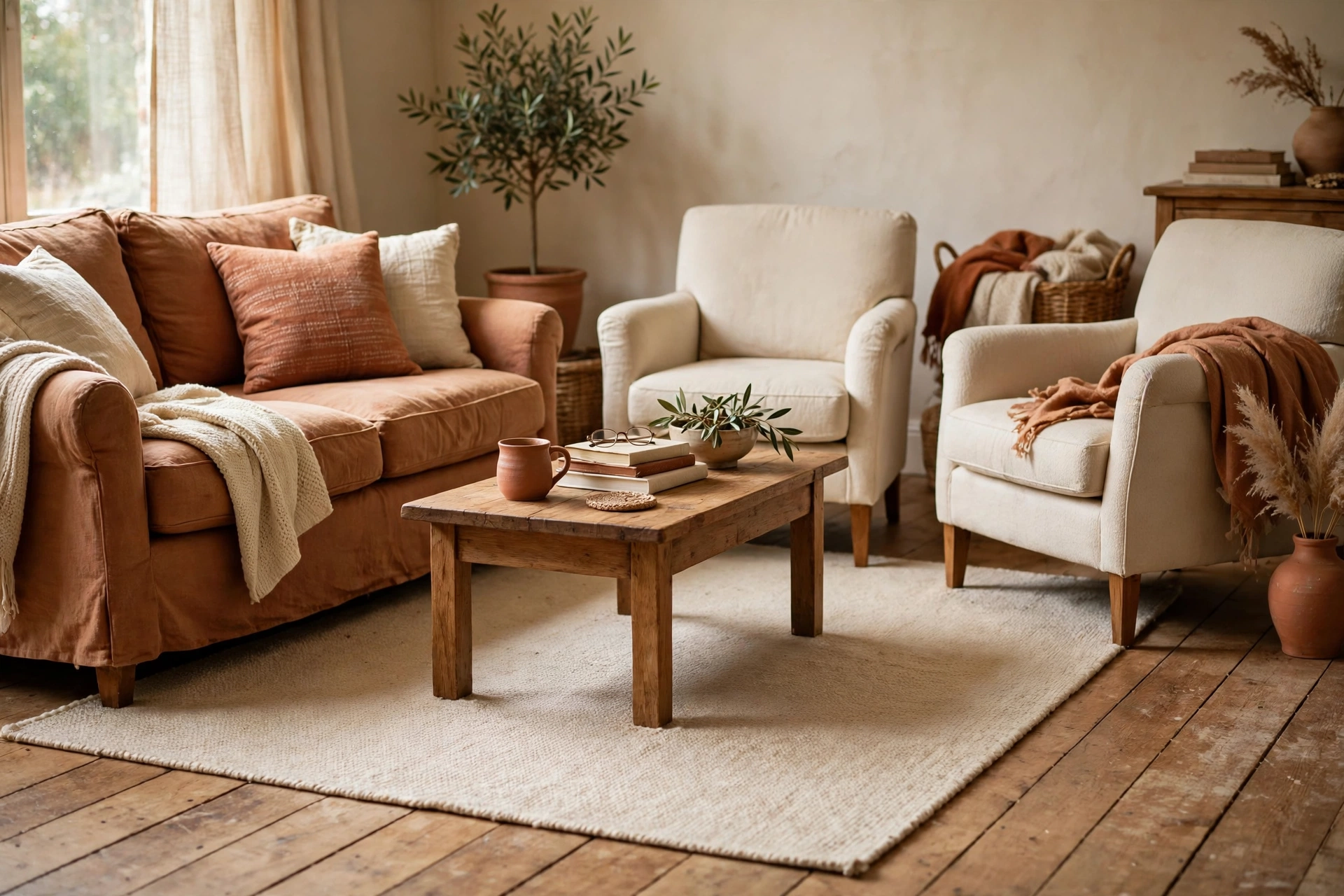
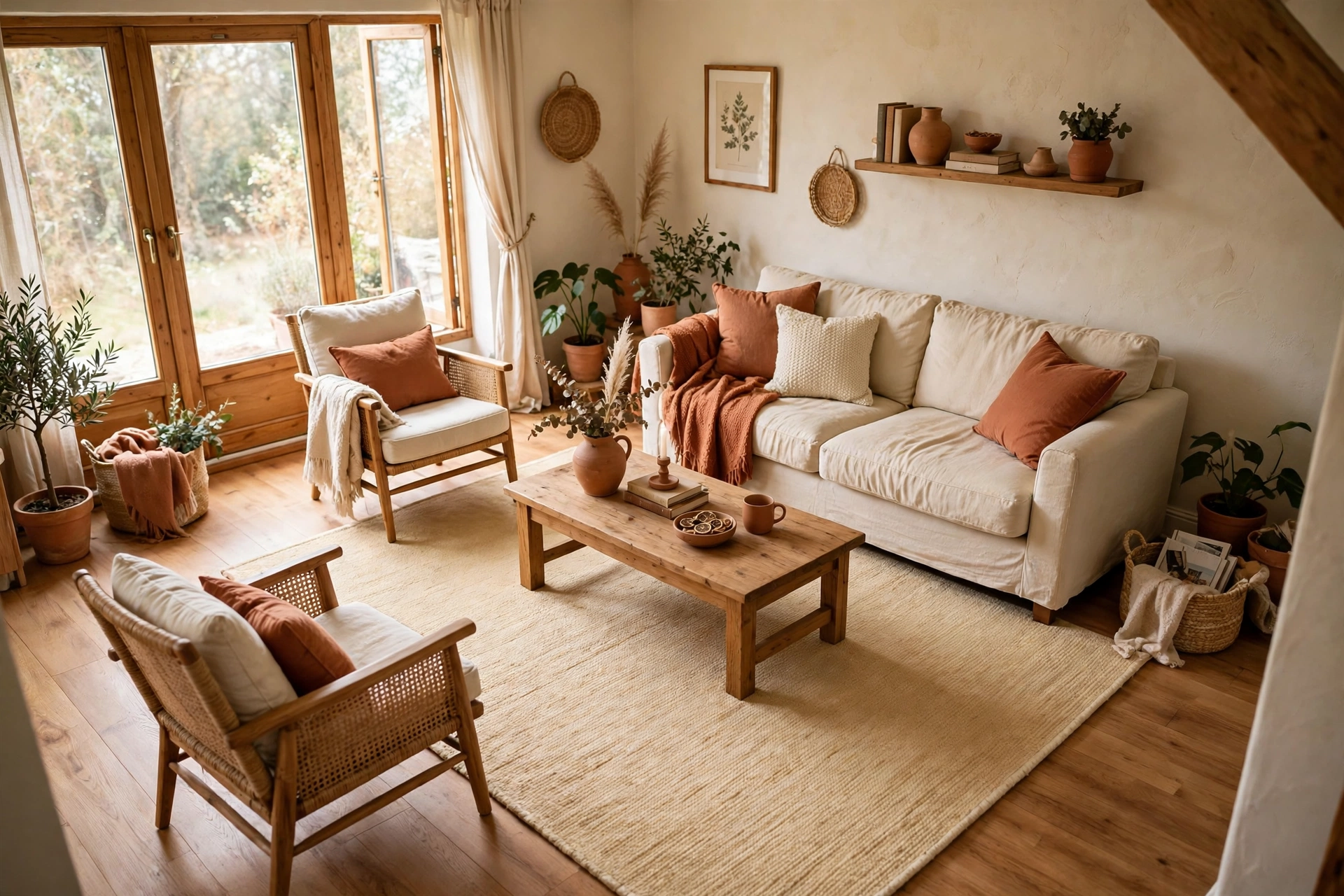
If you change nothing else, change this. Slide your rug under the front legs of your sofa and chairs so every main seat is connected to the same surface. That small overlap, just a few inches, tells your eye that these pieces belong together. A rug sitting alone in the middle of the floor, touching nothing, will always look like an afterthought.
You do not need a rug large enough for all four legs of everything. Front legs on is the standard in most living rooms, and it lets a modest 5×8 or 8×10 do the job of a much bigger rug. Push the rug far enough under the sofa that the legs sit securely, not right on the edge where they can slip off.
Styling tip: After sliding the rug in, step back and check that the front legs of every seat are on it by roughly the same amount.
2. Choose a Rug Wider Than Your Sofa
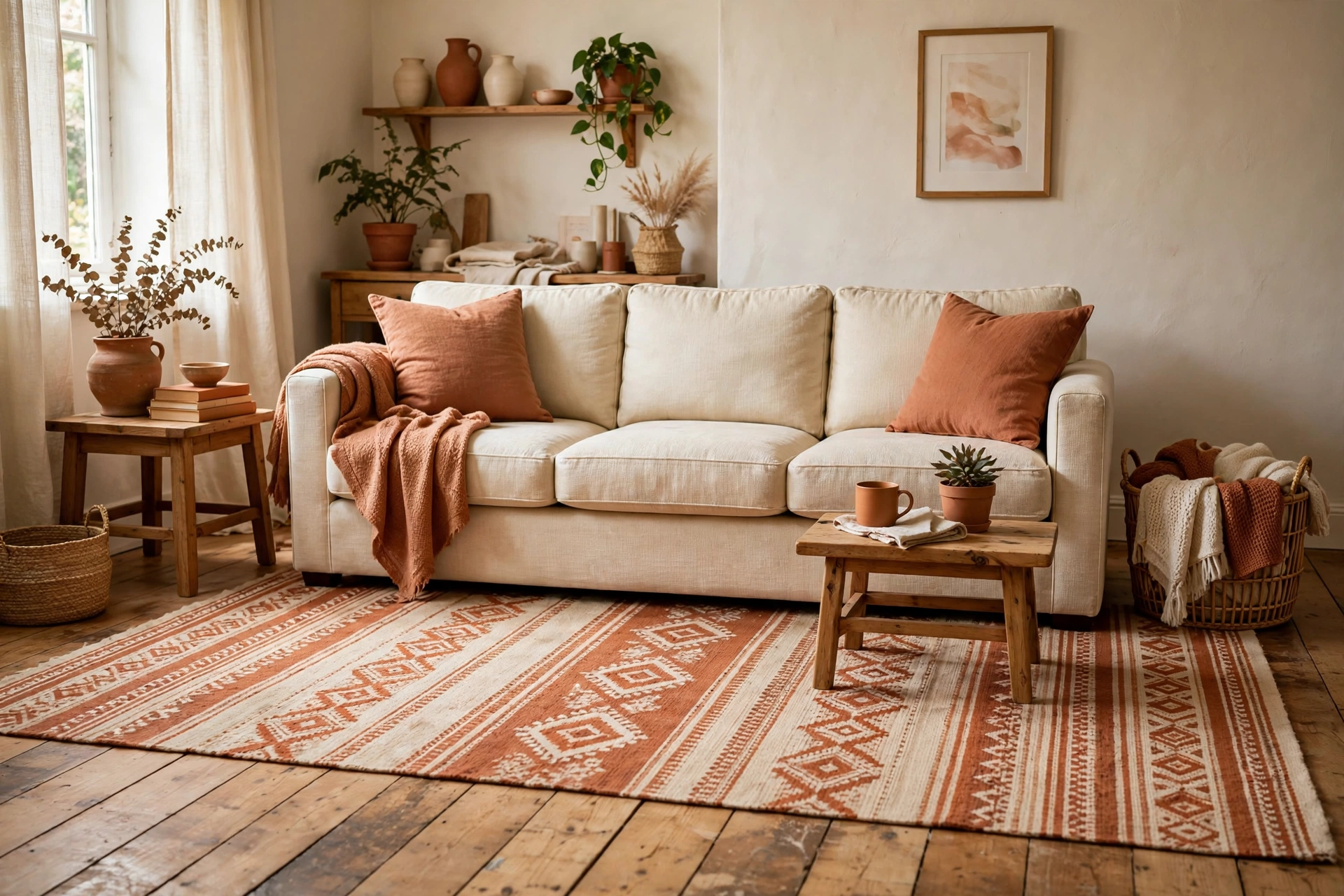
A rug should run about 6 to 12 inches past each end of your sofa. When the rug is narrower than the sofa, the whole seating area looks pinched, as if the furniture is squeezing onto a small island.
Start with your sofa measurement. A standard three-seat sofa is around 84 inches long, so look for a rug that is at least 96 to 108 inches wide in that direction. In practice, that often means choosing the 8×10 over the 5×8, even in a room that does not feel especially large at first glance.
Styling tip: Measure your sofa before you shop, write the number down, and add at least 12 inches to it before you start comparing sizes.
3. Leave an Even Border of Floor Around the Rug
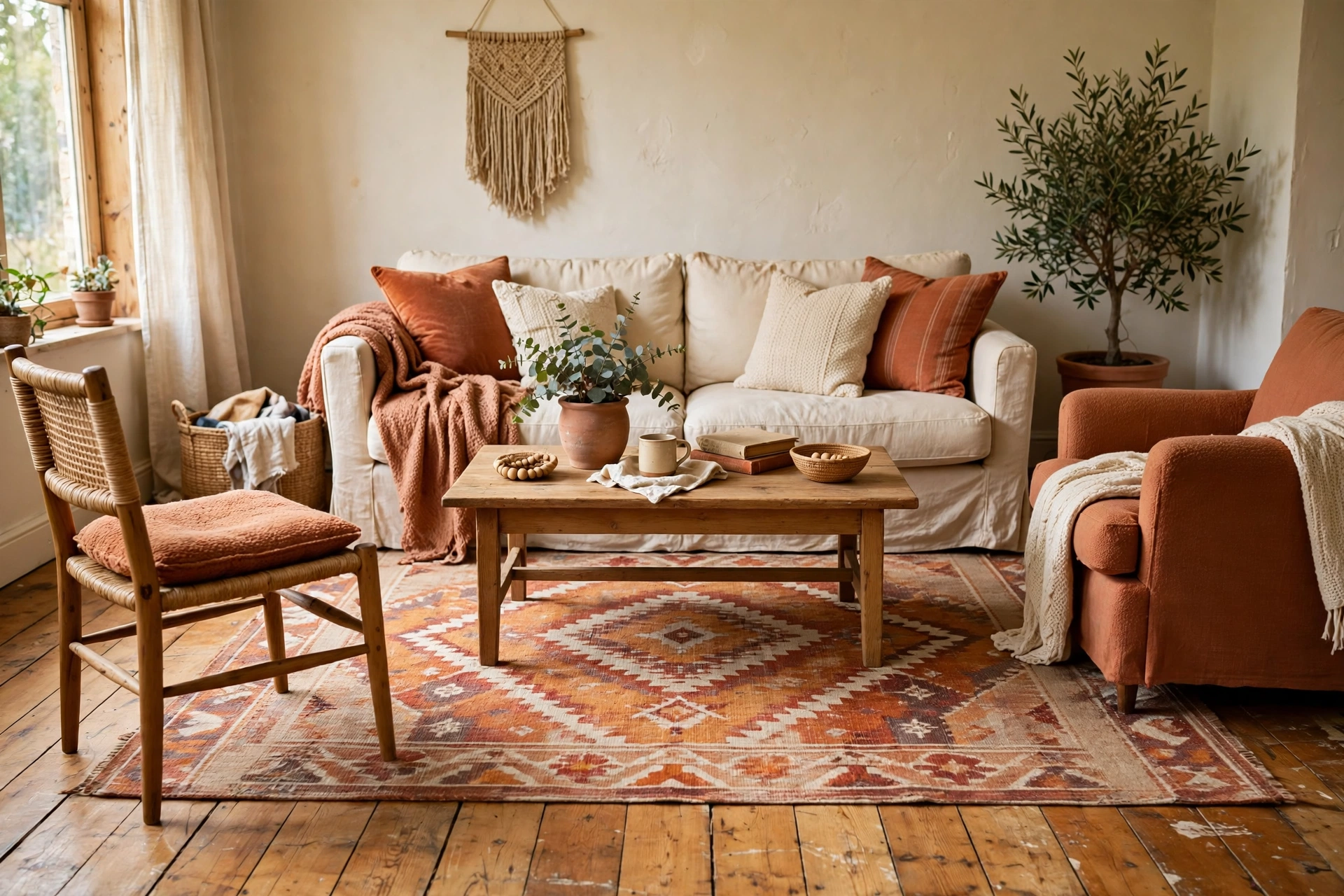
A rug looks most finished when a roughly even frame of bare floor shows around it. Aim for about 12 to 18 inches in a regular room, or 8 to 12 inches in a small one. That border is not wasted space. It is what makes the rug look intentional, like a picture inside a frame, instead of a piece of carpet that almost fit.
Try to centre the rug on your furniture grouping rather than on the room itself. Rooms are rarely perfectly symmetrical. If the border is a little uneven in one corner but the rug sits squarely under the seating, it will still read as tidy and calm.
Styling tip: Use painter’s tape to mark the border first, then adjust the tape until the visible floor looks even from where you enter the room.
4. Use One Big Rug Instead of Several Small Ones
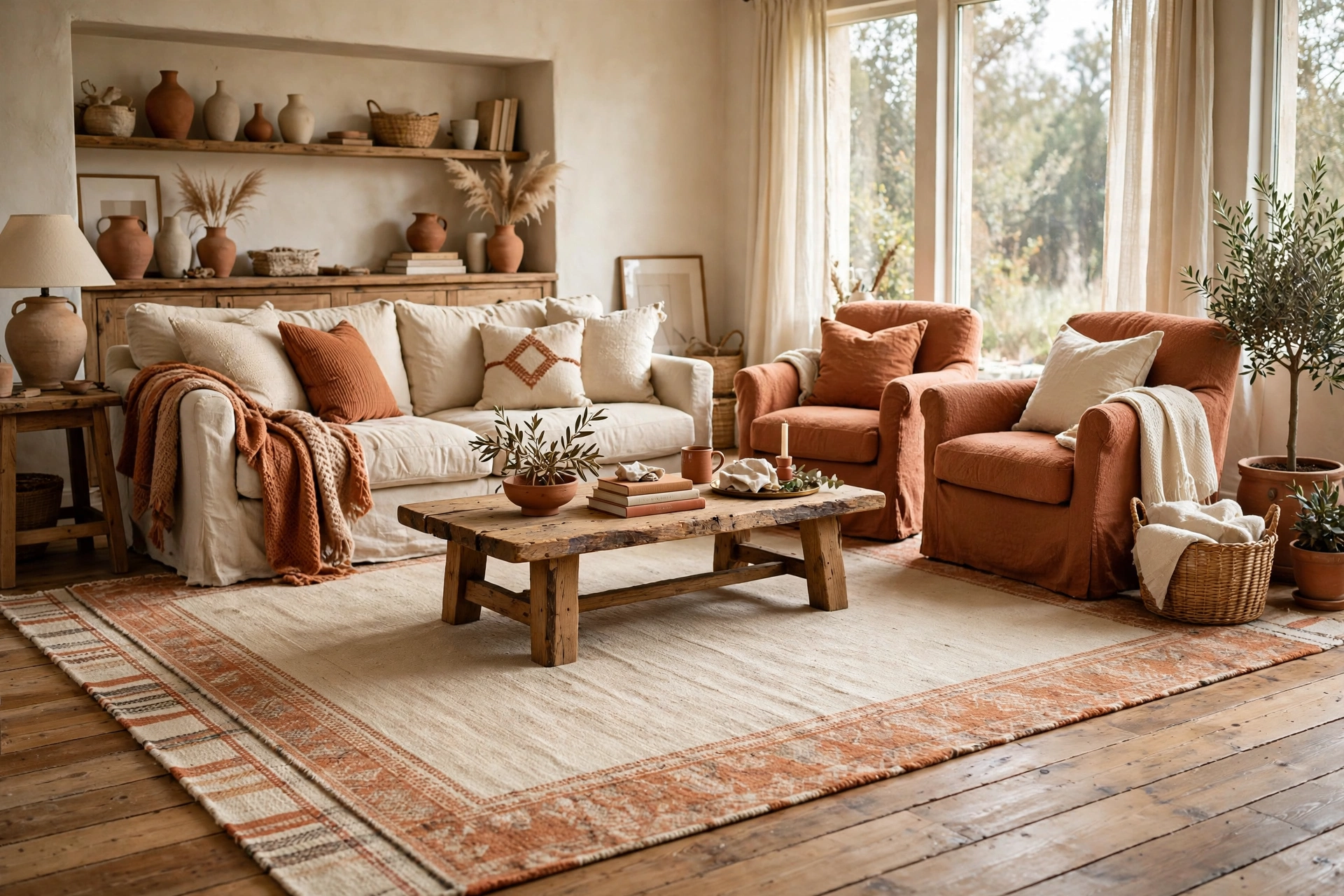
Several small rugs scattered around a room chop the floor into pieces. Your eye jumps from patch to patch, and even a clean room can feel busy and unsettled. One larger rug does the opposite. It gives you a single calm surface, and the furniture on top of it instantly reads as one group with one clear purpose.
This is especially true in living and family rooms where a small rug under the coffee table, another by a chair, and a mat by the door compete with each other. Replace that mix with one right-sized rug under the main seating.
Styling tip: If you are between sizes for one big rug, size up. Extra floor coverage under furniture is far less noticeable than a rug that falls short.
5. Give Every Zone Its Own Rug in an Open-Plan Room
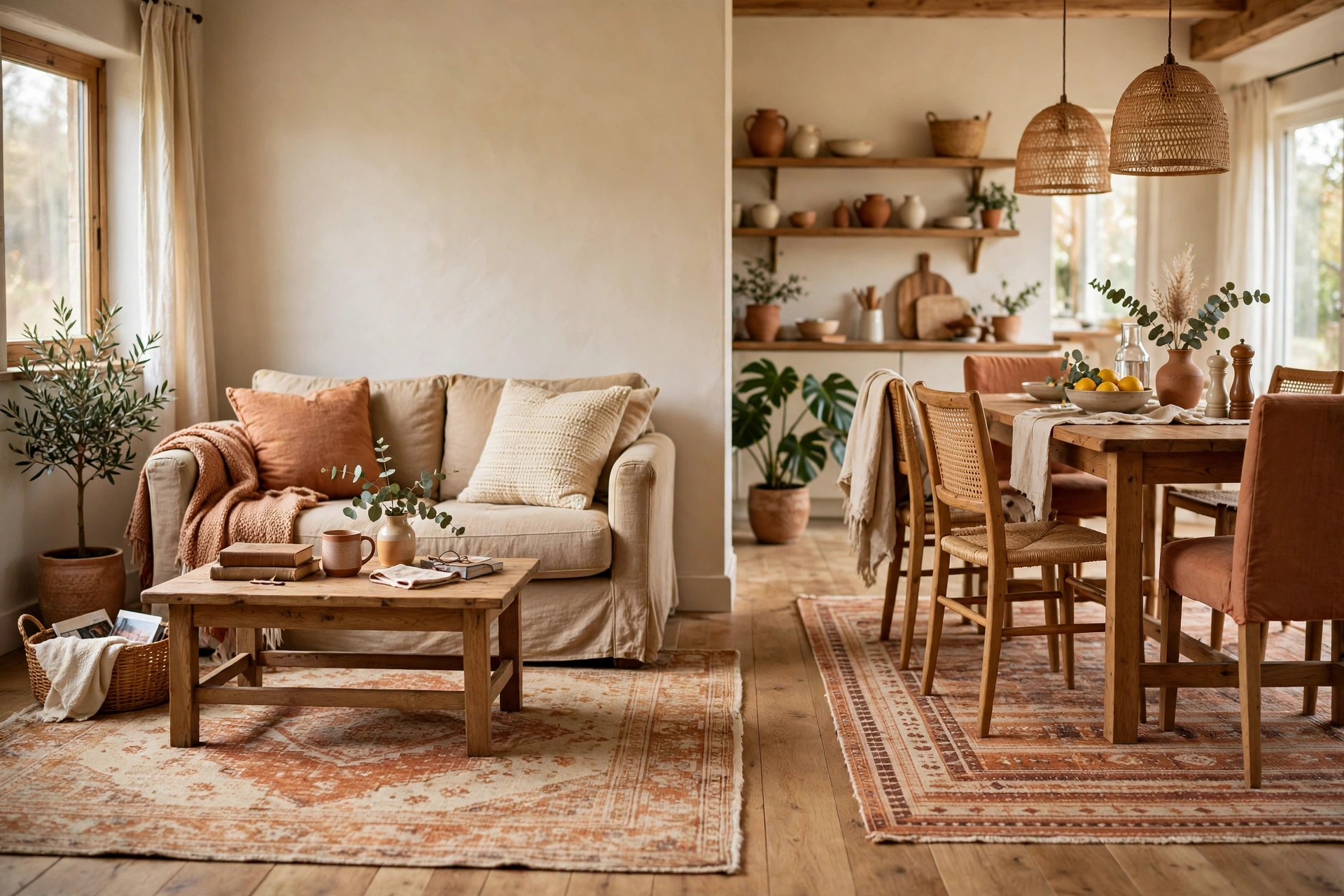
In an open-plan room or studio, a rug can do the job of a wall without blocking light or space. Put one rug under your seating area and a second rug under your dining table, and the room suddenly has two clear zones. You can feel where living ends and eating begins, even though nothing physical stands between them.
Keep the two rugs in the same general tone family so they feel related, but do not feel you must buy an exact matching set. Leave clear floor between them, at least a foot or two if you have it, so each zone has its own edge.
Styling tip: Tape out both rug sizes at once before buying, so you can check the walkway between zones stays comfortable and clear.
6. Size the Dining Rug for Pulled-Out Chairs
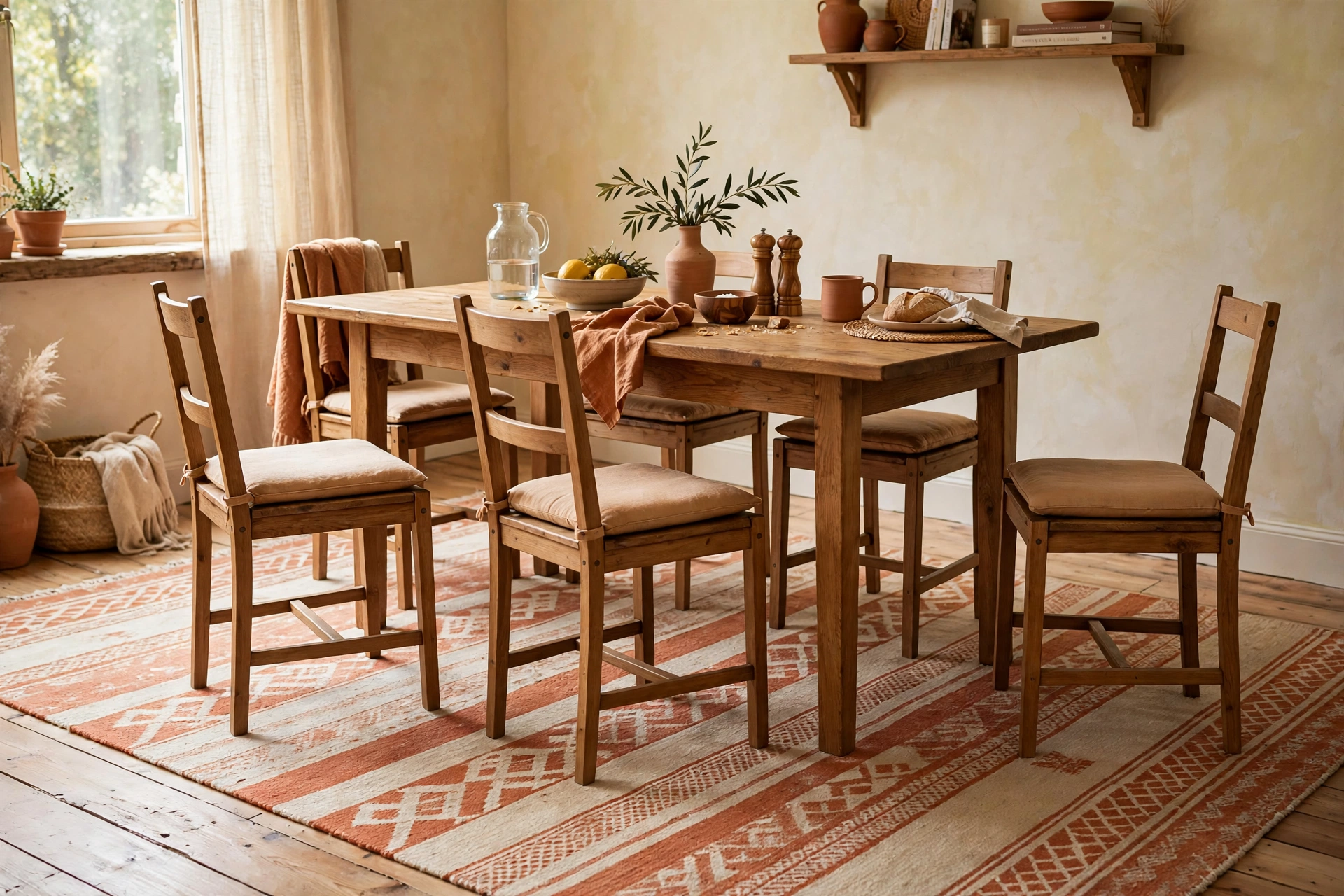
A dining rug is too small if chair legs fall off the edge when someone sits down. You want the rug to extend about 24 to 30 inches beyond the table on all sides, so a pulled-out chair still sits fully on the rug. That one measurement prevents the wobbling, catching feeling of chairs half on and half off.
Choose a low-pile or flatweave style here. Chairs need to slide in and out without dragging, and crumbs are easier to shake or vacuum from a flat surface. Add your table’s length and width, plus 48 to 60 inches total, and you will land close to the right standard size for most tables.
Styling tip: Sit in each chair and pull it out as you normally would while the tape outline is down, not just by measuring the table alone.
7. Slide the Bedroom Rug Under the Lower Two-Thirds of the Bed
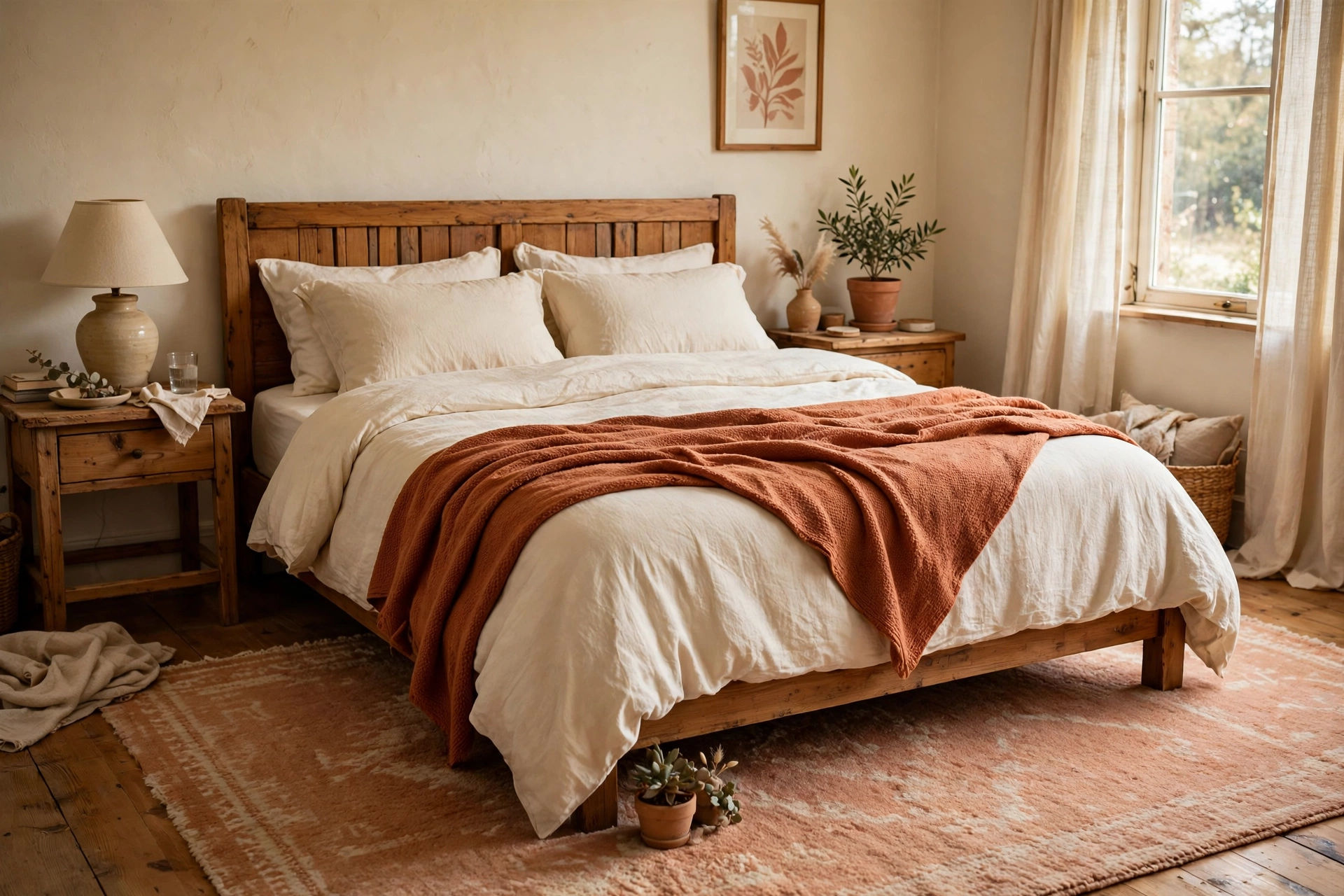
For a simple, tidy bedroom, slide the rug under the lower two-thirds of the bed and stop it before the nightstands. Your feet land on something soft when you get up, there is a generous soft area at the foot, and the nightstands stay on the floor where they are easier to move and clean around.
As a starting point, an 8×10 usually works well under a queen bed, and a 9×12 suits most king beds. You are looking for at least 18 inches of rug showing on each side, and a similar amount at the foot.
Styling tip: Center the rug on the bed, not the wall, and check from the doorway that the same amount shows on both sides.
8. Swap the Big Bedroom Rug for Two Bedside Runners
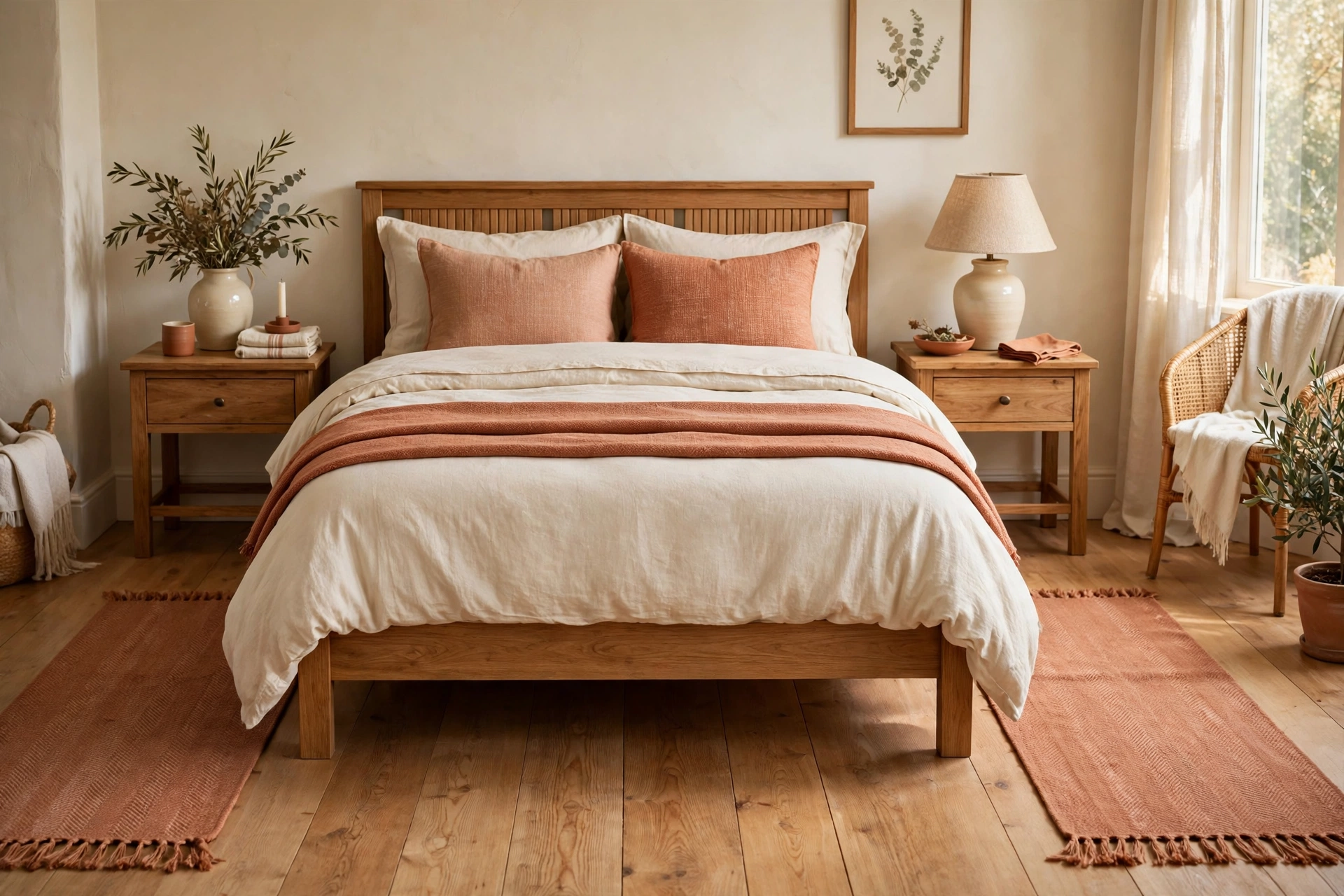
If a large bedroom rug feels like too much lifting, cost, or commitment, try two matching runners, one on each side of the bed. You get the same soft first step in the morning, the same tidy symmetrical look, and none of the struggle of getting a heavy rug under a heavy bed frame.
Runners are also easier to shake out, wash, or replace one at a time, which makes this a practical choice for rentals and busy households. Choose runners long enough to cover most of the side of the bed, so they look planned rather than like small mats placed by accident. Matching pairs keep the look calm and even.
Styling tip: Leave a few inches of floor between the runner and the bed frame, and line up the ends so both sides finish at the same point.
9. Centre a Flatweave Runner in the Hallway
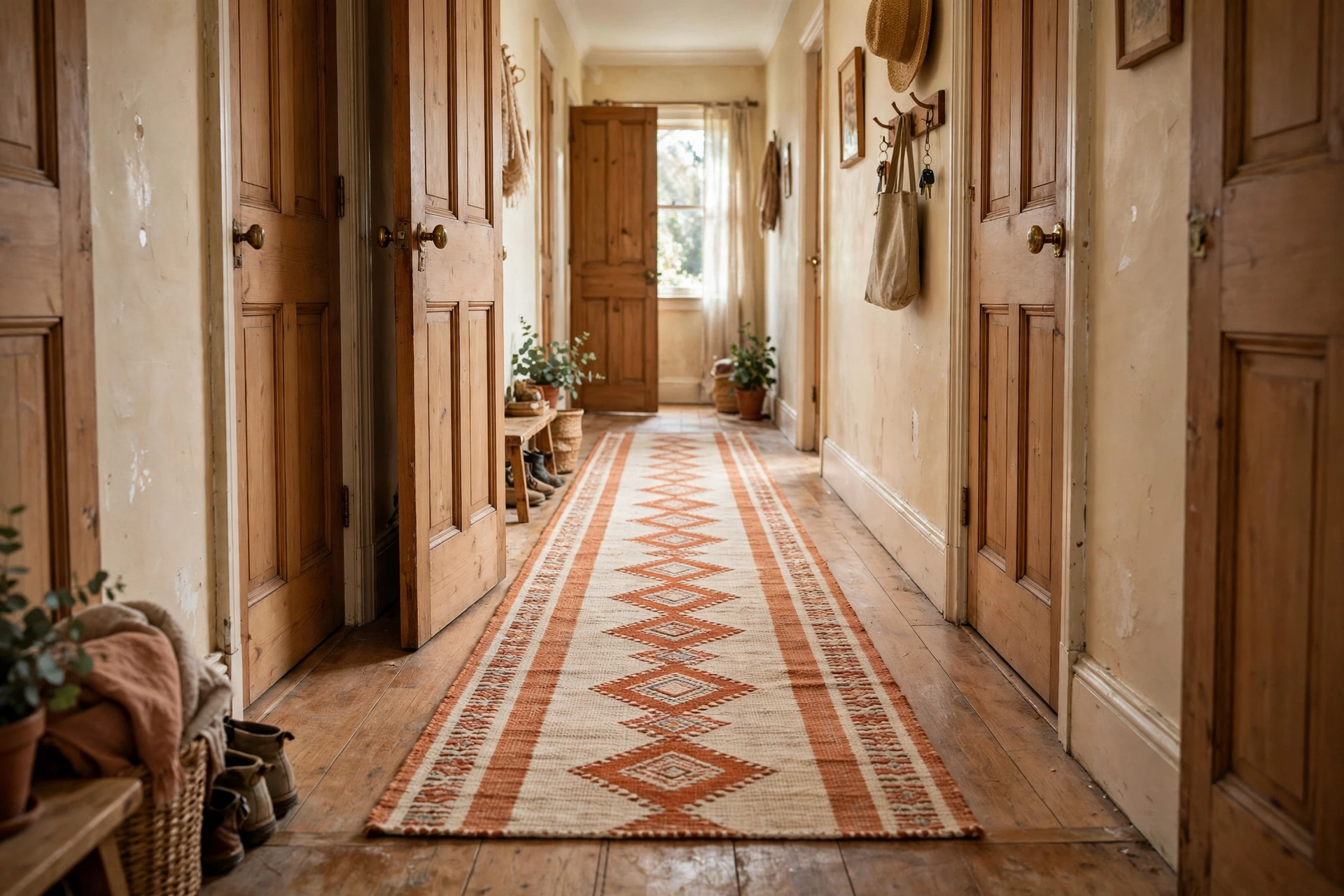
A hallway can feel like a leftover space, but one well-placed runner makes it feel finished in minutes. Choose a flatweave or very low pile so doors swing over it easily and it stays put under daily foot traffic. It softens footsteps, protects the floor, and gives a plain pass-through a sense of care.
Center it with a few inches of floor showing on each side, rather than pushing it against one wall. A standard runner width of about 2.5 feet suits most hallways, and the length should stop short of the ends, leaving some bare floor at each end. That framing is what keeps it looking neat instead of like a carpet remnant.
Styling tip: Use a runner pad or grip tape at both ends. A hallway runner that creeps forward a little each day will never look tidy.
10. Link Two Spaces With One Long Runner
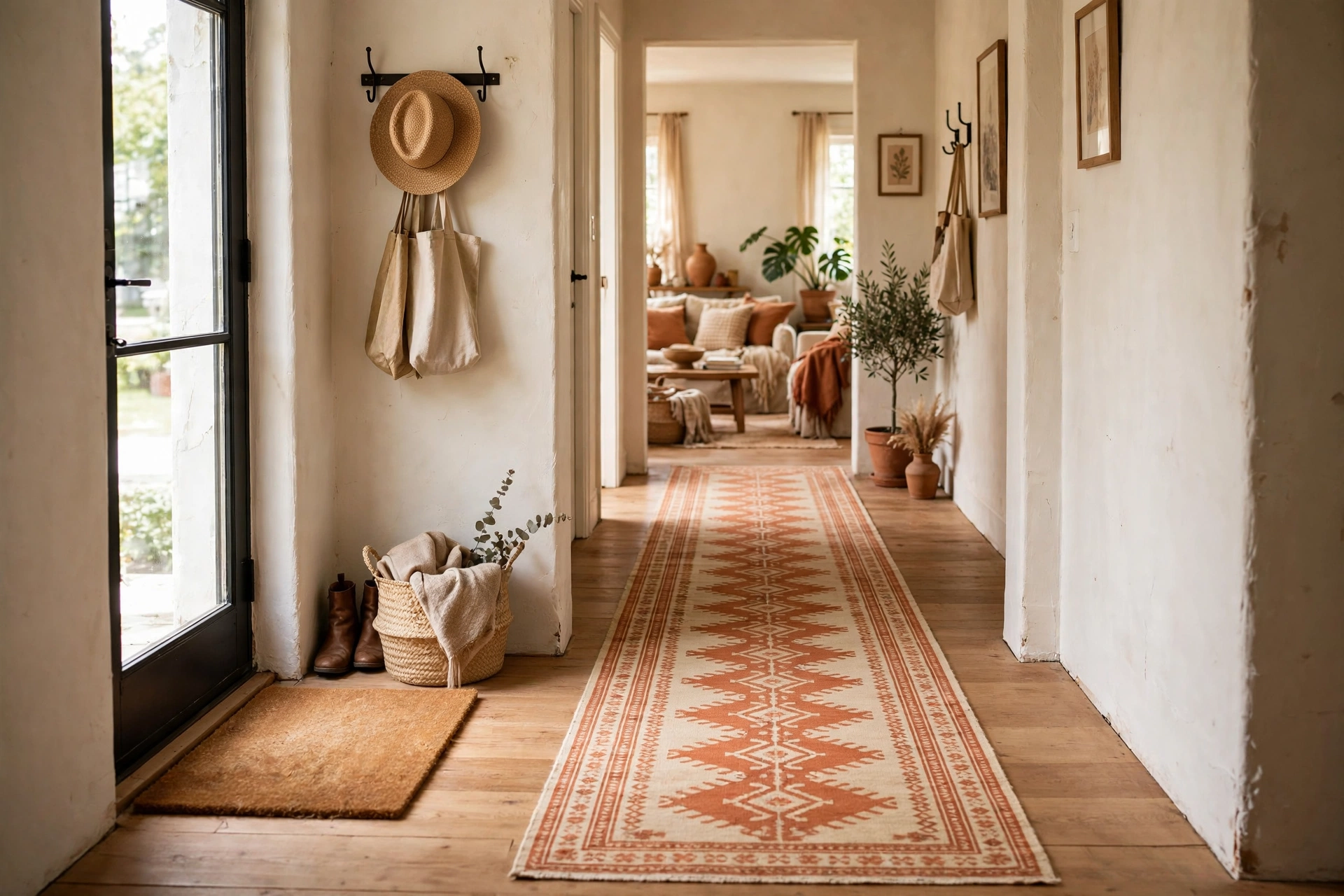
When two areas feel disconnected, one long runner can quietly link them. Run it from your entry toward the living area, or along a narrow kitchen where you stand and walk the most. Your eye follows the runner, and separate-feeling spaces start to read as parts of the same home rather than unrelated corners.
Look for an extra-long runner, often 8 to 12 feet, so it actually reaches from one zone toward the next instead of stopping halfway. Keep the width consistent with the space, with a small border of floor on each side.
Styling tip: Let the runner point toward the room you use most. That subtle direction makes a home feel easier to move through at a glance.
11. Match the Rug Shape to the Furniture Shape
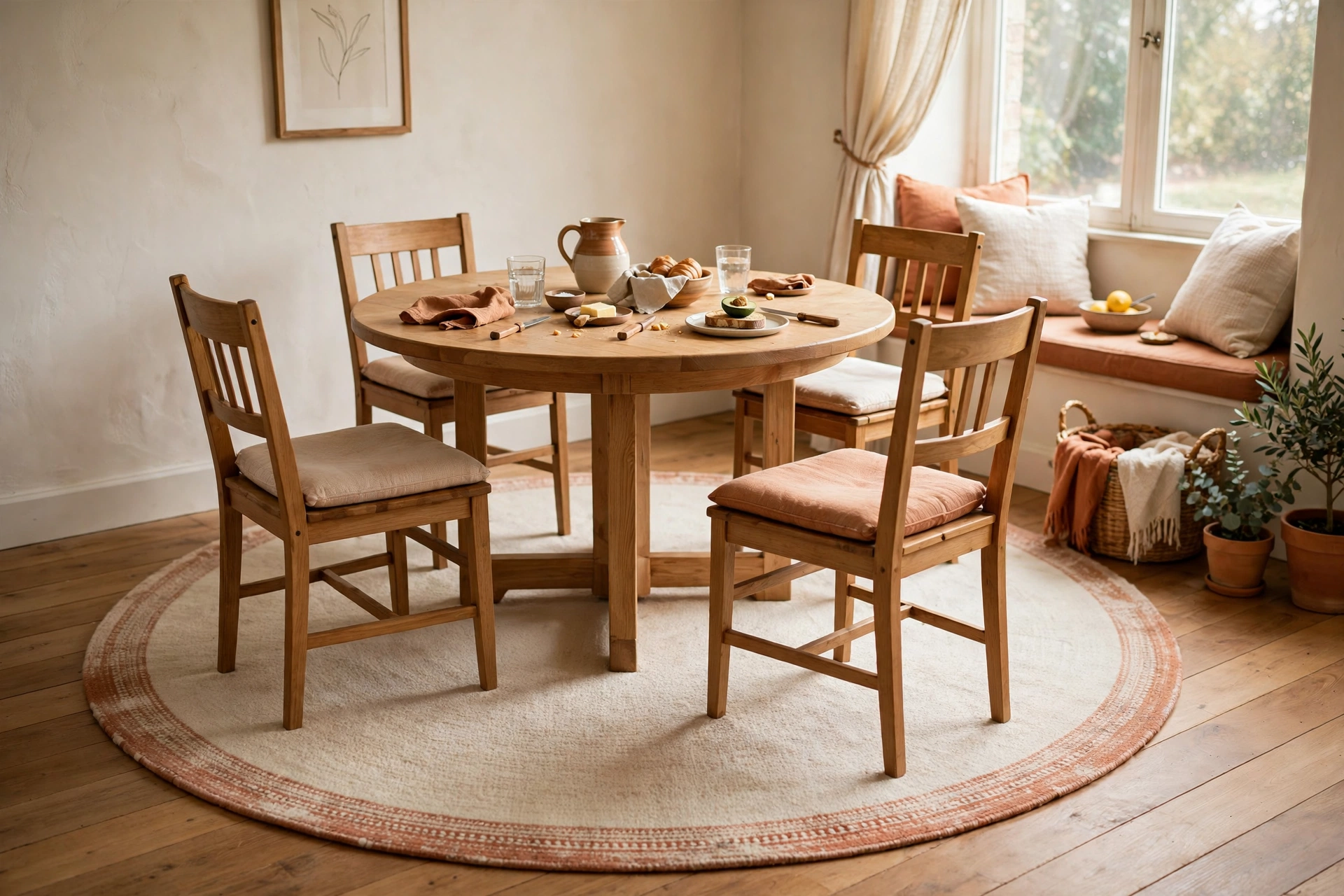
When you are unsure which rug to choose, let the furniture decide the shape. A round rug under a round dining or breakfast table echoes the shape above it and removes the awkward corners that stick out from a rectangular rug. A rectangle under a rectangular sofa setup or dining table does the same quiet, sensible job.
This simple match removes a lot of guesswork. Allow the round rug to extend well beyond the table edge, using the same pulled-out chair measurement you would use for any dining setup, so chairs stay on the rug.
Styling tip: If your table is round and your room is rectangular, trust the table. Center the rug on the furniture, not on the room’s walls.
12. Let Pattern Live on Only One Side
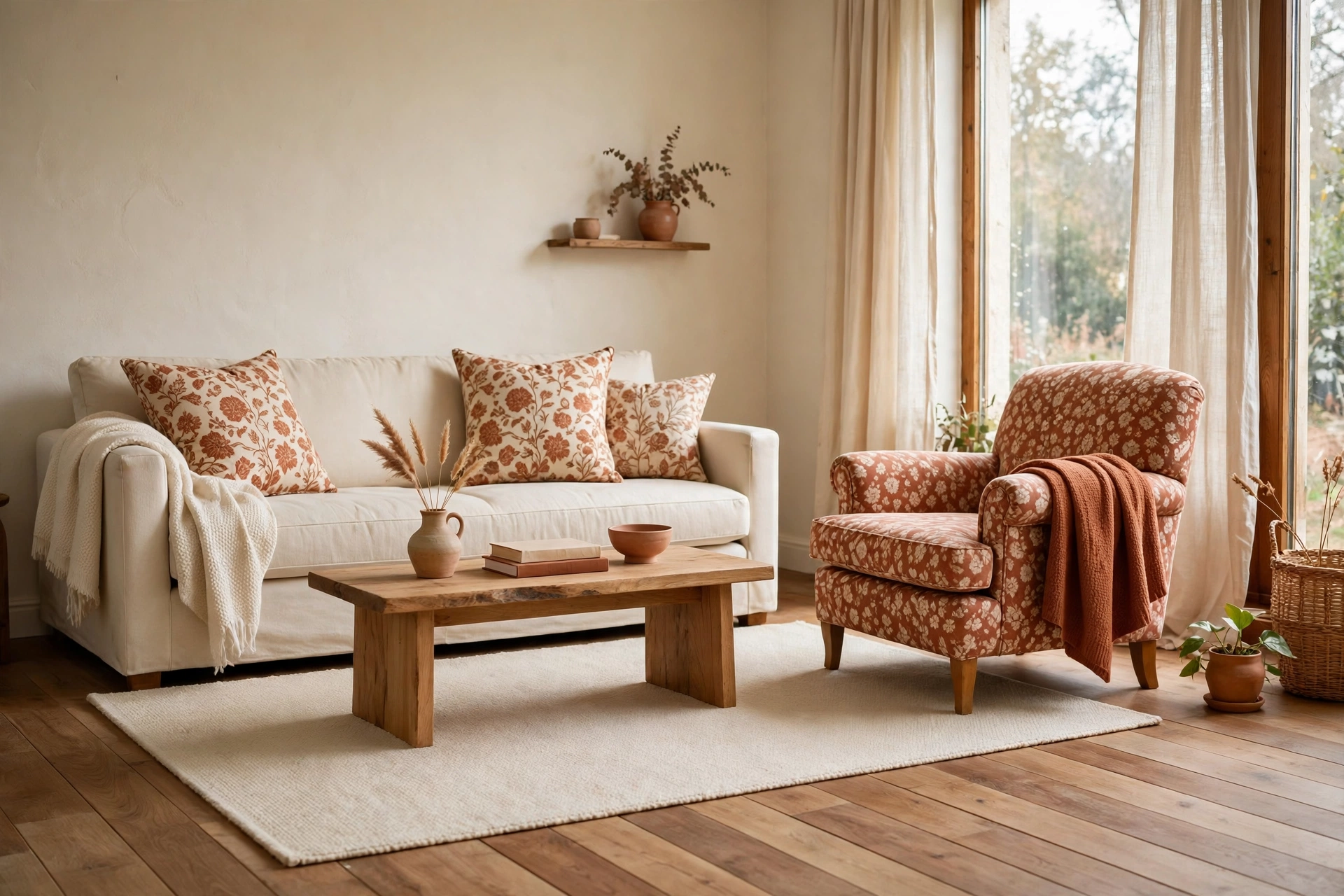
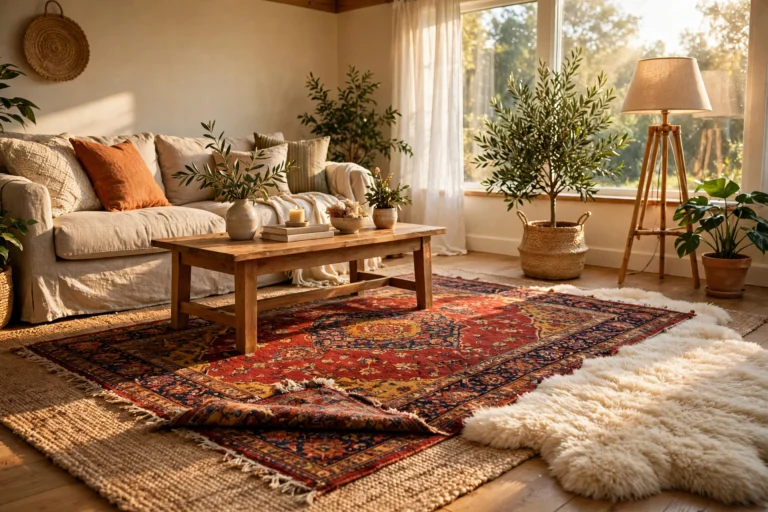
Rooms feel pulled together when pattern has one clear home. If your sofa, chairs, or cushions already carry a pattern, choose a plain or very subtle rug so the two do not compete. If your furniture is mostly plain, a simple rug with a low-contrast pattern can add interest without making the room feel busy or loud.
There is a practical bonus here, too. A gentle pattern on a rug is forgiving. It hides everyday dust, crumbs, and footprints between cleanings far better than a solid pale surface does. Keep the pattern’s colors close in tone, so it reads as texture from a distance and only shows its detail when you are near it.
Styling tip: Hold a cushion or fabric sample next to a rug sample before you commit. If both shout at the same volume, change one of them.
13. Repeat One Rug Color in Just Two Other Spots
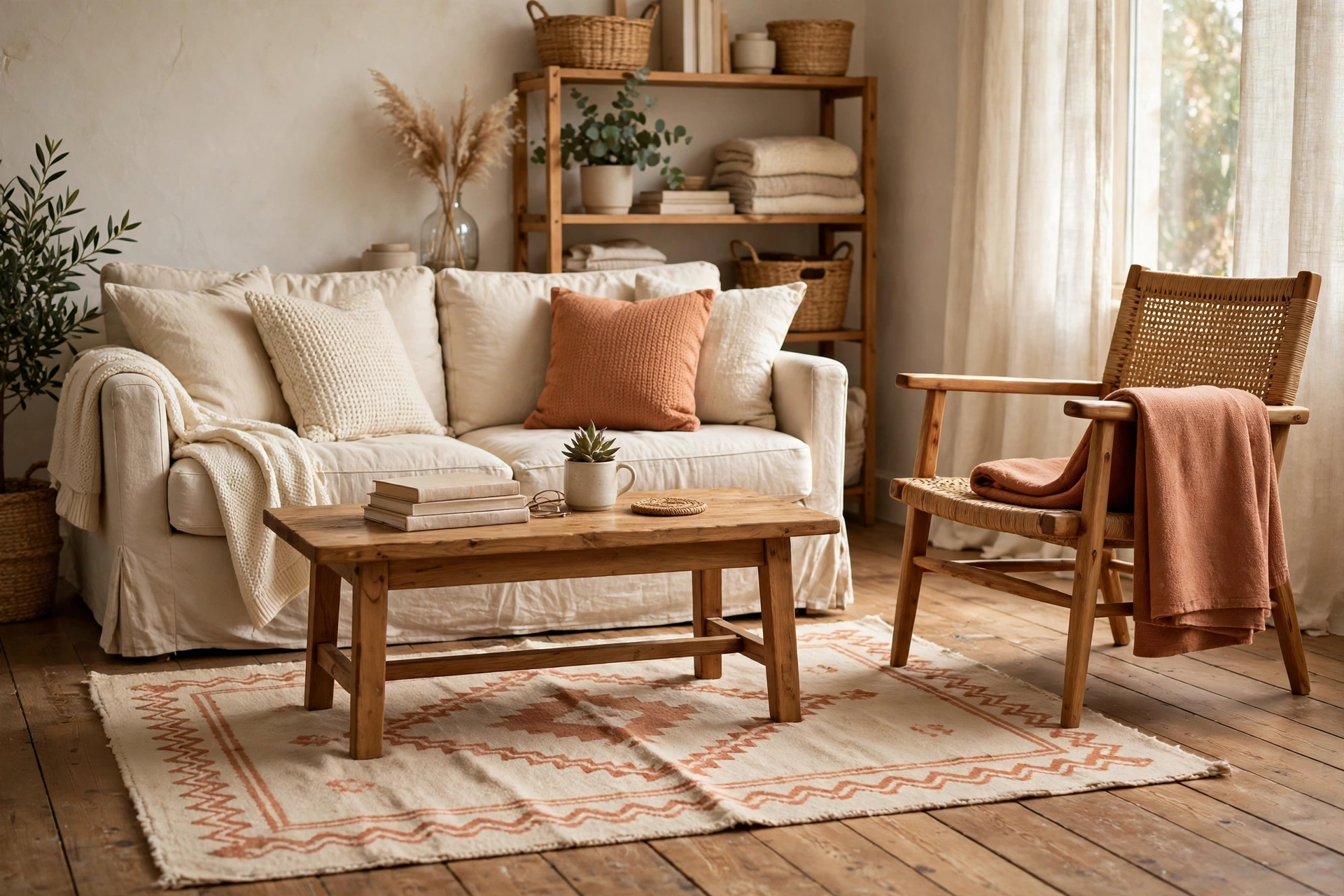
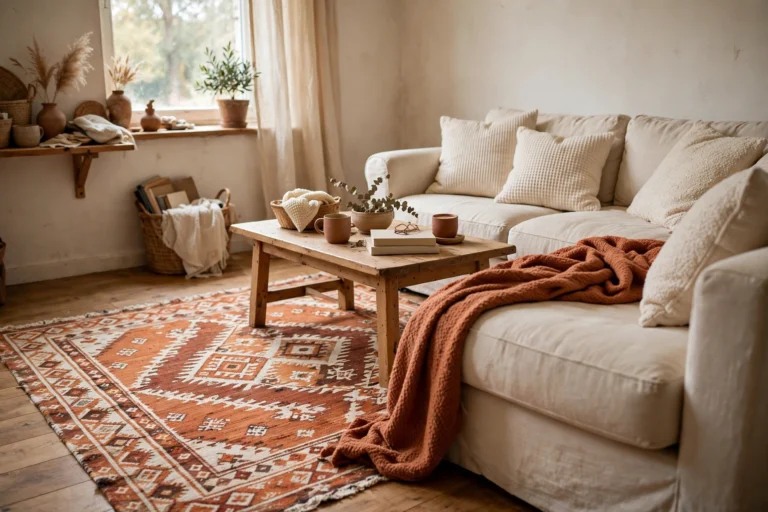
A rug can look like a random addition until its color shows up somewhere else. Pick one color from the rug and repeat it in just two other spots, such as one cushion and one throw. That small amount of repetition is enough to make the rug look deliberately chosen, as if the whole corner was planned at the same time.
You do not need an exact match, and you do not need a full matching set. Close in tone is fine, and in some cases better, because it looks relaxed rather than staged. Two repeats are the sweet spot for most rooms.
Styling tip: Choose the rug’s secondary color, not its main one, for your repeats. It ties the room together without making one color dominate everything.
14. Pick a Rug in the Same Tone Family as Your Floor
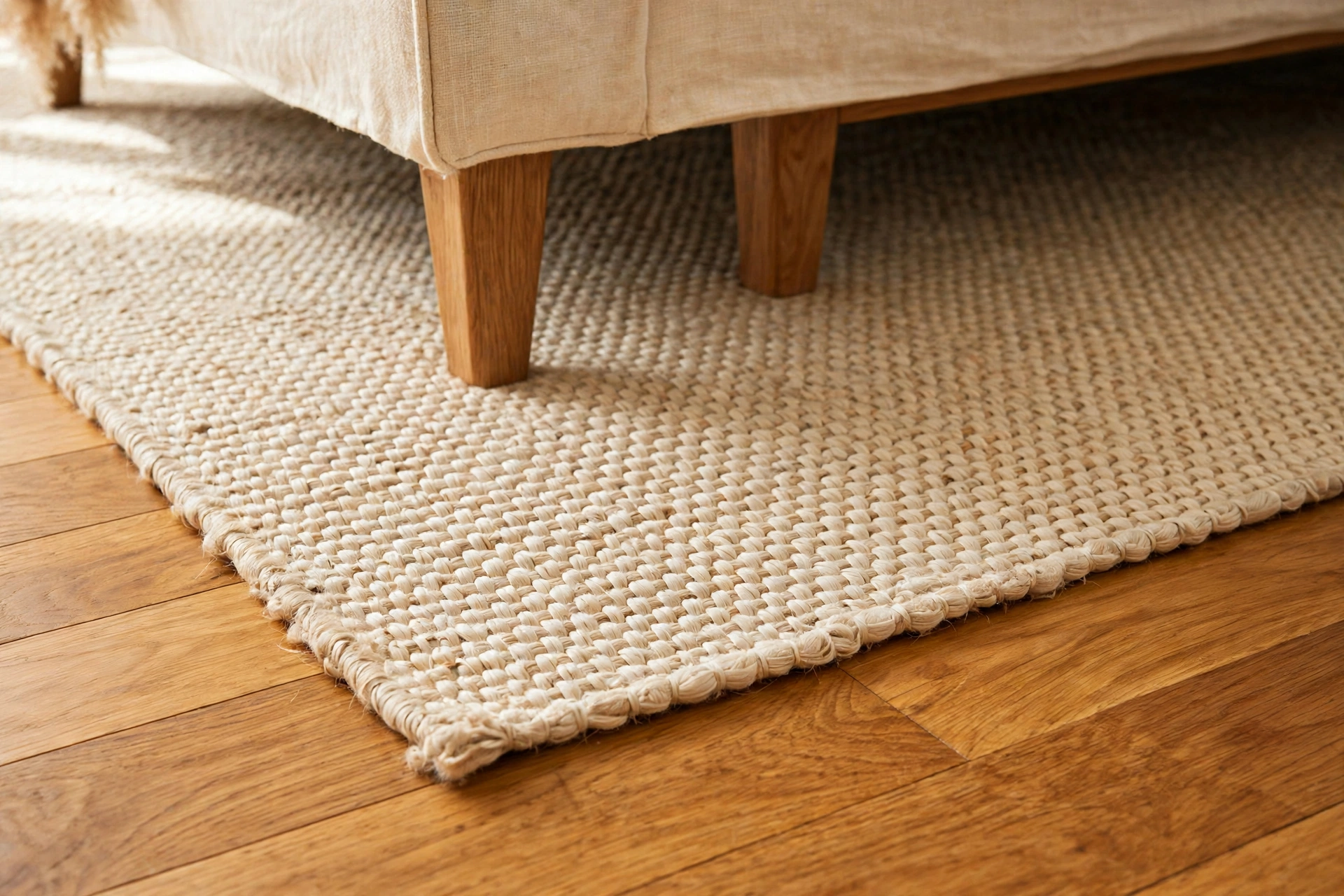
If choosing a rug color makes you nervous, stay close to home. Pick a rug in the same general tone family as your floor, light with light or warm with warm, but choose a clearly different texture. The rug will separate from the floor underfoot and under furniture, without introducing a new color that fights everything else you own.
The key is contrast of texture, not contrast of color. A matte woven rug on a smooth wood floor, for example, reads as a distinct surface even when the tones are similar.
Styling tip: Check a sample on your floor in daylight and again in evening light. Same-family tones can shift, and you want them close, not identical.
15. Give the Front Door One Small Washable Rug
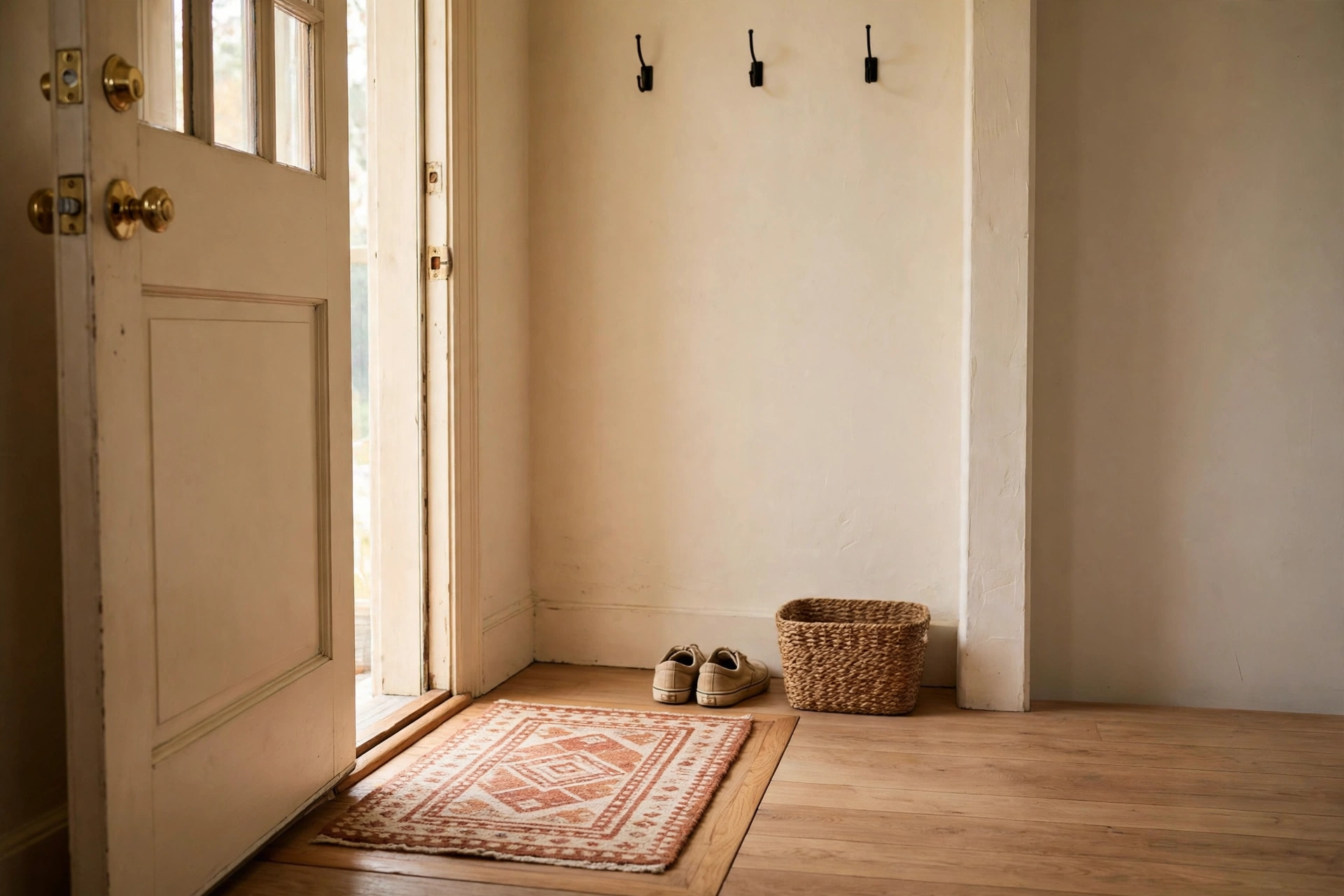
Your entry sets the tone for the whole home, and it needs the least from you. One small, low-profile washable rug, in a classic 3×5 footprint, traps dirt where it enters and gives shoes and bags a clear place to land. When it gets grubby, you wash it and put it back.
Size it to clear the door’s swing. Measure the arc of the opening door before you buy, and choose a low pile that the door passes over without catching. Leave a small border of floor around it if you can, so it looks placed rather than stuffed into the space. That tiny, tidy drop zone pays off every single day.
Styling tip: Keep a small basket or a pair of hooks just beyond the rug. The rug marks the zone, and the storage keeps it from overflowing.
Before You Buy: 5 Simple Rules That Save Regret
- Measure the furniture footprint first, not the room. Work from what the rug must hold: sofa length plus 12-16 inches, dining table plus 48-60 inches total, and a bed plus at least 18 inches on each side.
- Always budget for a rug pad. A pad stops slipping, adds a little comfort, and helps a rug last longer. Order it cut 1-2 inches smaller than the rug so it stays hidden underneath.
- Default to low-pile or flatweave where life happens. Dining rooms, hallways, entries, and spots under desk chairs need a flat, easy surface. Save plush, deeper piles for quieter, low-traffic corners.
- Choose a forgiving workhorse for high-traffic spots. A mid-tone rug, or one with a subtle fleck or gentle pattern, hides dust and footprints between cleanings and keeps a busy area looking tidy longer.
- Stick to standard sizes from return-friendly sellers. Sizes like 5×8, 8×10, and 9×12 are easier to exchange if the fit is wrong. Check the color in your own room’s daylight before you remove any tags.
Frequently Asked Questions
Can a rug be too big for a room?
Yes. If a rug runs wall-to-wall or leaves under about 6 inches of floor at the edges, it stops reading as a rug and starts reading as carpet. Keep a visible border of floor around it, so the rug frames the furniture instead of covering the whole room.
How far should a rug go under a couch – are front legs enough?
Yes, front legs on is enough for most living rooms. Let the rug run a few inches behind those front legs so they sit securely and do not slip off the edge. That placement connects the sofa to the rest of the seating, and it lets you use a smaller, more affordable size than an all-legs-on layout would require.
Should I centre the rug with the room or with the furniture?
Center it with the furniture and the room’s main focal point, such as a fireplace or a bed, if you cannot do both. Rooms are rarely perfectly even, and a rug that sits squarely under the furniture grouping will look right even if the floor border is slightly uneven in one corner that nobody really notices.
Should my rug be lighter or darker than my floor?
Either can work well. What matters most is contrast. A lighter rug lifts a dark floor and brightens the seating area, while a deeper rug grounds a light floor and makes it feel settled. Avoid an exact tone-and-texture match with your floor, because the rug will disappear and the room will lose that clear, finished edge.
The Bottom Line
A room looks pulled together when the rug reaches the furniture, leaves a calm border of floor, and does one clear job in one clear place. You do not need more decor to get there. You need the right size, placed with a little care, and then left alone to do its work. Start with the one room that bothers you most, tape out a size, and make that single change first.
Save this list for your next room refresh, and follow Decor Velora for 3 fresh home decor ideas every day – rugs, small apartment decor, mirrors, curtains and cozy room makeovers.