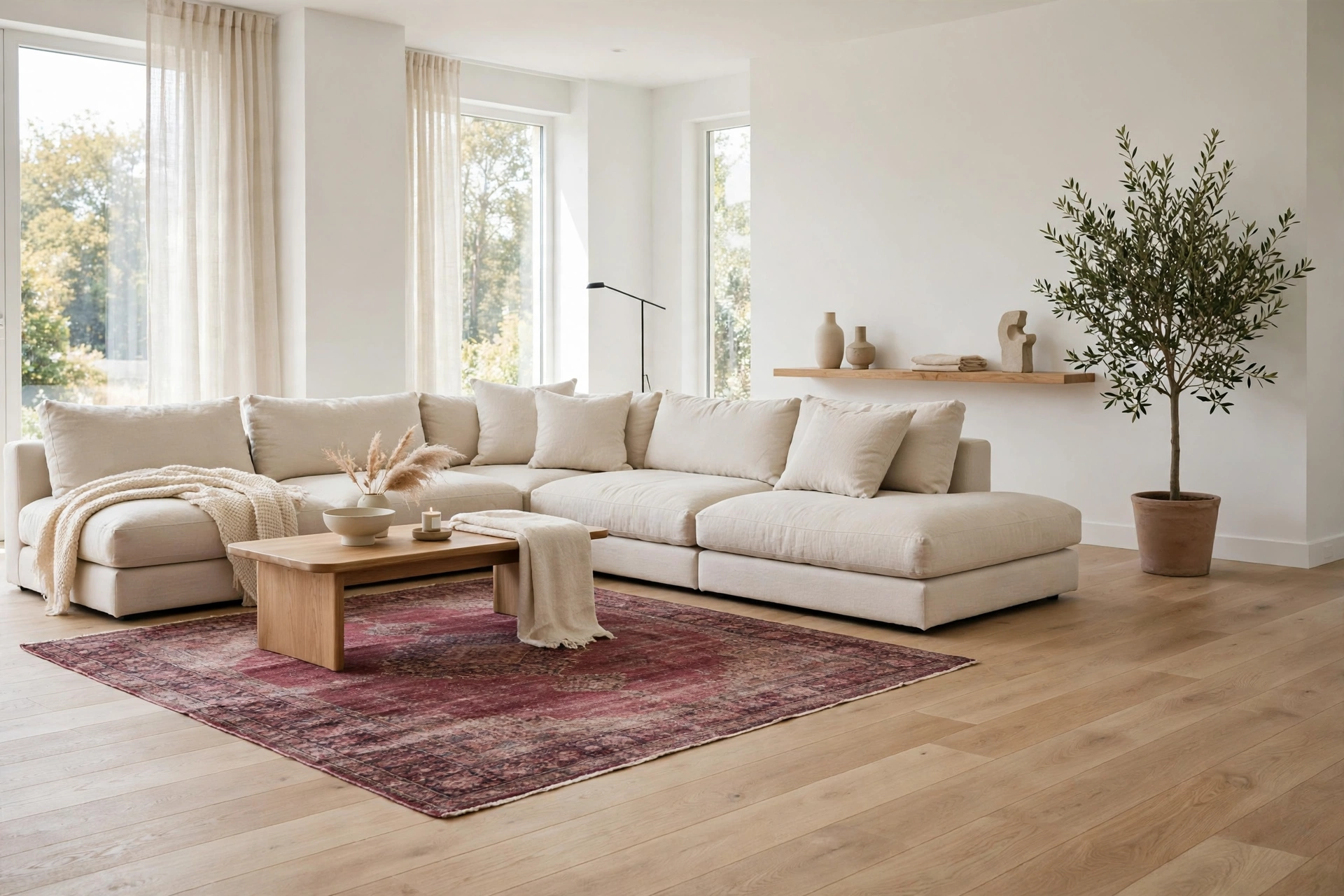
11 Persian Rug Ideas That Make Modern Rooms Feel Classic
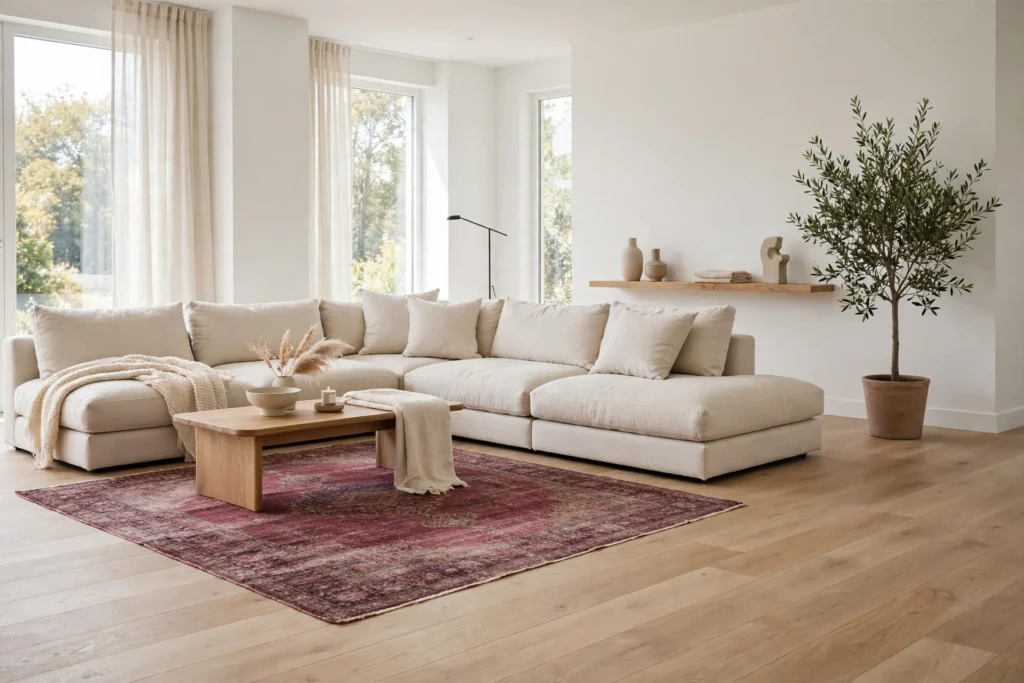
Modern rooms have a known weakness: they can feel finished and unfinished at the same time. The lines are clean, the palette is calm, everything matches — and somehow the room has no memory. A Persian rug is the fastest correction there is. One centuries-old pattern under modern furniture gives a room instant depth, warmth and history, without changing a single other thing in it.
The pairing works because of contrast, not coordination. The rug brings the pattern, the colour and the age; the modern room brings the calm, the space and the clean lines. Neither side has to compromise — the sofa stays minimal, the rug stays ornate, and each makes the other look better. It is why this combination keeps appearing in the most-shared modern interiors right now.
The eleven ideas below cover the whole modern house — living rooms, bedrooms, entries, offices and lofts — and they all run on current Persian directions: faded vintage washes, softened palettes, overdyed finishes and practical washable versions of the classic look.
The 3 modern-classic rules behind every idea below:
- One classic per room. The Persian rug is the room’s single traditional voice. Everything else stays modern — that discipline is what makes the rug read as a design choice instead of a theme.
- Fade is your friend. In modern rooms, washed, distressed and overdyed Persians almost always beat bright, crisp ones. The softened palette bridges old pattern and new furniture.
- Echo, never match. Borrow one or two of the rug’s quieter colours for a cushion, a throw or a piece of art. Matching the rug’s main colour exactly is what tips the room toward dated.
1. Slide a Faded Persian Under a Low Linen Sectional
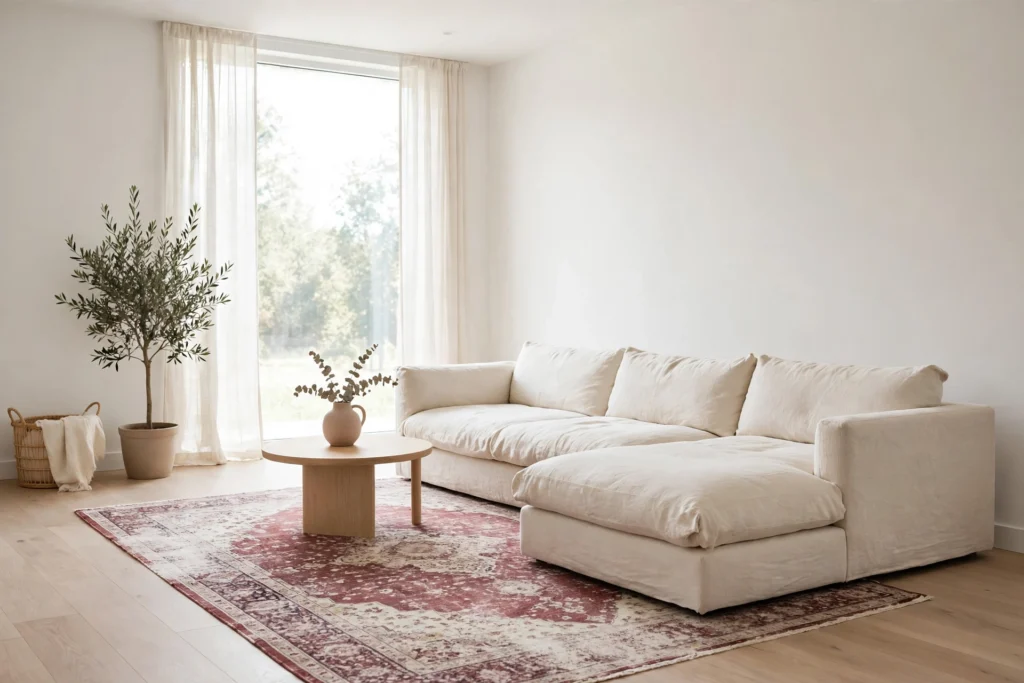
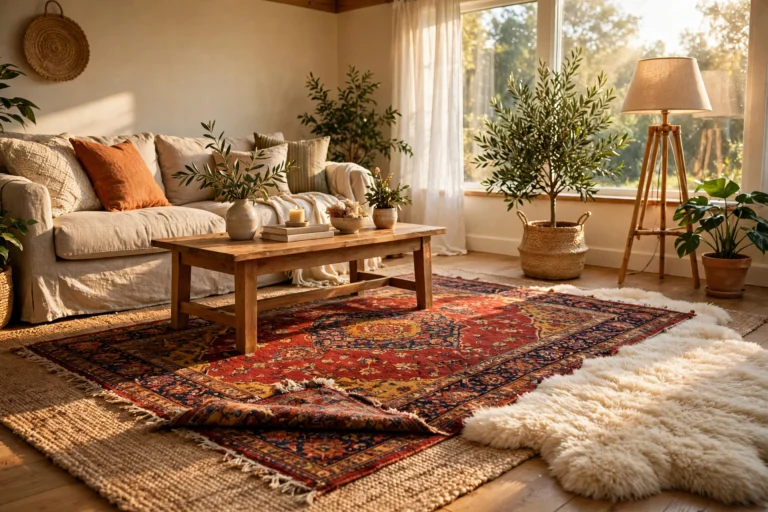
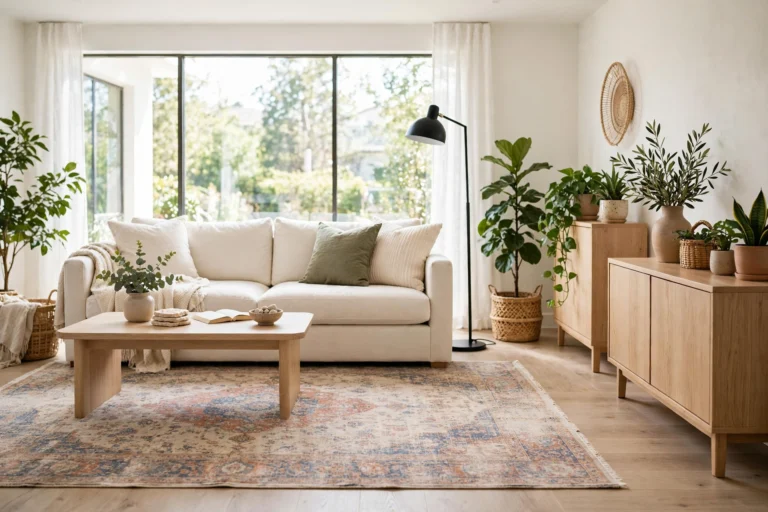
This is the defining modern-Persian pairing of the moment: a washed, faded Persian — burgundy softened to rose, motifs blurred by the vintage finish — under a low, sprawling linen sectional. The sectional is all modern comfort and clean bulk; the rug is all pattern and history. Together they make a living room that feels relaxed and storied at once, which is exactly the balance most modern rooms are missing.
Keep everything else quiet: light wood floors, white or warm-white walls, one simple coffee table. The faded finish does the diplomatic work — because the rug’s colours arrive pre-softened, they never fight the sectional’s pale upholstery, and the pattern reads as texture from across the room. It is the easiest possible first Persian for a modern home.
Tip: Let the rug extend well beyond the sectional on the open side — a visible field of faded pattern in front of the sofa is what sells the contrast. A rug that only peeks out at the edges wastes it.
2. Warm Up Mid-Century Furniture With a Classic Motif

Mid-century modern and Persian rugs were made for each other — the furniture’s walnut tones, tapered legs and low profiles come from the same warm, crafted world the rug does. A classic red-and-navy motif under a walnut credenza and a pair of sculptural chairs gives a mid-century room its missing layer of pattern, and the furniture’s clean silhouettes stop the traditional rug from feeling formal.
The trick is to let the furniture float. Mid-century pieces sit on legs, so the rug’s pattern shows through and around them — choose a rug whose design stays interesting in fragments, like an all-over motif or a border-heavy design, rather than one giant medallion that the furniture will chop in half. One period-echoing accent — a sunburst clock, a ceramic lamp — is enough; the room should nod to the era, not recreate it.
Tip: Pull the rug’s rust or camel tone into exactly one mid-century accent, like a leather sling chair or a cushion. That single warm echo ties the two eras together.
3. Put a Persian Under a Modern Platform Bed
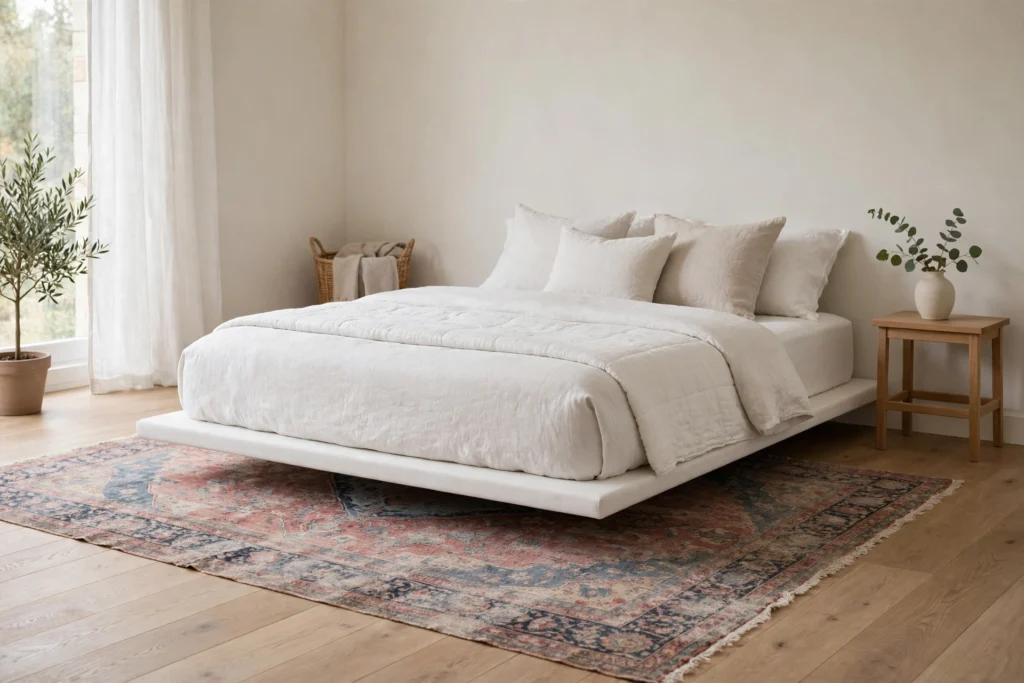
A modern bedroom is usually the plainest room in the house — a low platform bed, white linen, two lamps, nothing else. A faded Persian spread under the bed changes its whole register: suddenly the room has a foundation with colour, pattern and age, and the bed’s minimalism looks deliberate rather than bare. The rug should extend generously on both sides and at the foot, so bare feet land on pattern, not floorboards.
Choose the washed end of the Persian spectrum here — dusty reds, faded blues, softened sage — because bedroom light is gentle and saturated colour can feel loud at close range. Keep bedding white or ivory and let one cushion carry the rug’s deepest remaining tone. The effect is a serene, boutique-hotel calm with a genuinely classic floor.
Tip: Size up. A rug that disappears under the bed wastes its best feature — aim for at least 60 cm of rug visible on each side, which usually means an 8×10 or 9×12 under a queen bed.
4. Run a Persian Runner Down a Modern Hallway
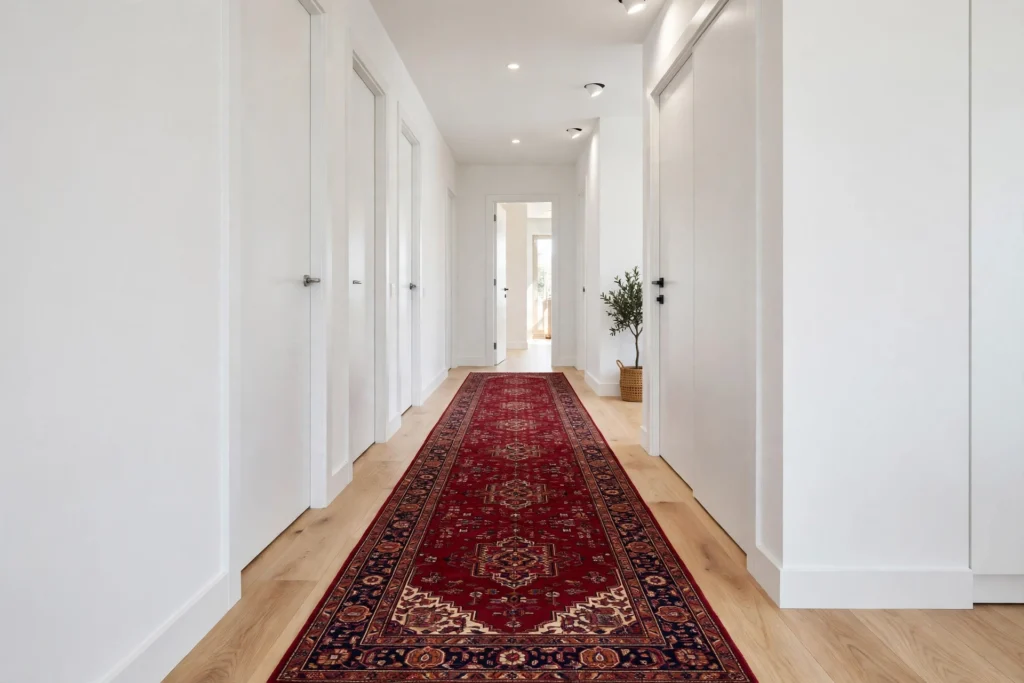
Hallways in modern homes are pure pass-through: white walls, pale floors, nothing to look at. A Persian runner turns that corridor into the most classic-feeling stretch of the house. The long, bordered format was designed for exactly this — a repeating motif that draws the eye forward, deep colours that forgive the heaviest foot traffic in the home, and a strip of pattern that warms every room it connects.
Because a hallway is narrow, the runner can carry a richer, less faded Persian than you might choose elsewhere — deep red, navy, even a near-black field all work, since the walls provide plenty of calm around it. Keep the runner centred with equal floor showing on both sides, and finish the hall with one modern gesture — a simple black-framed print series or a sculptural wall light — so the contrast stays intentional.
Tip: Runners creep. A runner-specific non-slip pad, cut slightly smaller than the rug, is not optional in a hallway — it is what keeps the classic look from bunching into a trip hazard.
5. Ground a Home Office With a Navy Persian
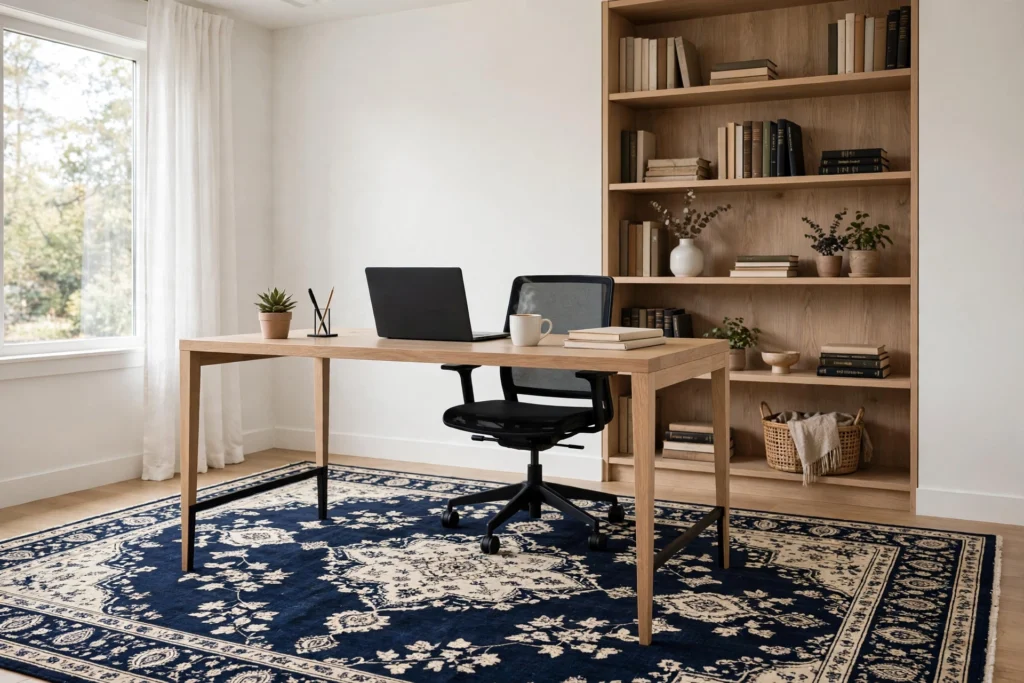
The modern home office tends to be a desk, a chair and a screen floating in a spare room. A navy Persian underneath gives it instant gravitas — the deep blue field reads professional and calm on camera, the traditional pattern makes the room feel established rather than improvised, and the wool surface quietly improves the room’s acoustics for calls. It is the single fastest way to make a workspace look like a study.
Navy is the right temperature for an office: warm enough to feel classic, cool enough to stay focused. Pair it with a simple modern desk — white, oak or black — and keep the rug large enough that the chair stays on it through a full day of rolling back and forth. A low-pile or flatweave Persian-style rug handles chair casters best.
Tip: If your chair has casters, choose a low, tight pile and skip the thick pad — a plush Persian under a rolling chair fights you all day, while a flat one feels like it was made for the job.
6. Contrast a Persian Against a Curved Boucle Sofa

The curved boucle sofa is modern design’s softest shape — and a classic Persian is its perfect opposite. The rug is geometric, bordered and centuries old in pattern; the sofa is organic, plain and unmistakably now. Put the deep reds of a traditional Persian under all that cream boucle and the room snaps into focus: the sofa looks softer, the rug looks richer, and the pairing feels curated rather than matched.
This is the one idea where a less faded Persian can shine, because the boucle’s texture and the room’s modern shapes do the modernising work. Keep the coffee table simple — round marble or pale wood — and accessories near zero. When the contrast is this strong, the styling is already done; adding more is how it tips into busy.
Tip: Centre the rug’s medallion under the curve of the sofa, not under the coffee table. The arc of the furniture and the symmetry of the pattern should share an axis, or the arrangement looks accidental.
7. Choose an Overdyed Persian for a Monochrome Room
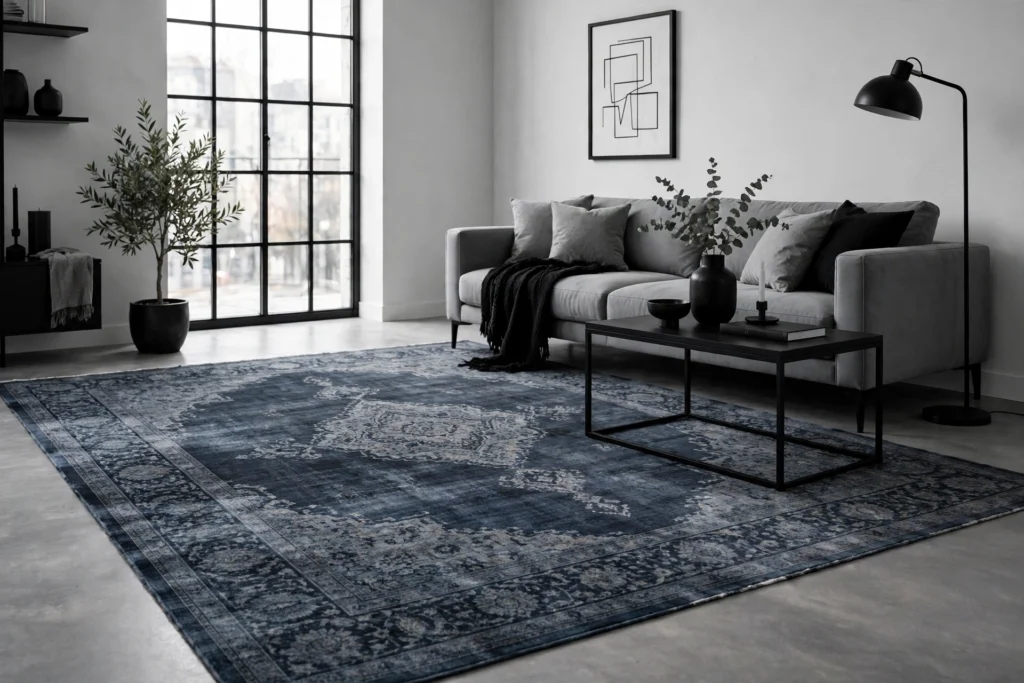
An overdyed Persian is a vintage rug that has been re-dyed in a single modern colour — charcoal, slate blue, deep teal, even black — so the traditional pattern survives only as a ghost beneath the dye. For a monochrome or minimalist modern room, it is the ideal classic: all of the texture, history and hand-made variation, none of the multicolour palette to manage. From a distance it reads as a rich solid; up close, the medallion emerges like a watermark.
Style it inside a strict palette — grey sofa, black metal, pale wood, the rug one shade deeper than everything else — and let changes in light do the decorating as the hidden pattern appears and disappears through the day. Overdyed rugs also forgive modern life well: the single deep colour hides a multitude of everyday marks.
Tip: Overdyed rugs vary hugely in how visible the pattern is. If you want the classic note to register, choose one where the motif is clearly visible in daylight photos, not just hinted at under showroom lighting.
8. Lay a Persian Over Polished Concrete in a Loft
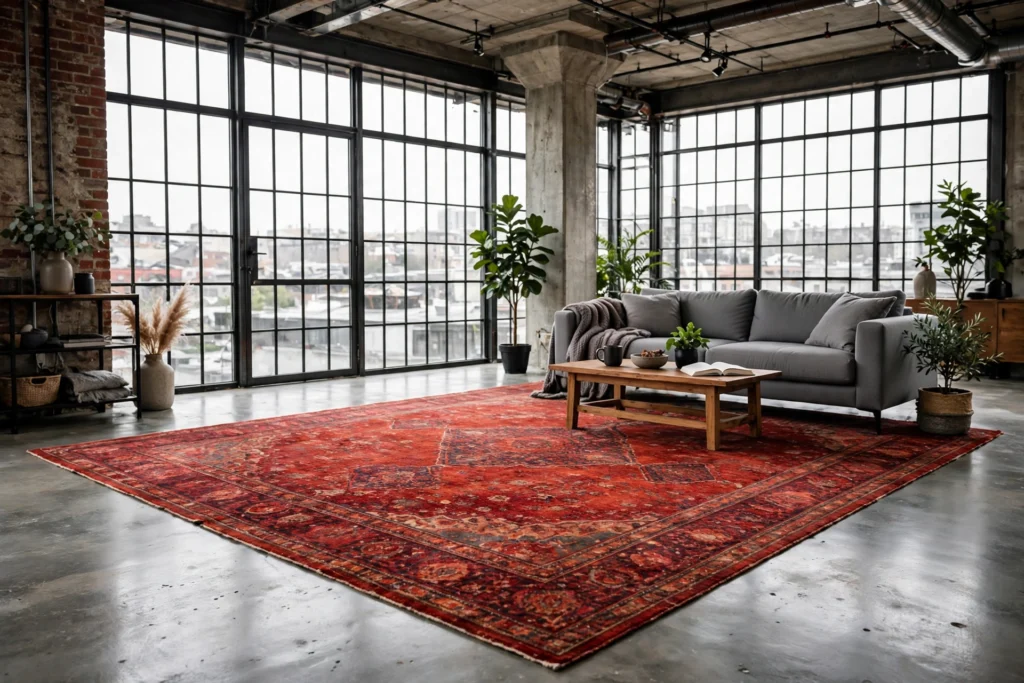
Industrial lofts have everything except softness: concrete floors, steel windows, exposed structure. A large, warm Persian is the classic counterweight — its wool pile absorbs the echo, its deep reds and navies warm the grey shell, and its traditional pattern gives the raw architecture a furnished, inhabited centre. Designers return to this pairing constantly because the contrast is total: the hardest floor meets the softest classic.
Go big and go warm. A small rug in a loft reads as a mat; the Persian should hold the whole seating group with pattern to spare. Slightly worn, faded examples suit the industrial setting better than pristine ones — a rug with its own history sits comfortably in a building with history. Add leather, black steel and one plant with scale, and stop there.
Tip: Concrete is cold and slightly abrasive under a rug. A thick felt pad is essential — it protects the rug’s backing from the rough surface and adds the insulation the floor is missing.
9. Use Black Accents to Sharpen a Persian’s Pattern
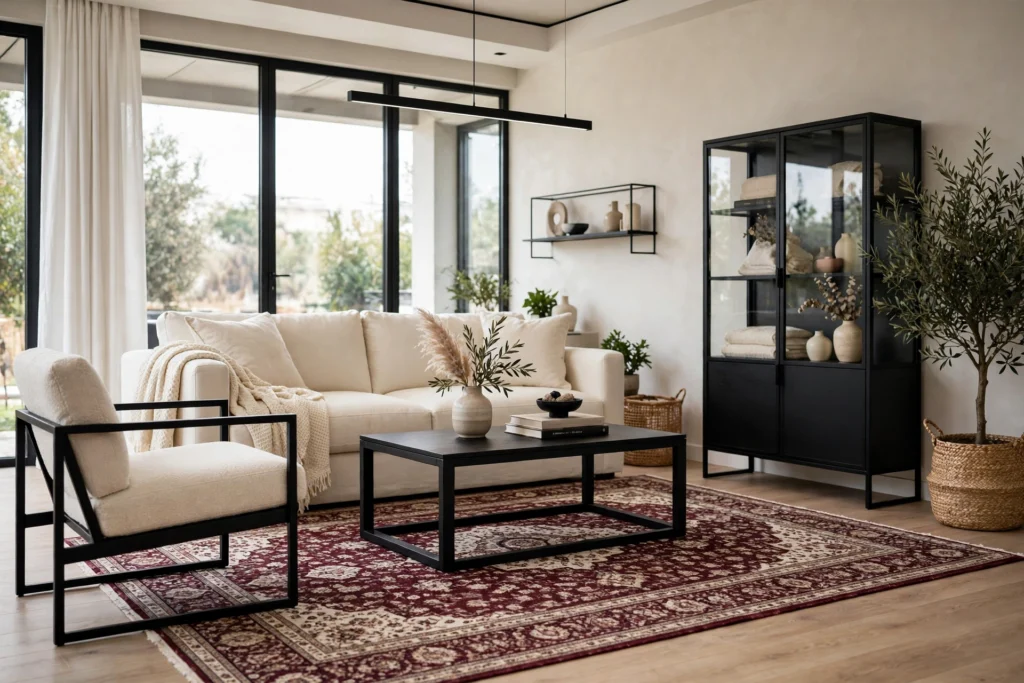
If a Persian in your modern room feels almost right but slightly soft, the missing ingredient is usually black. A black coffee table, black-framed chairs, a black floor lamp — these crisp, graphic notes sharpen the rug’s pattern the way a frame sharpens a painting, and they pull the whole arrangement unmistakably into the present day. Black is already hiding inside most Persian patterns as outline and detail, so the accents feel connected, not imposed.
The balance matters: black should be the room’s punctuation, not its paragraph. Two or three black pieces against cream upholstery and the rug’s warm field is enough. This is also the fastest rescue for an inherited Persian that feels too traditional — before replacing it, try framing it with black modern pieces and watch its register change.
Tip: Match the black’s finish to the rug’s mood — matte black metal keeps things modern and calm, while glossy black can feel formal and push the room back toward traditional.
10. Let a Small Persian Be the Only Colour in a Neutral Apartment

Small modern apartments often land on all-neutral by default — beige sofa, white walls, pale wood — and then feel afraid to disturb it. A single small Persian is the safest possible first colour: it brings a whole woven palette in one piece, it can be genuinely small (a 4×6 or 5×8 under the coffee table), and because it is a classic, it never looks like a trend passing through. The room stays calm; the floor starts telling a story.
Because the rug is doing all the colour work, let it be rich — a saturated little Persian in jewel reds and blues that would overwhelm at large size becomes a jewel at small size. Pull just one of its colours into a single cushion or a piece of art, and leave everything else neutral. If you tire of it, one rug is an easy change — which is precisely why it is the right first step.
Tip: In a rental, this is also the practical move: a small quality Persian covers worn flooring, defines the living zone on carpet, and moves house with you — buy the best small rug rather than a mediocre large one.
11. Pick a Washable Persian-Style Rug for a Modern Family Room

The modern family room makes the hardest demand of a Persian: look classic, survive everything. Washable Persian-style rugs now answer it properly — low-pile, muted traditional patterns printed or woven with real subtlety, in faded reds, soft navies and warm creams that read as the genuine article across a room, then go into the wash after the juice incident. The classic look no longer has to be the precious thing in the house.
Style it exactly like a modern room: a simple contemporary sofa, uncluttered surfaces, the rug sized generously so the seating sits on it. Choose the most faded pattern you can find — heavy distressing is your friend twice over, since it looks vintage and hides the evidence of family life between washes. Keep a proper gripping pad underneath, as most washable systems need it.
Tip: Check your machine’s capacity before choosing the largest sizes, and fold-test the rug if you can — a washable rug that folds flat washes and dries far better than a stiff one, whatever the label promises.
Before You Buy: 5 Rules That Save Regret
- Fade first, pattern second. In a modern room the finish matters more than the motif. A faded, distressed or overdyed version of any classic pattern will sit comfortably with modern furniture; the same pattern bright and crisp is the one that risks looking dated.
- Size it like a modern rug. The old habit of a small Persian floating in the middle of the floor is half of what makes them look old-fashioned. Buy for front legs on at minimum — 8×10 for most living rooms — and let the pattern run under the furniture.
- Count your room’s other patterns. The Persian should be the only patterned textile in the room. Solid upholstery, solid cushions, solid curtains. If a patterned piece already lives there, it has to be much smaller and share the rug’s colours exactly.
- Match pile to the room’s job. Low pile or flatweave for offices, dining and under doors; plush wool where the rug is pure comfort. Modern rooms show every practical flaw, so the rug that works is the rug that looks intentional.
- Check the colours in your own light. Persian reds and navies shift dramatically between showroom light and a north-facing living room. Order the largest sample or the smallest returnable size first, and judge the faded tones — they are what your modern palette has to live with.
Frequently Asked Questions
Do Persian rugs work with modern furniture?
Yes — they are one of the most reliable pairings in current design. The contrast is the point: the rug supplies pattern, colour and history while clean-lined modern furniture supplies calm. Faded and overdyed finishes bridge the two styles most easily.
What colour Persian rug suits a grey sofa?
Navy is the classic answer — a navy Persian with ivory motifs flatters grey upholstery and keeps the room cool and composed. A faded burgundy is the warmer alternative; its softened reds sit happily against warm greys and add the richness grey rooms often lack.
How do I stop a Persian rug looking old-fashioned?
Choose a faded or distressed finish, size it generously so furniture sits on it, surround it with clean-lined furniture and solid textiles, and echo one of its quiet colours instead of matching its main one. Those four moves account for nearly every dated Persian room.
Are washable Persian-style rugs convincing?
The current generation is. Low-pile washable rugs in heavily faded traditional patterns read as vintage across a room, especially under furniture. They will not fool a rug expert at close range, but for family rooms they deliver the classic look with none of the anxiety.
The Bottom Line
A modern room does not need more minimalism — it needs one thing with a past. A Persian rug, faded to sit easily among clean lines and sized to anchor the furniture properly, gives a contemporary space instant classic weight without disturbing anything else in it. Pick your room, pick your finish, keep everything around it calm, and let four hundred years of pattern do what no new purchase can.
Save this list for your next room refresh, and follow Decor Velora for 3 fresh home decor ideas every day — rugs, small apartment decor, mirrors, curtains and cozy room makeovers.