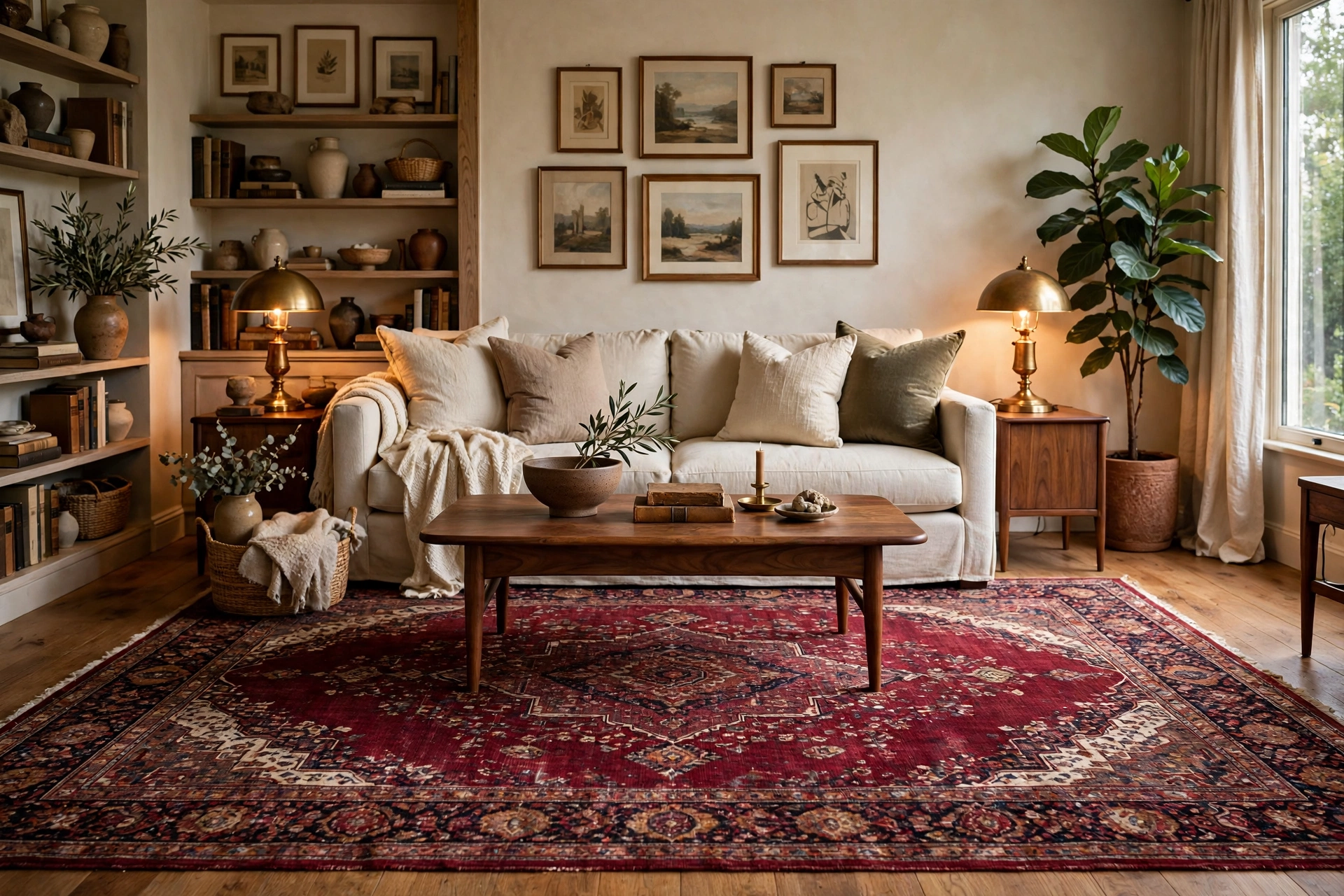
7 Timeless Persian Rug Ideas for a Rich, Collected Living Room

Some living rooms look decorated. The best ones look collected — as though every piece arrived over years, from different places, and somehow belongs. No single purchase creates that feeling faster than a Persian rug. Its pattern carries centuries of design in a single piece, its colours are deep and many-layered, and it gives a room instant history, even if everything else in it was bought last spring.
The secret to the collected look is that it is built, not bought in one go. A Persian rug does the heavy lifting because it is never just one colour or one motif: a single rug might hold burgundy, navy, ivory, sage and gold in quiet conversation, which means the rest of the room can pull its palette from the floor for years as pieces come and go.
The seven ideas below are the timeless directions — the ones that were beautiful fifty years ago and will be beautiful fifty years from now. Each pairs a classic Persian palette or pattern with the furniture and styling that makes a living room feel rich, warm and genuinely gathered over time.
The 3 collected-room rules behind every idea below:
- Let the rug be the oldest thing in the room. Even a new Persian-style rug should carry the visual age — faded tones, a traditional motif, a little variation in the dye. Everything else can be newer; the floor sets the timeline.
- Build the palette upward from the rug. Sofa, cushions, curtains and art should each borrow one of the rug’s colours — never all of them, and never the dominant one at full strength.
- Mix eras on purpose. A collected room pairs the rug with at least one modern piece and one natural material — clean-lined chair, raw wood, linen, leather, brass. The contrast is what stops “classic” from becoming “formal”.
1. Anchor the Room With a Deep Burgundy Medallion Persian
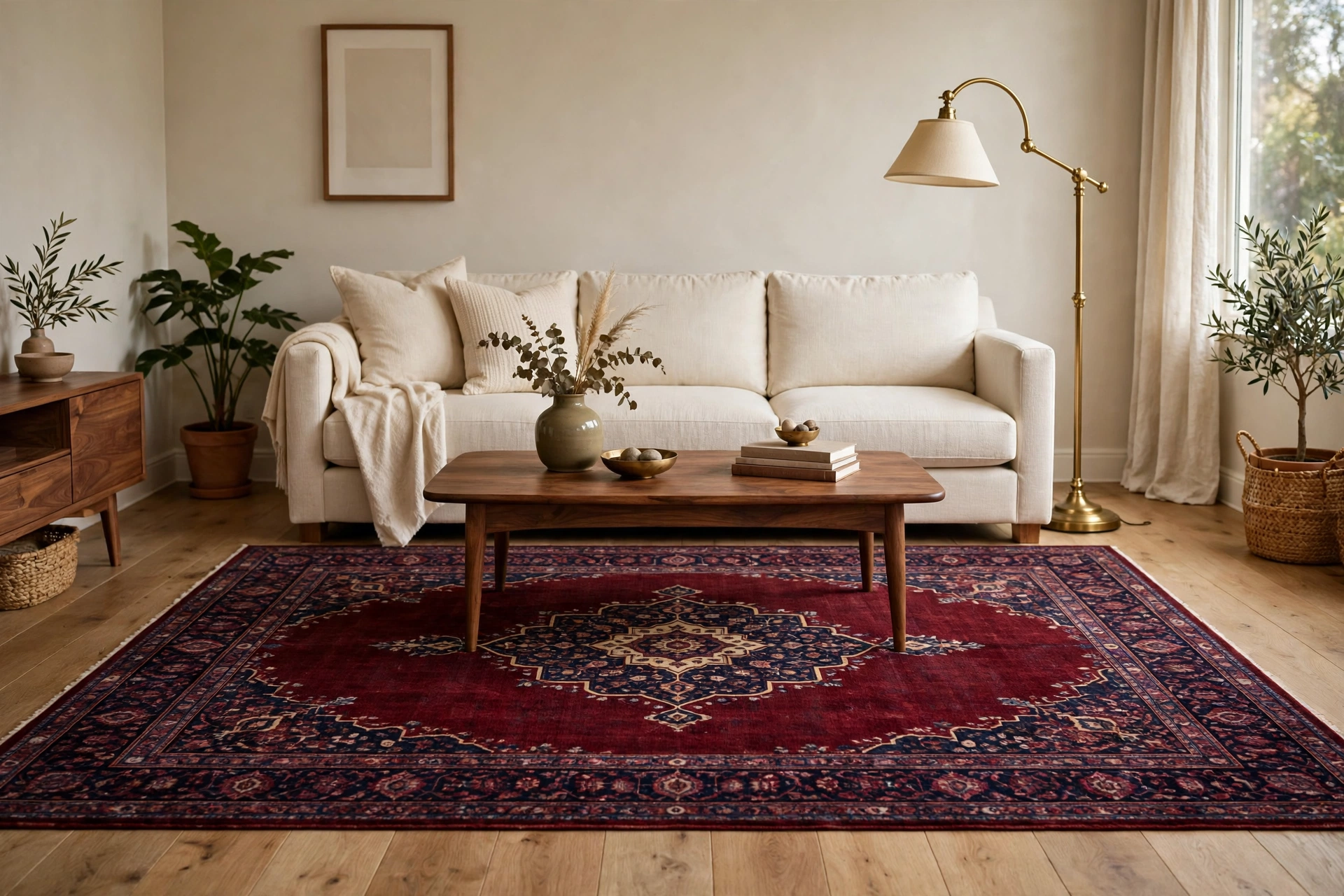
The burgundy medallion Persian is the original collected-room rug, and it remains the richest starting point of all. A deep wine-red field, a formal central medallion, and a navy or ivory border give a living room instant gravity: the pattern is symmetrical, the colours are saturated but earthy, and the whole seating group settles onto it like it was always meant to be there. Burgundy is broken up by the pattern’s secondary colours — navy, brown, faded cream, a little olive — so it reads as depth, never as a block of red.
Style it the traditional way, but lightly. A cream or oatmeal sofa keeps the room from darkening, walnut or dark oak furniture matches the rug’s warmth, and brass lamps pick up the gold threads in the pattern. Let the medallion sit centred under the coffee table with the rug’s border visible on all sides — that framed symmetry is exactly the formal note that makes the rest of the room’s casual pieces look collected rather than random.
Tip: If a full burgundy field feels bold, choose a rug where burgundy is the border and the field is ivory or navy. You get the same richness at half the volume, and the lighter centre keeps a small room open.
2. Choose a Navy Persian for a Cooler, Calmer Kind of Rich

Not every collected room runs warm. A navy Persian delivers the same history and pattern density as the classic red, but in a cooler register that suits north-facing rooms, grey sofas and homes that lean calm rather than cosy. The traditional pairing — deep indigo field, ivory motifs, touches of soft red or camel in the details — is one of the oldest colour stories in rug weaving, and it flatters modern grey upholstery better than almost any other classic palette.
Because navy is a quieter anchor, the room around it can carry more contrast: a dark wood cabinet, black picture frames, brass accessories for warmth, one red or rust cushion borrowed from the rug’s smallest motif. The result is collected but composed — the kind of living room that feels like a library’s calmer cousin. Navy Persians also hide everyday wear superbly, which makes them the practical classic for busy households.
Tip: Match the navy to your room’s light. In a bright room a deep, inky navy looks rich; in a dim room choose a faded, denim-leaning blue Persian so the floor does not turn into a dark pool.
3. Let a Faded Vintage-Wash Persian Bring the Patina
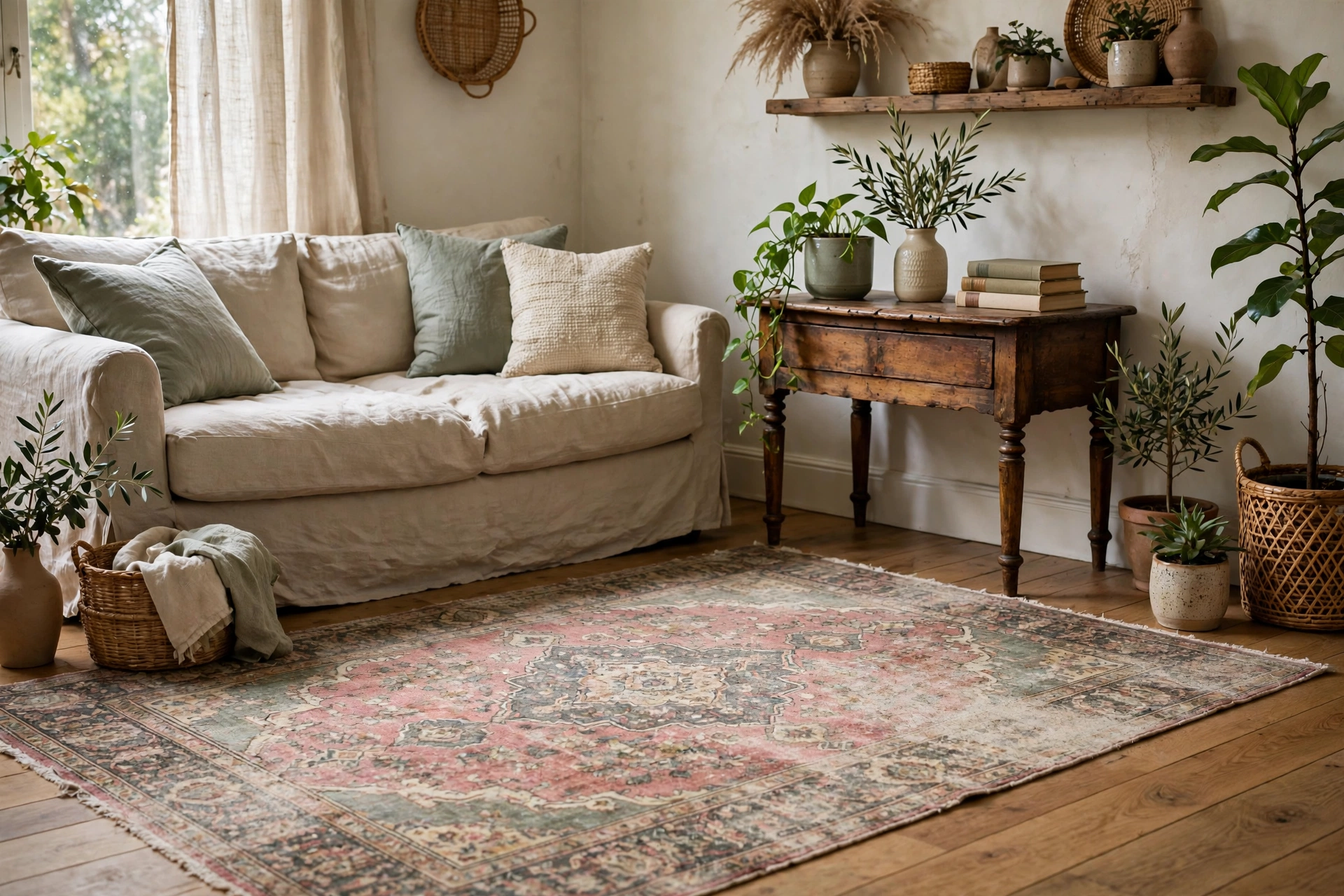
The most loved Persian look of the moment is the one that arrives pre-aged: a vintage-wash finish where burgundy has softened toward rose, navy toward slate, and the whole pattern sits under a gentle, sun-faded haze. This is the rug that makes a room feel collected fastest, because patina is the one thing new furniture cannot fake. Worn patches, abrash colour variation and softened motifs all tell the eye that this piece has lived a life.
A faded Persian is also the easiest classic to live with. Its muted palette pairs with almost anything — linen sofas, light oak, antique wood, modern chairs — and its worn pattern forgives crumbs, pet hair and everyday marks that would announce themselves on a solid rug. Style it with pieces that have their own texture: a slubby linen cushion, a worn leather book stack, a plant with real presence. The room should feel like everything in it has been somewhere.
Tip: Judge a vintage-wash rug in daylight before committing. The faded tones shift between warm and cool depending on the wash — hold it against your sofa fabric, because the soft background colour, not the pattern, is what your eye will live with.
4. Layer a Smaller Persian Over a Natural Jute Base

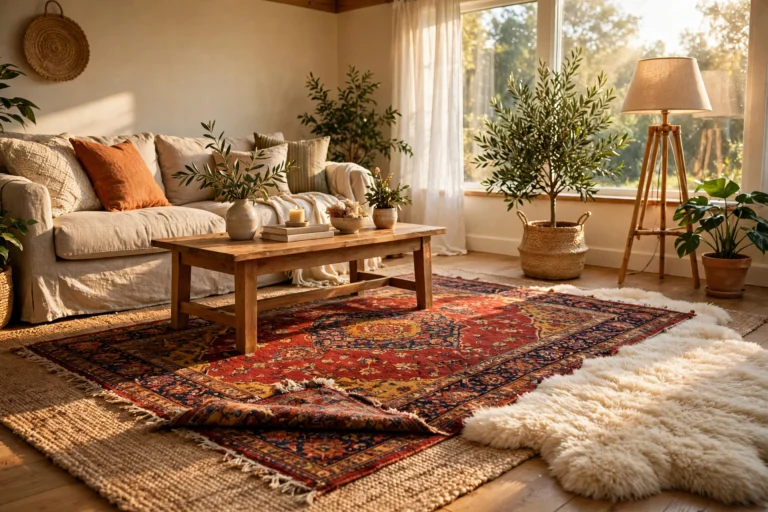
Genuine Persian rugs in very large sizes are expensive, and the beautiful one you found may simply be too small for your seating. Layering solves it the collected way: a big, plain jute or sisal base rug — 9×12, warm honey tone — gives the room its full footprint and texture, and the smaller Persian sits centred on top, under the coffee table, where its pattern does the talking. Two rugs, two eras of craft, one generous anchor.
This is also how collected rooms actually evolve — pieces added as they are found, not sized in advance — so the layered look reads authentic rather than like a workaround. Keep the two rugs close in warmth: a golden jute under a warm red or faded Persian looks intentional, while a cool grey base under a warm rug looks like a mistake. Let the seating group’s front legs cross both layers so the arrangement reads as one composition.
Tip: The top rug needs grip on the base. A thin rug pad between the layers, or a base with a slightly rough weave, stops the Persian creeping sideways every time someone sits down.
5. Pair a Persian With a Leather Sofa for the Club-Room Feel
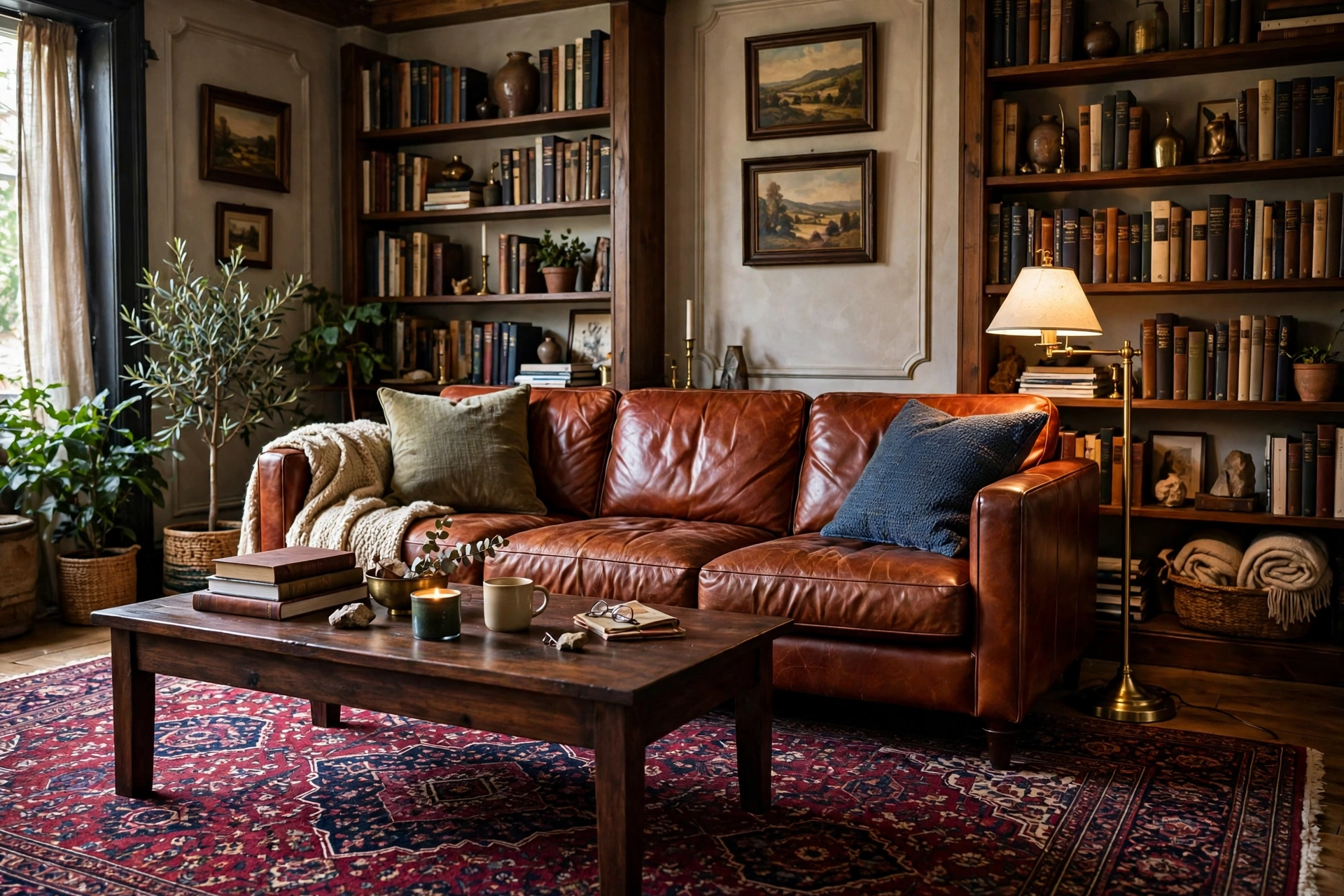
Leather and Persian wool are the oldest partnership in the collected living room, and they flatter each other completely. A cognac or chocolate leather sofa brings smooth, worn richness; the rug brings pattern and colour depth; neither competes, because their textures are opposites. Add dark wood, a brass reading lamp and shelves with actual books, and the room takes on that settled, club-room warmth that guests describe as “comfortable” without knowing why.
Choose the rug’s palette to sit inside the leather’s temperature. Warm leathers — cognac, tan, saddle — want burgundy, rust and warm navy rugs. Dark espresso leather can carry a deeper, moodier Persian with charcoal or indigo in the pattern. Let the leather age honestly alongside the rug: a slightly worn sofa and a slightly faded rug look like they grew up together, which is the entire point of a collected room.
Tip: If the leather sofa is new and shiny, this pairing works even better with a faded or distressed Persian. The contrast between crisp leather and softened pattern stops the room reading as a furniture showroom set.
6. Try an All-Over Pattern Persian for a Softer, Busier Warmth

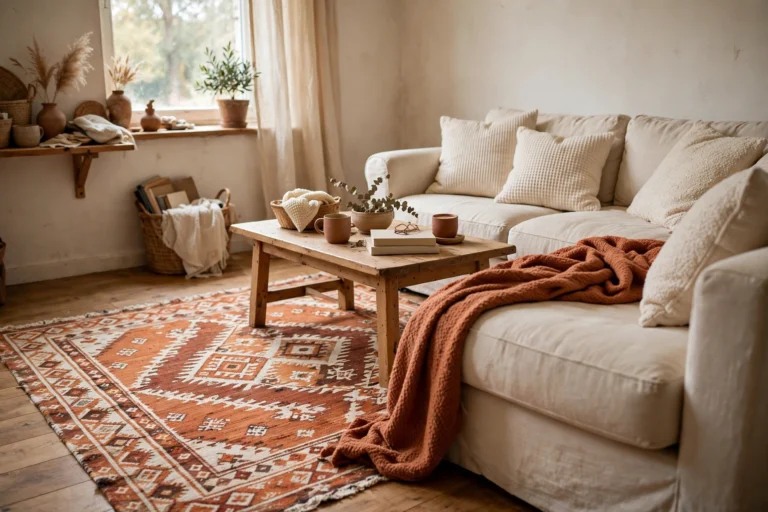
Not every classic Persian has a medallion. All-over patterns — the repeating Herati motif of diamonds and leaves, or a dense floral lattice — spread their pattern evenly across the whole rug, with no centre and no single focal point. In a living room that makes for a softer, more enveloping warmth: the floor feels like a patterned carpet in the best sense, and the furniture can sit anywhere on it without arguing with a central motif.
That evenness is practical, too. An all-over Persian is the most forgiving classic for real furniture layouts — no medallion to centre, no border symmetry to protect, and the dense repeat disguises wear paths and spills better than any other traditional design. In warm terracotta, cream and soft navy it gives a collected room its cosiness without formality, pairing happily with plain sofas and simple wood pieces that let the floor carry the detail.
Tip: With an all-over pattern, keep every other textile in the room solid — sofa, cushions, curtains. One patterned surface at this density is richness; a second one is noise.
7. Go Soft and Neutral With an Ivory Persian
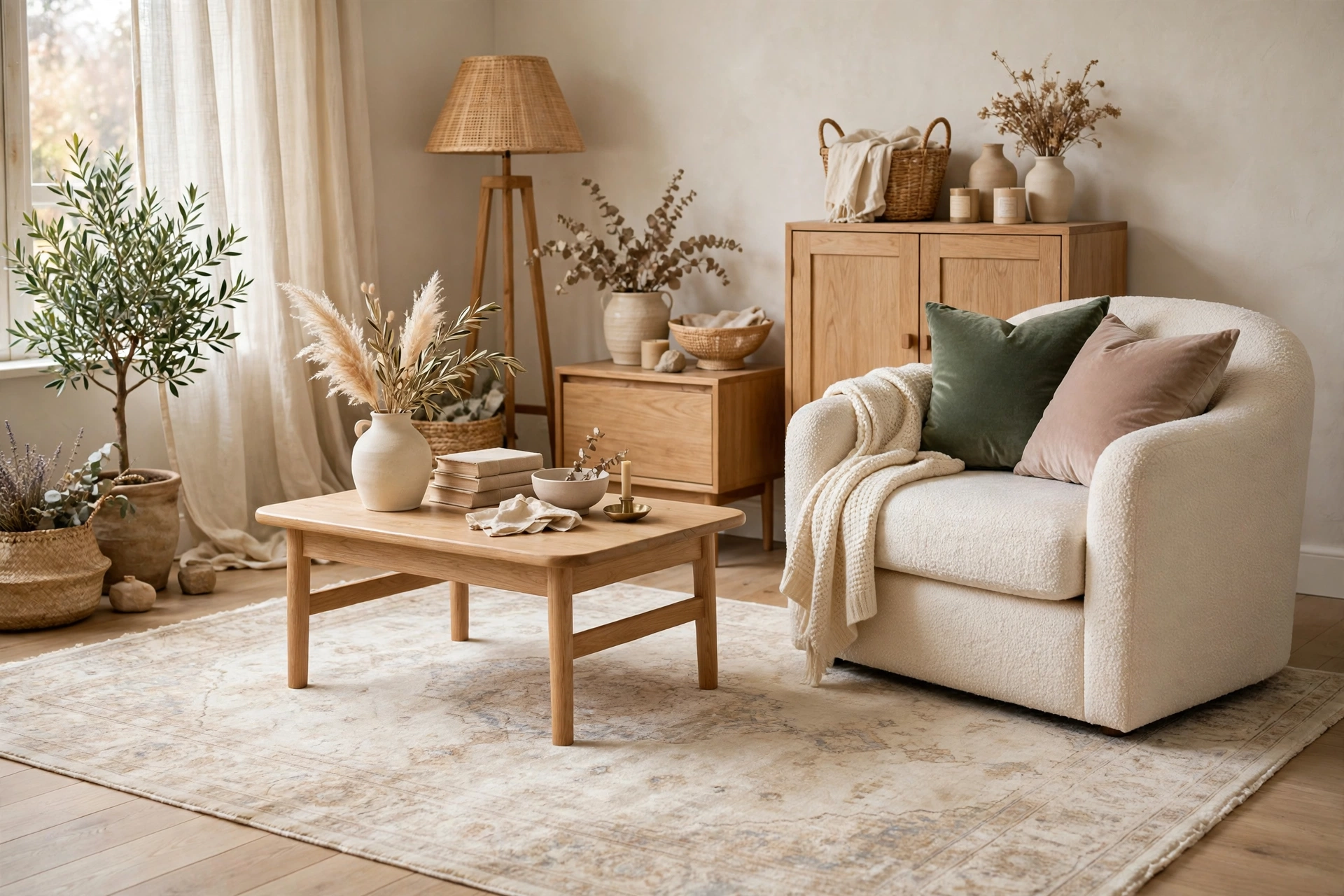
A collected room does not have to be dark. The soft neutral Persian — ivory or cream field, motifs in faded taupe, pale gold and the whisper of washed blue or rose — delivers the same intricate pattern and history as its deep-coloured cousins, at a fraction of the visual weight. It suits bright rooms, small living rooms, and anyone who loves the Persian pattern language but lives in a light, Scandinavian-leaning home.
The richness here comes from layering tones and textures instead of colours: the ivory rug under a cream sofa, separated by pile and pattern; velvet cushions in the rug’s faintest accent shade; light oak and one piece of dark wood to keep the palette honest. Because the pattern is tonal, it reads as texture from a distance and reveals its detail up close — the quietest, most grown-up version of the classic.
Tip: A pale Persian shows its quality in the motifs. Up close the pattern should still be clearly woven and varied, not a flat print — in a neutral rug, that fine detail is the entire luxury.
Before You Buy: 5 Rules That Save Regret
- Decide your temperature first. Warm collected rooms start with burgundy, rust and warm navy; cool collected rooms start with navy, slate and ivory. Committing to a temperature before you shop halves the options and stops the rug fighting your light and wood tones.
- Read the secondary colours, not the field. The colours you will actually decorate with are the small ones — the ivory motif, the sage leaf, the gold line. Photograph the rug and zoom in: if none of those tones exist anywhere in your room or your plans, the rug will always feel borrowed.
- Size for the seating, border visible. A collected look needs the rug’s border showing — it is the frame of the picture. Front legs of sofa and chairs on the rug as a minimum, with the full border visible beyond the coffee table; when between sizes, the larger one almost always looks more gathered and generous.
- Wool is worth it here. More than any other rug style, a Persian lives or dies by its material. Wool’s natural lanolin resists stains, its pile holds the pattern’s fine detail, and it ages into patina instead of wearing out. A good wool or wool-blend Persian-style rug is the budget-honest choice over a decade.
- Buy the pad with the rug. A felt pad protects both the rug’s backing and the floor, stops a layered or lightweight Persian from travelling, and adds the soft underfoot cushion that makes a traditional rug feel luxurious rather than thin.
Frequently Asked Questions
Are Persian rugs out of style?
No — Persian rugs are one of the few genuinely timeless floor coverings, and current design has moved back toward them: vintage-inspired and faded traditional patterns are among the strongest-selling rug styles right now. A classic palette in a faded or well-made finish does not date the way a trendy geometric or a novelty print does.
What colours go with a burgundy Persian rug?
Cream and oatmeal upholstery, walnut and dark oak wood, brass and antique gold metals, and the rug’s own secondary tones — navy, sage, soft gold — used one at a time in cushions or curtains. Warm neutrals let burgundy read as rich rather than heavy.
Can a Persian rug work in a small living room?
Yes, and it can make a small room feel more finished, not less. Choose a faded or ivory-leaning Persian so the pattern stays soft, size it so the front legs of the seating sit on it, and keep the rest of the room’s textiles solid. The rug becomes the room’s one rich surface and everything else calms down around it.
How do I tell a good Persian-style rug from a cheap-looking one?
Look at the pattern’s edges and the colour variation. A good rug has crisp, detailed motifs, subtle natural-looking variation in the dye (abrash), and colours that are deep but slightly muted. A cheap-looking one has blurry motifs, flat uniform colour and a shiny synthetic sheen — all most visible in bright light, so check before you buy.
The Bottom Line
A rich, collected living room is not assembled in a weekend — but a Persian rug is the one piece that makes it look as though it was. Start with your temperature, burgundy-warm or navy-cool, let a faded finish or a classic medallion carry the room’s history, and build every later purchase out of the colours already woven into your floor. Get the size generous and the material honest, and the room will keep collecting itself around the rug for years.
Save this list for your next room refresh, and follow Decor Velora for 3 fresh home decor ideas every day — rugs, small apartment decor, mirrors, curtains and cozy room makeovers.