
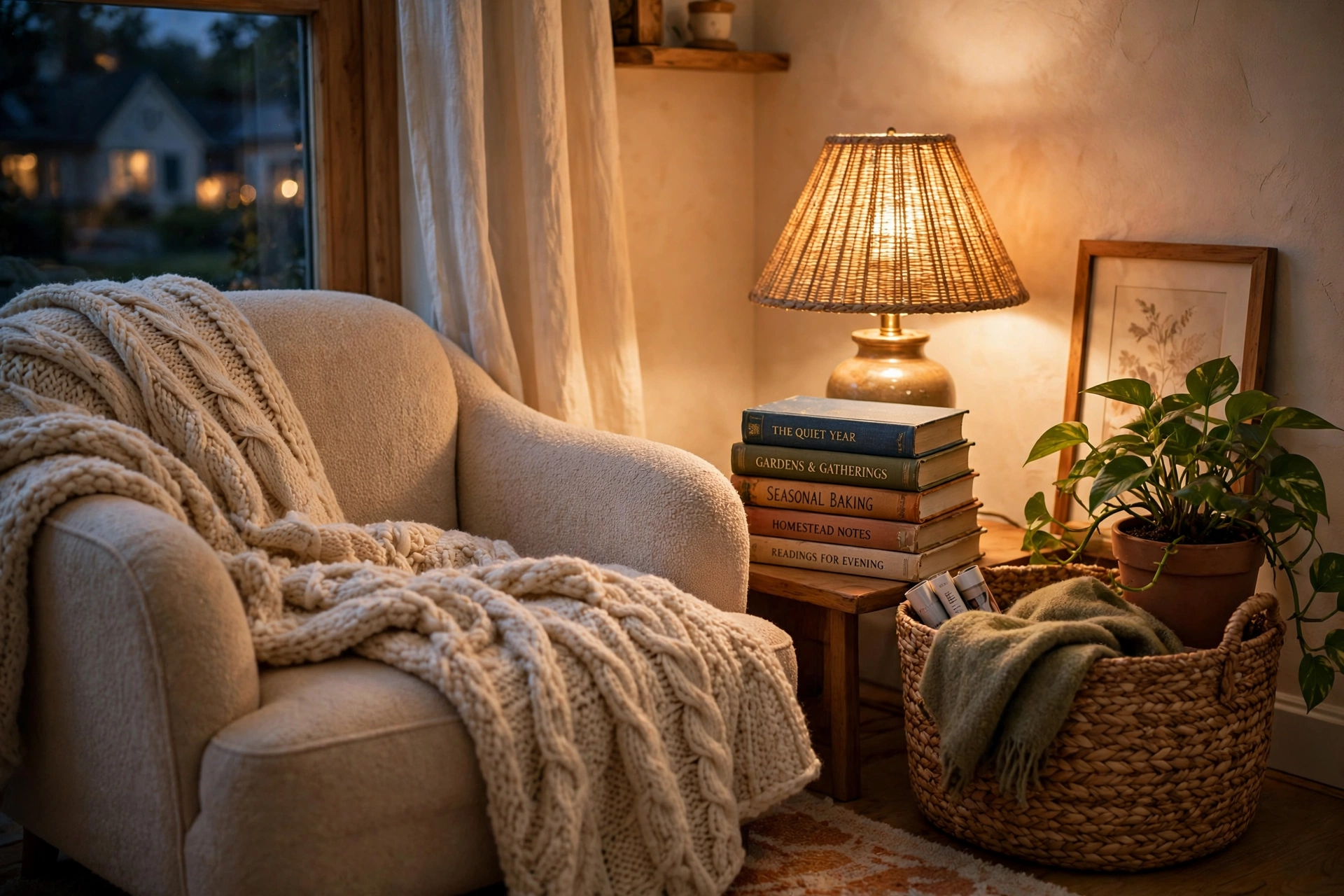
40 Easy Home Decor Ideas That Make Every Room Feel Warm and Welcoming
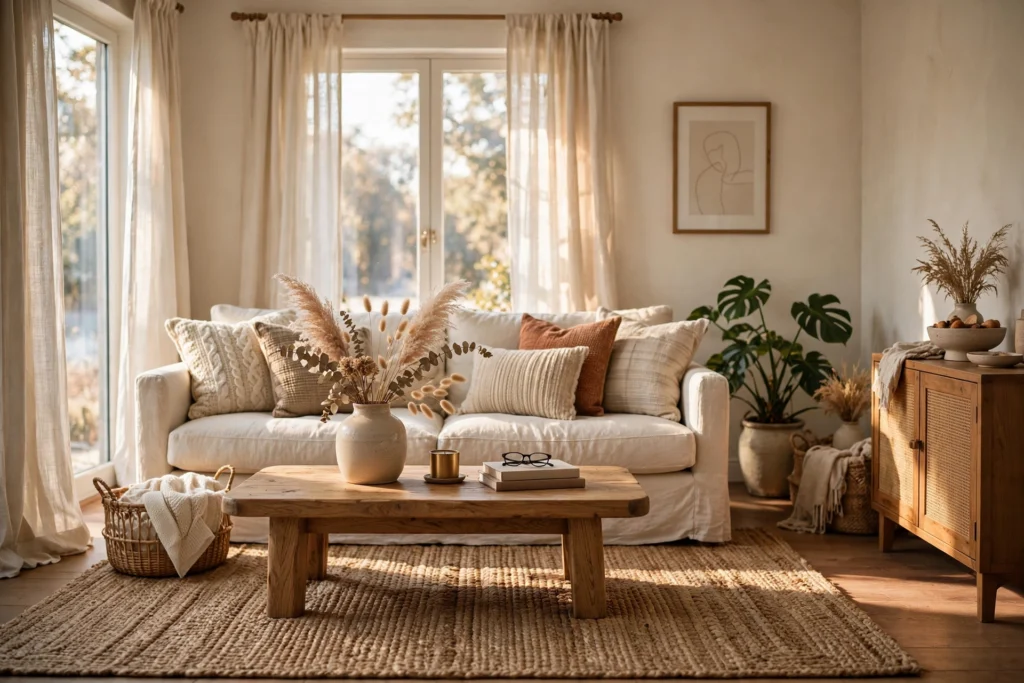
Warm and welcoming is not a style you buy — it is a feeling you build. Most homes are a few changes away: better light, softer texture, a bigger rug, something personal on the wall.
The 40 ideas below work in any room, on almost any budget, grouped by upgrade, so you start where home feels coldest. Pick three, and the house already feels different.
The 3 welcoming rules behind every idea below:
- Big pieces first, ornaments last. Paint, rugs and lighting change how a room feels; accessories only polish what is there.
- Warm light and natural texture beat more stuff. A linen throw and a warm bulb add more welcome than a shelf of objects.
- Every room needs one personal thing. A travel print, an inherited piece, real books — rooms feel cold when nothing has a story.
Color & Light Foundations
1. Start With a 60-30-10 Color Palette

Welcoming rooms follow one recipe: about 60 percent a soft main color, 30 percent a supporting tone, 10 percent a lively accent. Pick your three colors once, and make every later purchase answer to them.
2. Paint Is the Highest-Impact Change You Can Make
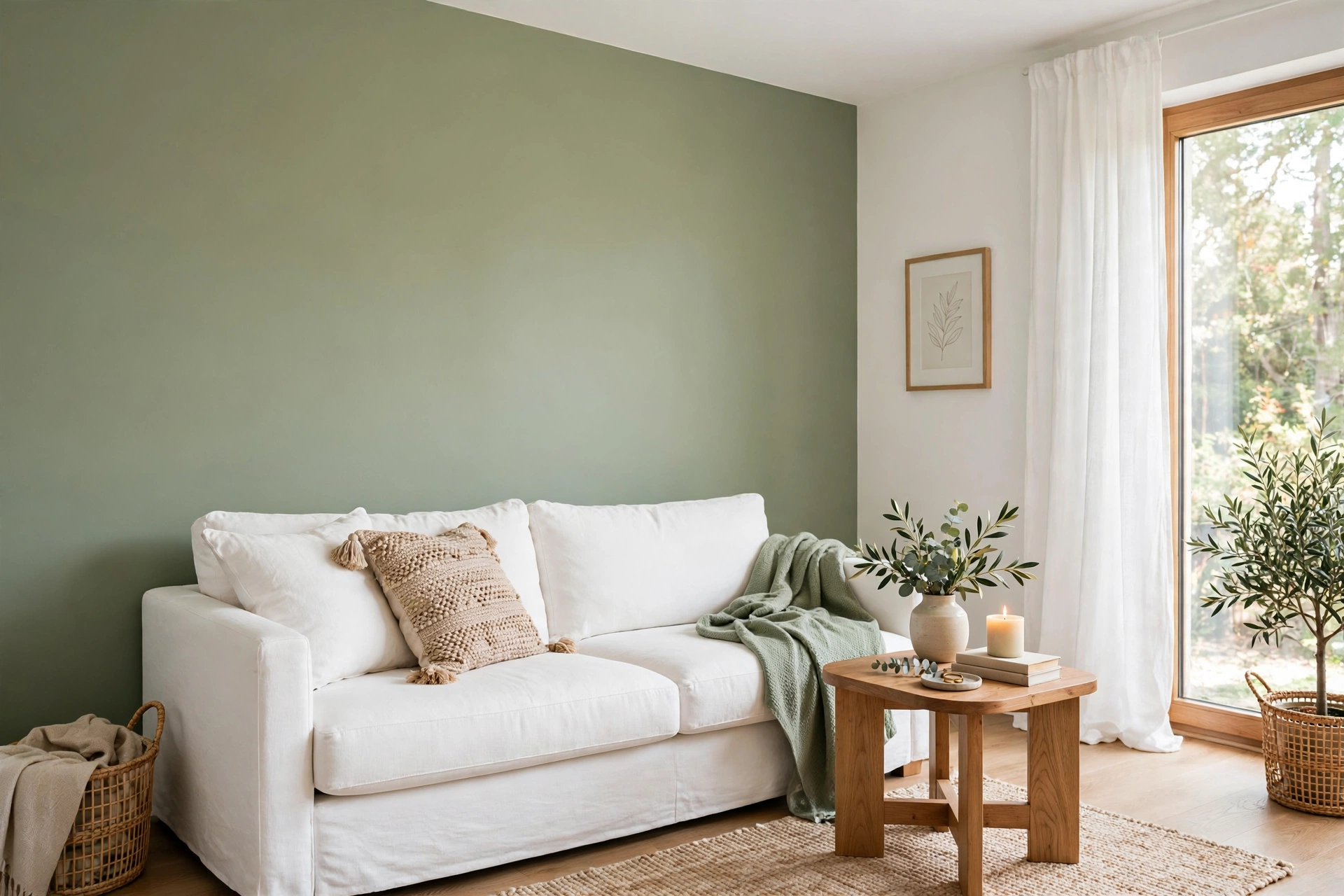
Paint changes a room more than any object in it, for the least money. One warm white or a sage accent wall instantly resets the mood. Change only one thing this year — change the walls.
3. Layer Light at Three Heights

Rooms lit by one ceiling light feel flat. Layer three heights instead: a ceiling light, a lamp at eye level, and one low candle glow. Layered light creates the warm pools that make people linger.
4. Switch Every Bulb to Warm White

Cool daylight bulbs are why many rooms feel like offices. Swap every bulb to warm white — around 2700K — and wood, fabrics and skin tones soften at once. A ten-minute change that alters every evening at home.
5. Hang Curtains High and Wide

Hang rods close to the ceiling and wider than the frame, so fabric stacks on the wall, not the glass. Windows look bigger, ceilings taller, more daylight gets in. The oldest decorator trick — because it always works.
6. Repeat One Accent Color Three Times
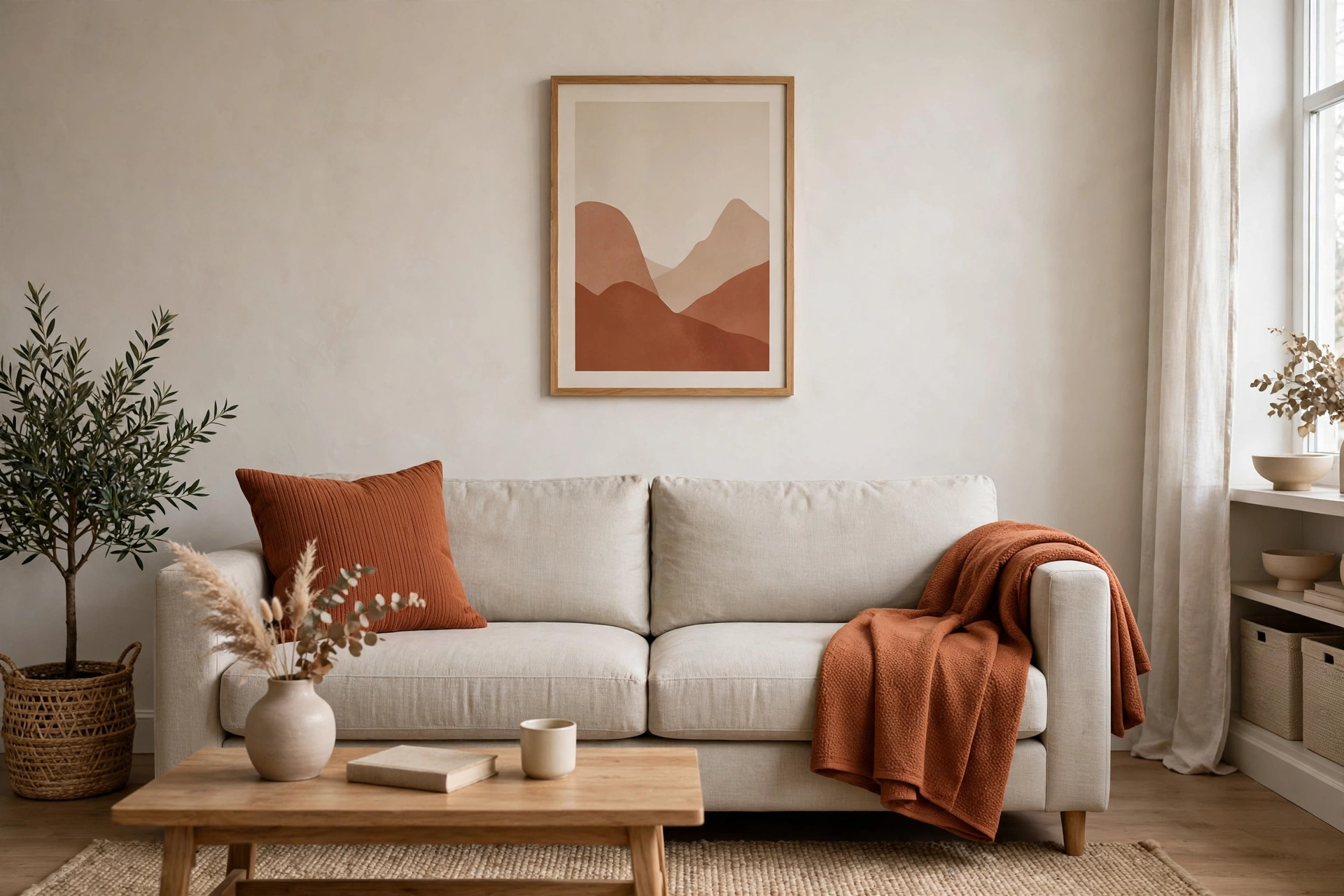
An accent color used once looks like an accident; used three times, it looks like a plan. Echo your terracotta, olive or navy in a cushion, a throw and one piece of art.
7. Warm Up White Walls With Wood Tones

All-white rooms feel cold because nothing in them is warm. Real wood — an oak table, walnut shelves, a rattan chair — brings the warmth in. Even one or two wooden pieces change the whole room’s temperature.
8. Keep Big Pieces in Soft Neutrals
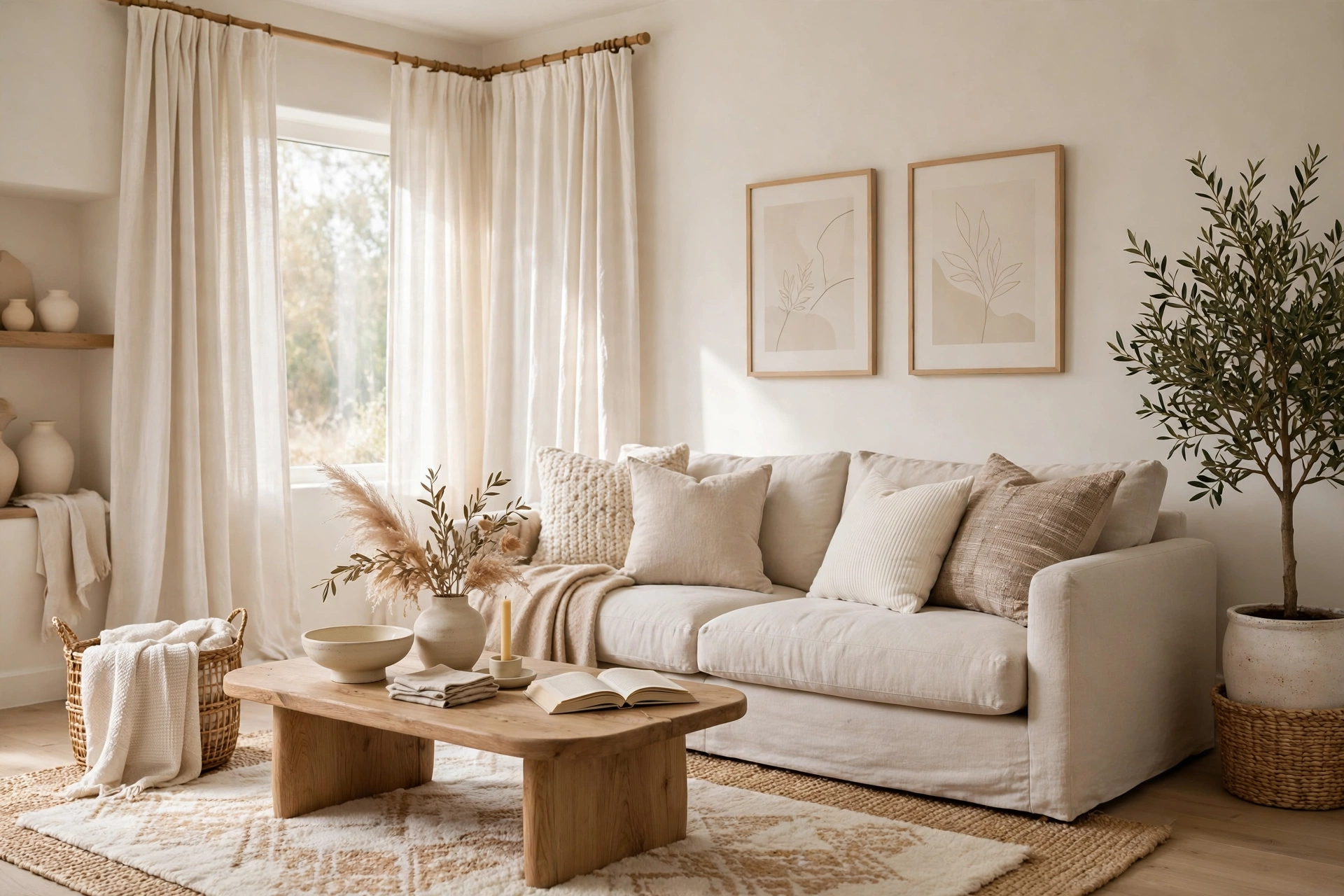
Cream, warm white, beige and soft gray are not boring — they are the base everything else shines against. Keep walls and furniture neutral, and color arrives through cushions and art, then leaves when you tire of it.
Texture & Textiles
9. Mix Three Textures in Every Room

A room with only smooth surfaces feels finished but cold. Mix a texture trio — something soft (linen), something natural (wood or stone), something woven (jute, rattan, wool). Eyes read it as warmth instantly.
10. Swap Cushion Covers Instead of Buying New Cushions

New cushions are expensive; new covers are not. Keep a rotation of linen and cotton covers in your palette colors and swap them when the room feels tired. The sofa looks newly bought; off-duty covers store flat.
11. Drape a Throw Where People Actually Sit

A throw folded over the sofa arm or the foot of the bed is an open invitation to sit down and stay. Choose chunky knits or washed cotton, placed where hands reach — decor that gets used daily.
12. Let Linen Curtains Soften the Light

Heavy drapes swallow light; washed linen filters it. Linen curtains turn harsh midday sun into a soft glow that flatters everything in the room, and their relaxed wrinkles suit real homes. Choose warm white or natural flax.
13. Put a Woven Basket in Every Room

Clutter is the enemy of cozy, and woven baskets are its prettiest solution. One by the sofa for blankets, one in the entry for shoes, one in the bathroom for towels — the mess disappears, the texture stays.
14. Layer the Bedding Like a Hotel

Hotels feel luxurious because the bed is layered: sheets, a duvet, a folded throw, cushions in two sizes. Copy the stack in your palette colors — the bedroom feels cared for and resets in seconds.
15. Choose Natural Fibers Over Shiny Synthetics

Shiny synthetics reflect light coldly and feel clammy; natural fibers absorb light and soften it. Cotton, linen, wool and jute in curtains, cushions and rugs warm a room without changing its colors. Fiber matters more than price.
16. Add Dried Flowers in a Ceramic Vase
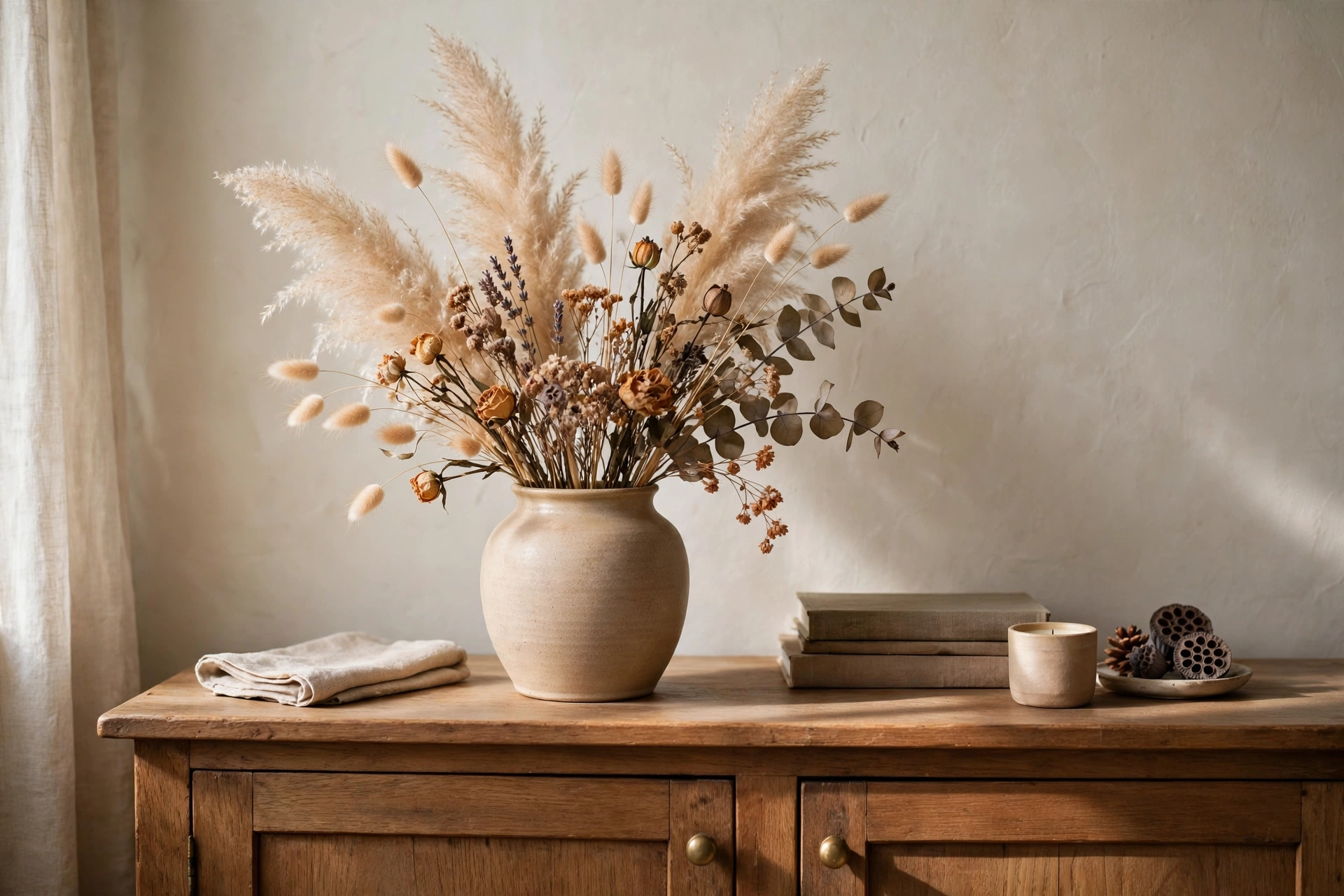
Fresh flowers are lovely and brief; dried flowers last for months. A ceramic vase of pampas or dried blooms on a sideboard adds height, softness and a handmade feel. Swap the stems once or twice a year.
Rugs, Furniture & Layout
17. Buy the Largest Rug the Room Can Hold
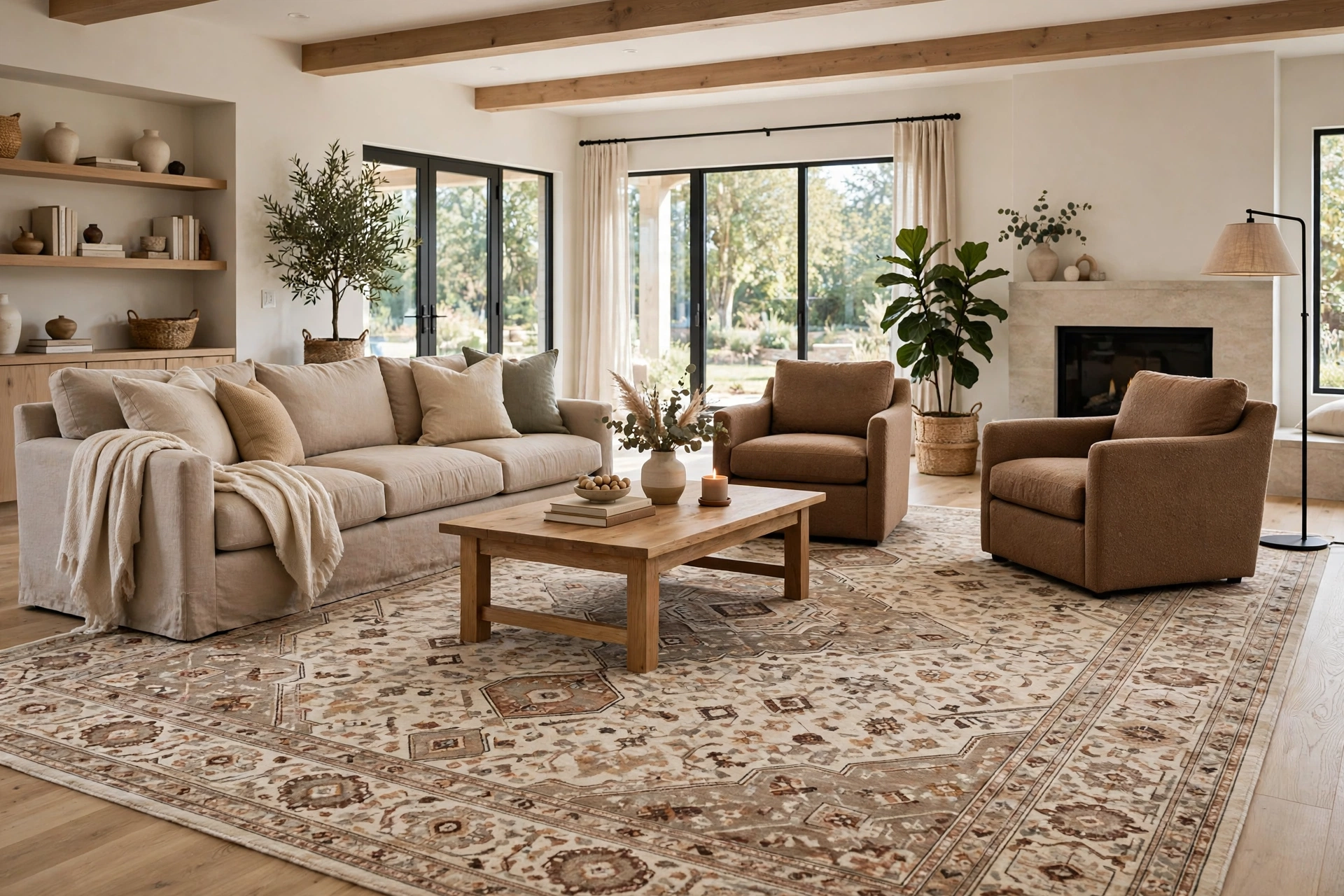
The commonest living-room mistake is a rug that is too small, leaving furniture floating apart. Buy the largest size the room can hold, with at least the front legs of every seat on it — one generous rug unites the group.
Tip: Tape the rug’s outline on the floor first — the right size is always bigger than you guessed.
18. Float Furniture Away From the Walls

Pushing every piece against the walls makes a room feel like a waiting area. Pull the sofa a few inches forward, slip a console or lamp behind it, and the room gains depth.
19. Give Every Seat a Surface and a Light
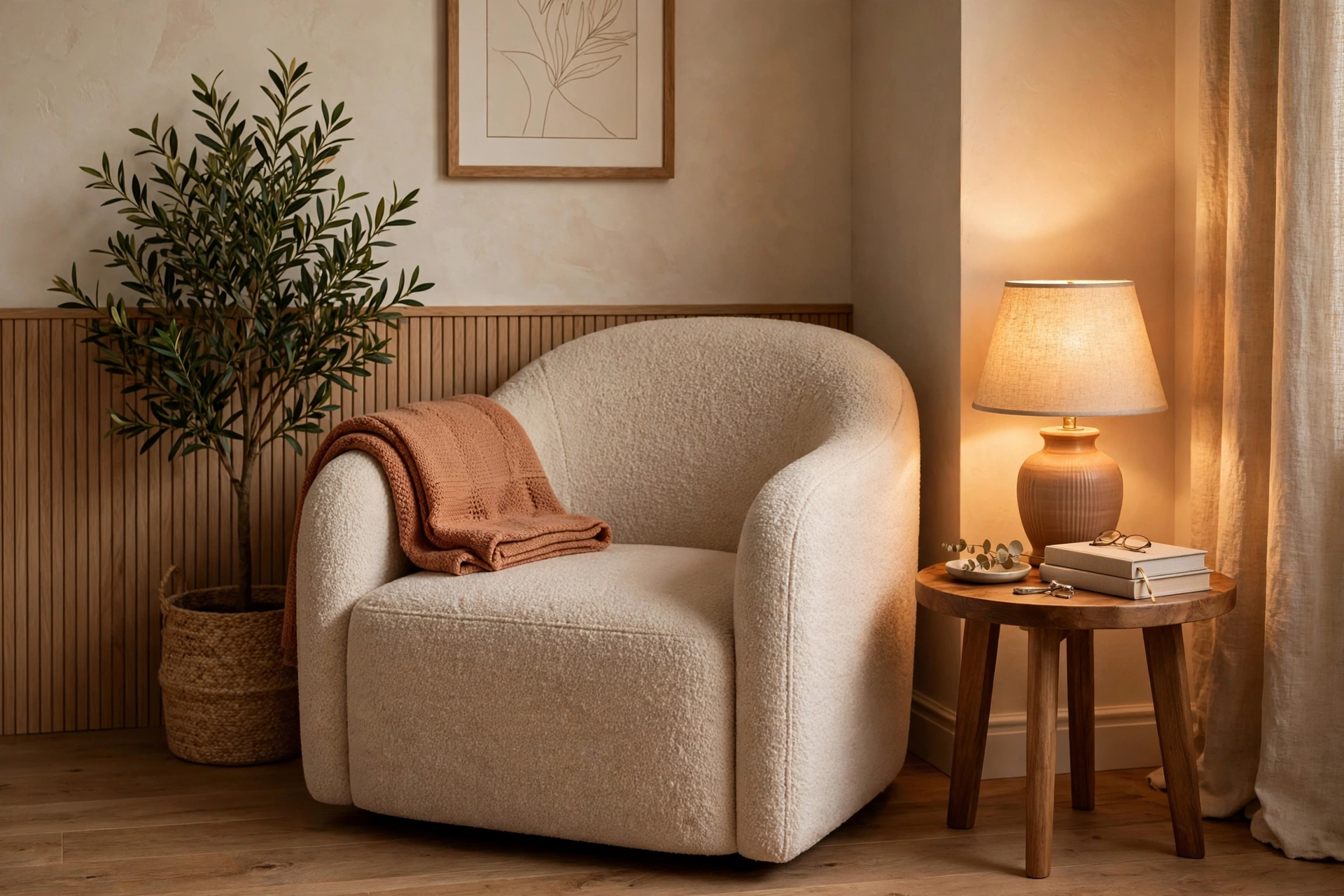
Every seat in a welcoming home passes one test: somewhere to set a drink, and a light close enough to read by. Add side tables and lamps until every chair passes.
20. Anchor the Room With One Real Wood Piece
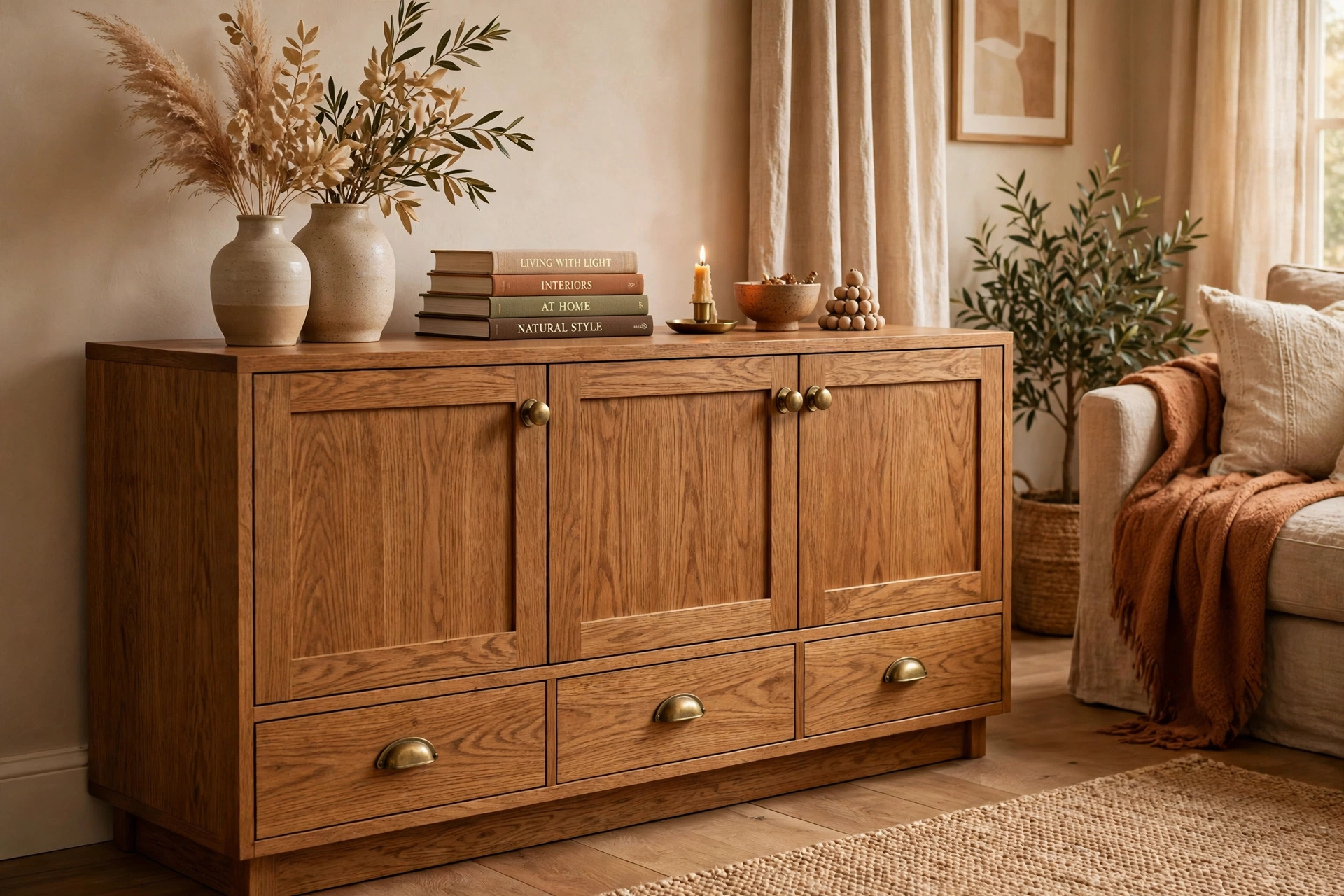
A single solid-wood piece — a dining table, a credenza, a coffee table — grounds a room of painted, upholstered furniture. Wood brings grain, weight and age flat-pack cannot copy. Buy it once, buy it well.
21. Mix Furniture Styles Instead of Buying a Set

Matching furniture sets are why many rooms feel like showrooms. Mix instead: a modern sofa with a vintage armchair, a farmhouse table with metal chairs. Pieces from different eras look collected — and collected is what welcoming means.
22. Add an Ottoman or Pouf for Flexible Seating
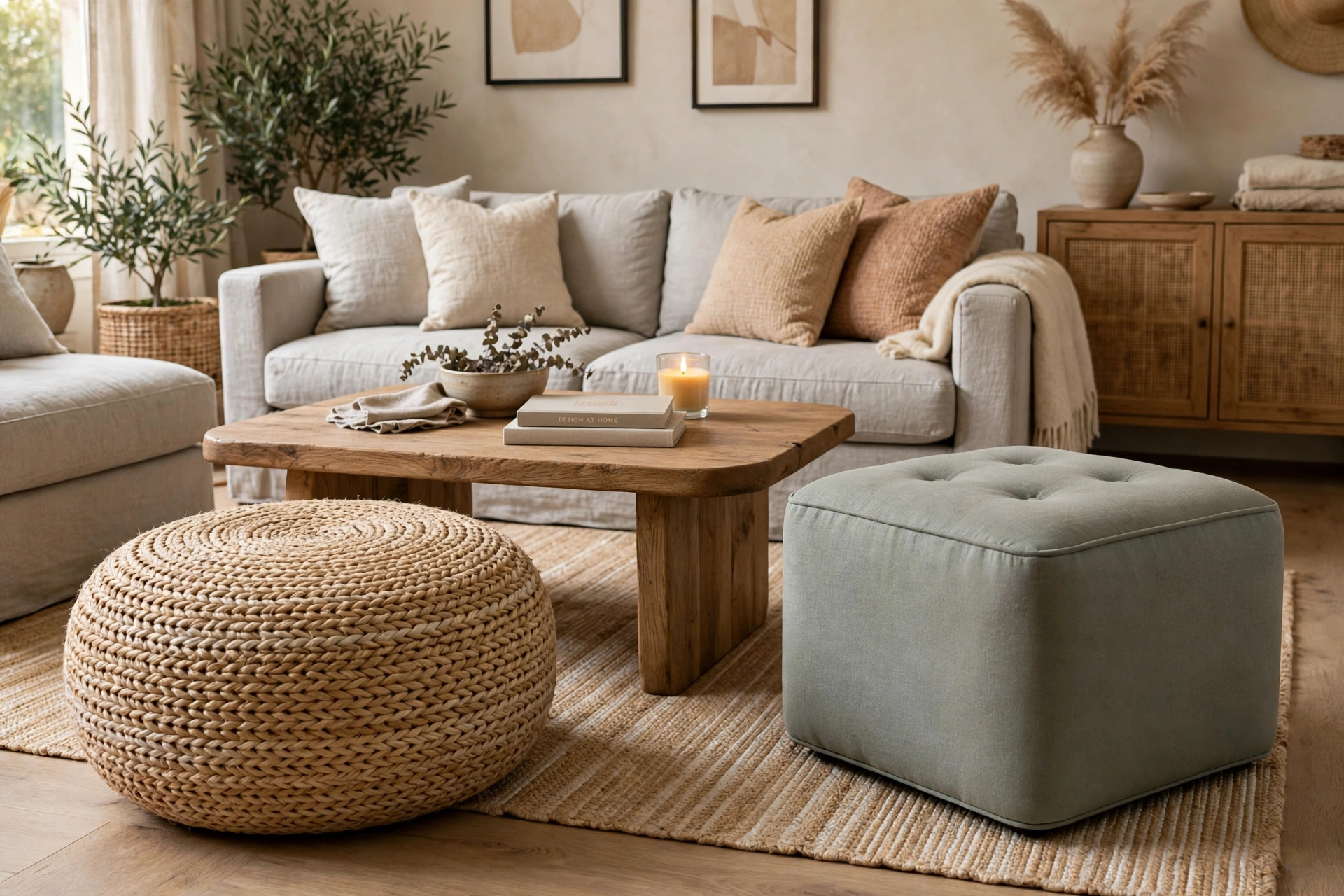
An upholstered ottoman or round pouf is the hardest-working small piece you can buy — extra seat, footrest, tray table, soft texture in one. It fills awkward gaps and keeps seating flexible.
23. Define Zones in Open-Plan Rooms With Rugs
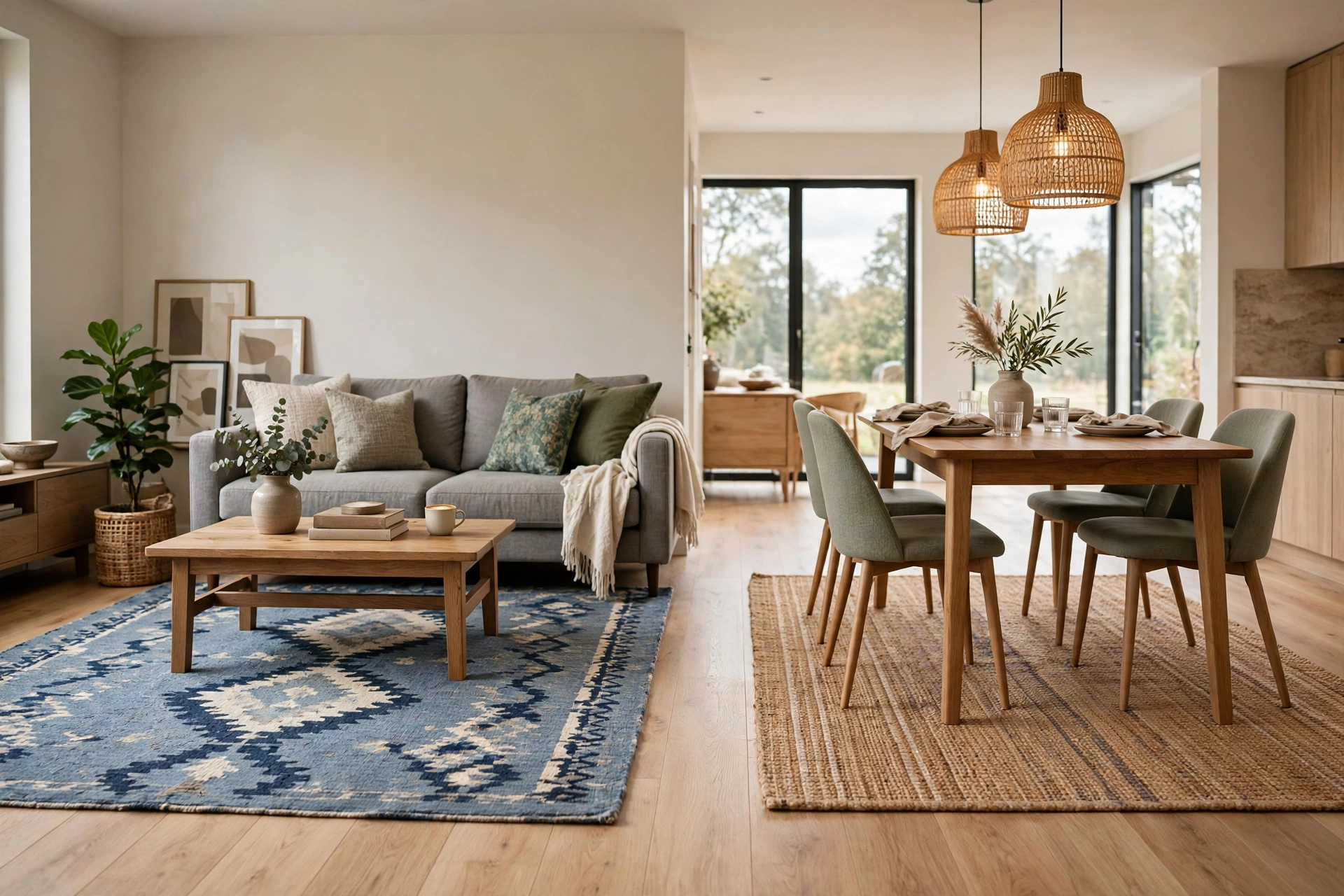
Open-plan rooms feel unsettled when nothing marks where activities change. A rug under the sofa zone and another under the dining table draw invisible walls, and each area feels like a room of its own.
24. Leave Breathing Room Around Furniture
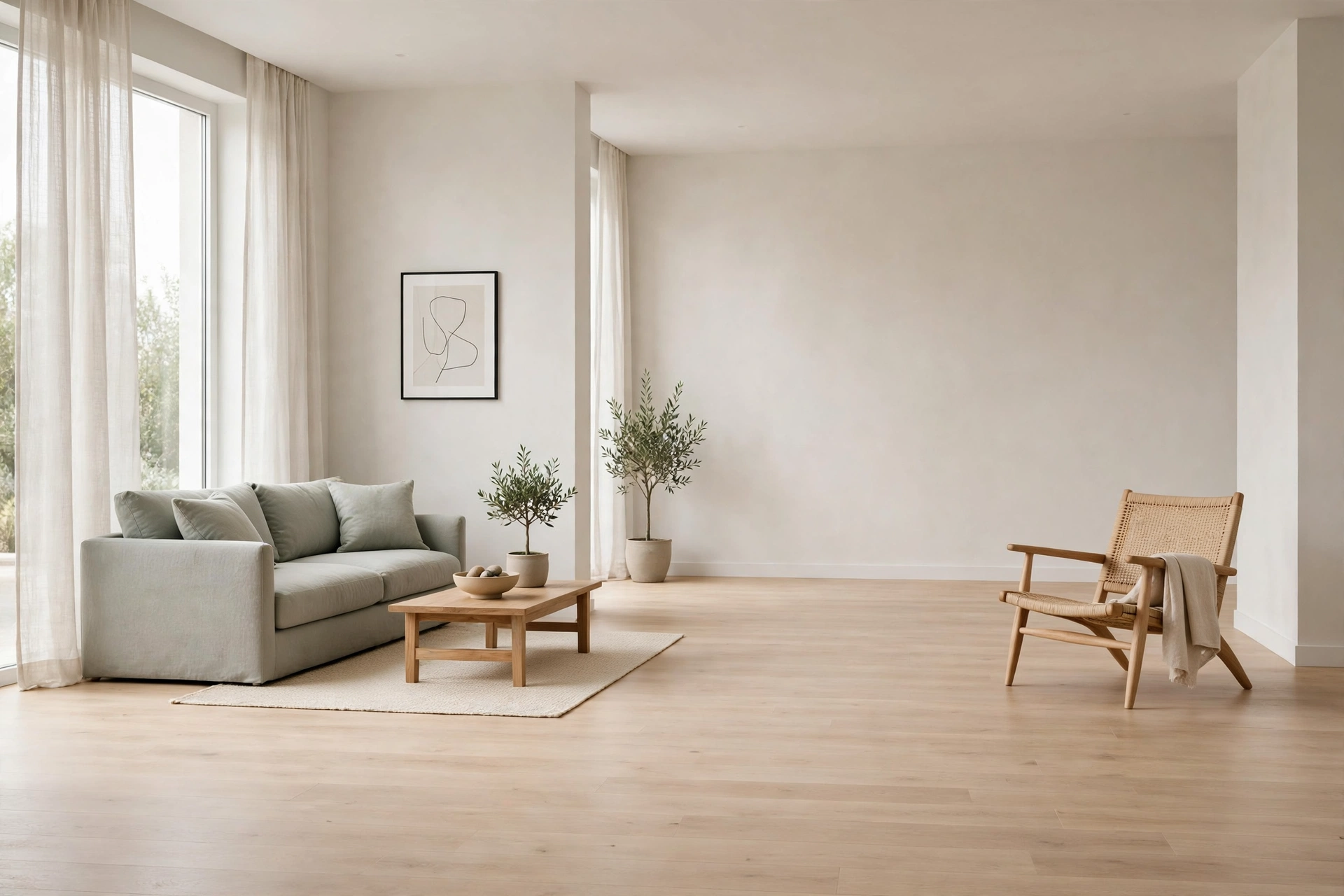
Welcome needs empty space. A room where every corner is filled feels busy, not cozy. Remove one piece or clear one corner and notice how the rest relaxes. Editing costs negative money.
Walls, Mirrors & Personal Touches
25. Hang One Big Thrifted Mirror
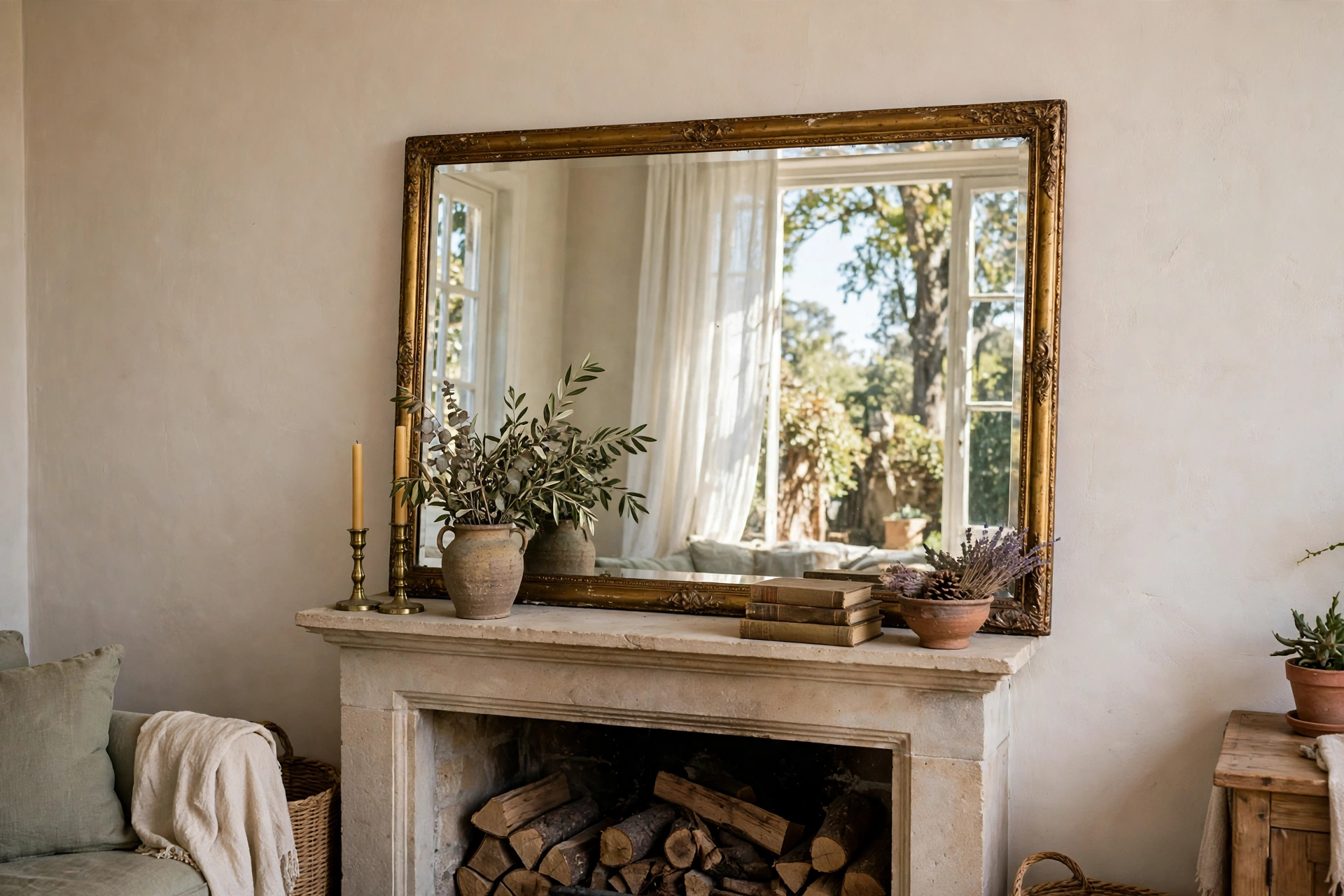
One large mirror doubles the light, doubles the view and gives a room a focal point for little money — especially second-hand. Lean an oversized thrifted frame on a mantel or hang it opposite a window.
Tip: Check thrift stores and marketplace listings weekly — big mirrors sell fast and cheap.
26. Build a Gallery Wall From Travel Prints

A small gallery of your own travel photos, printed and framed alike, beats generic art because it starts conversations. Keep frames one color, spacing even, and hang the group where people sit — personal walls feel like you.
27. Display One Inherited or Collected Piece
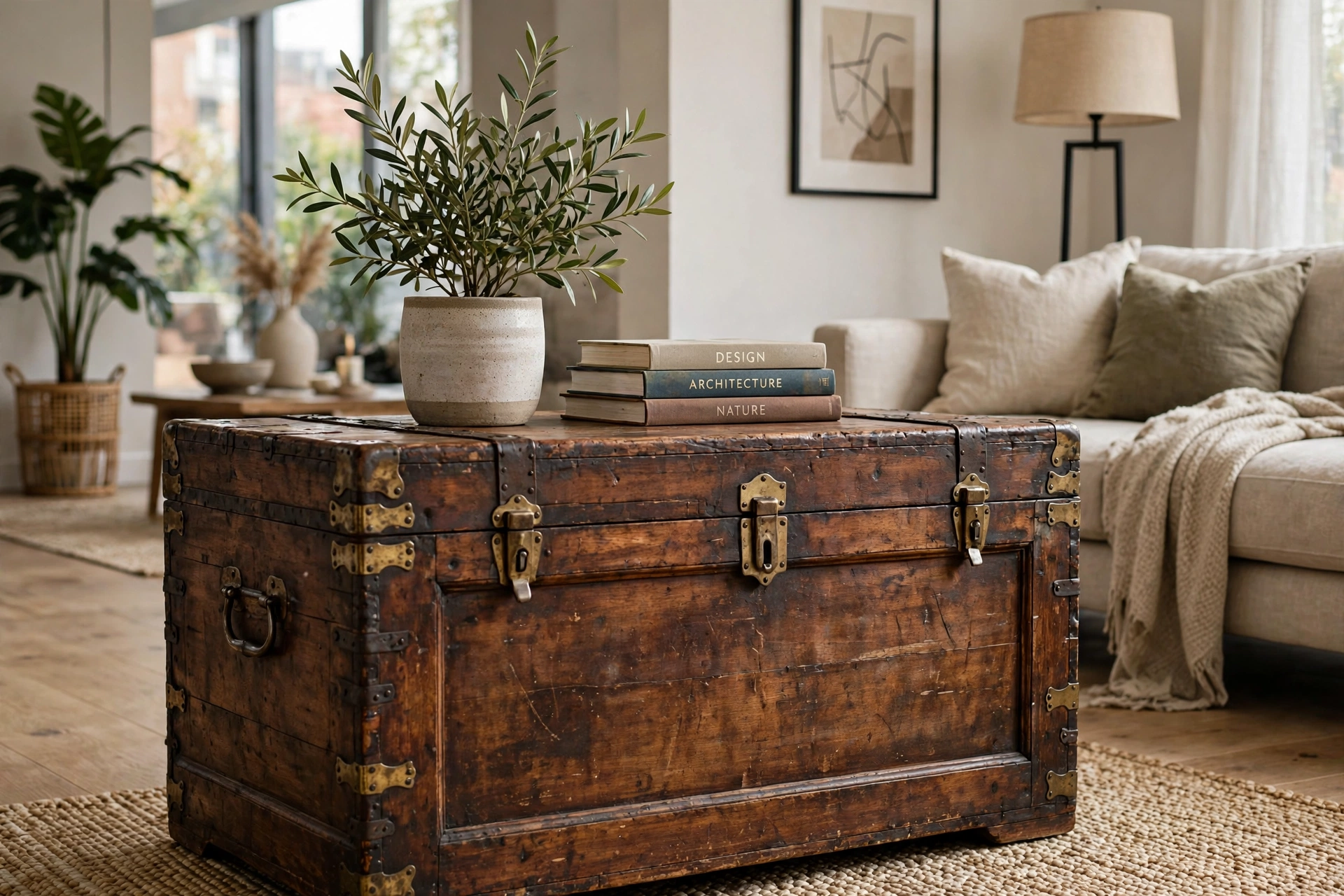
An inherited chest, a grandmother’s chair, a flea-market find — one piece with history gives a room a soul new furniture cannot. Style it proudly, and let its age warm everything around it.
28. Put Real Books on the Coffee Table

A stack of real, read books on the coffee table adds color, texture and personality in one move. Stack favorites in twos and threes, top one with an object — rooms with books feel lived-in and welcoming.
29. Go Big With One Oversized Artwork
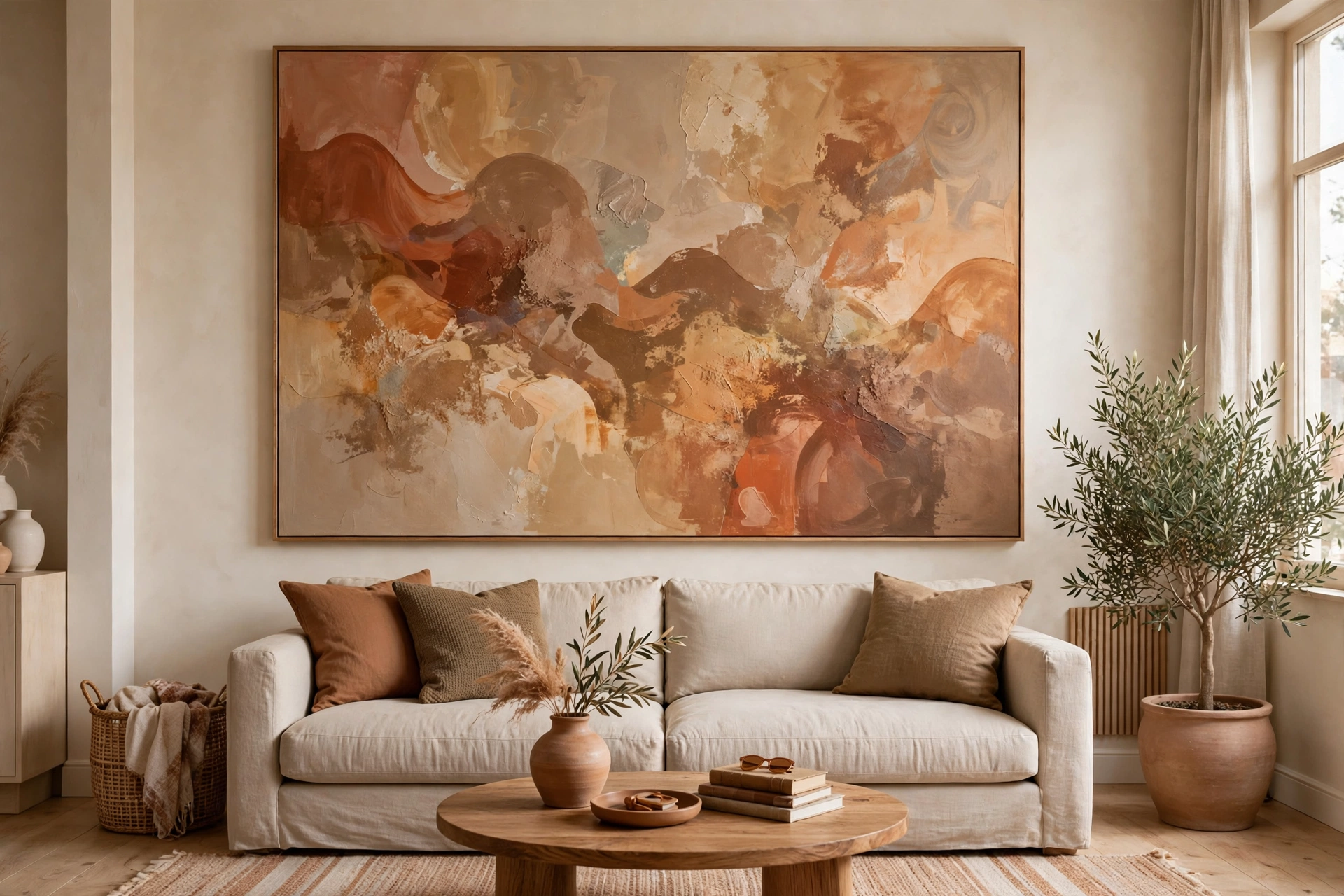
One oversized artwork looks calmer than a wall of small prints. Go as big as the furniture below it — about two-thirds its width — and hang it low. One canvas, one point of view.
30. Style Floating Shelves in Threes
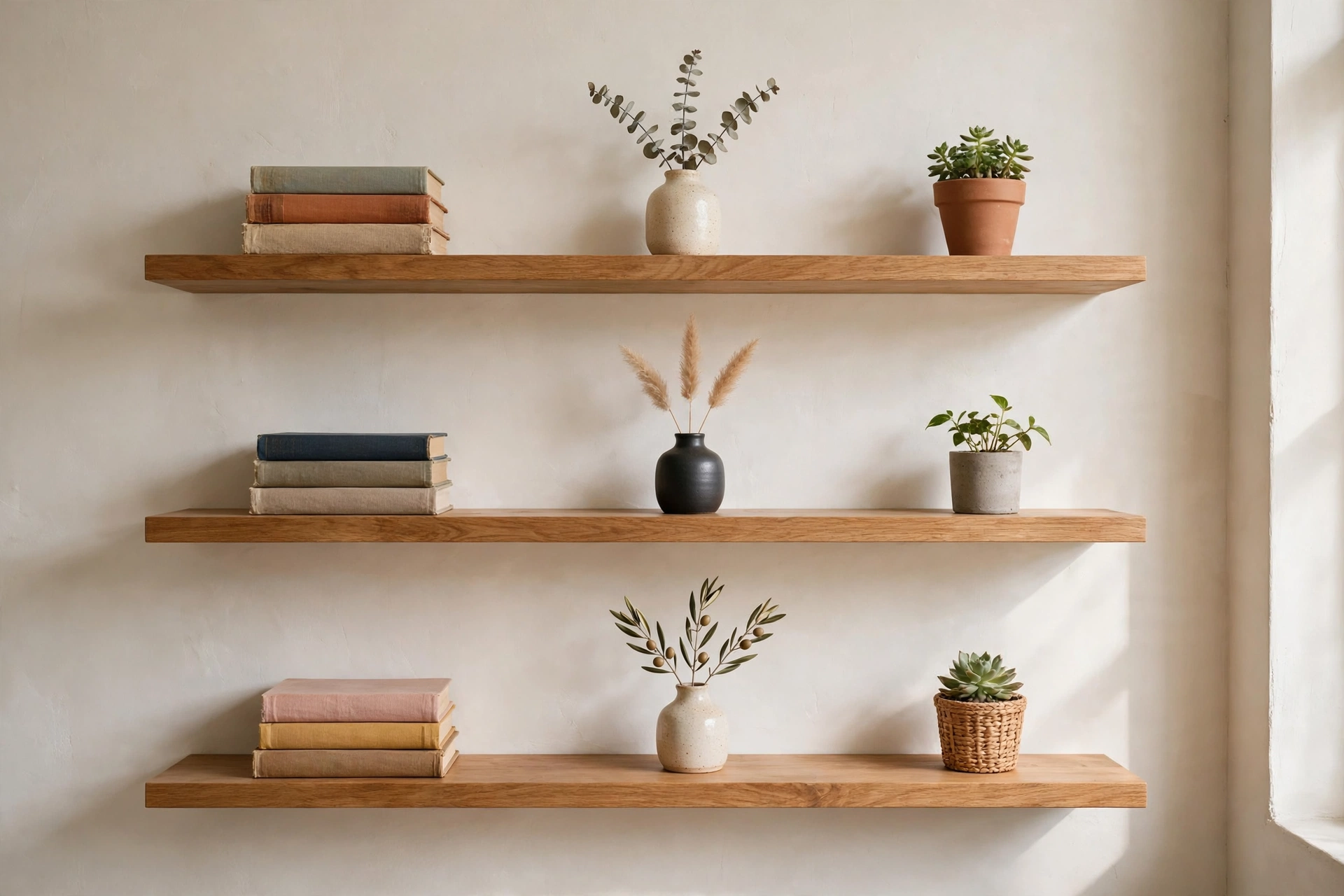
Floating shelves fail when they become storage; they succeed when styled. Group objects in threes — a vase, a small plant, a stack of books — with empty space between groups. The gaps make it look designed.
31. Add a Plant at Every Window

Every room needs something alive. A tall plant in a corner, a trailing one on a shelf, a small pot on the table — greenery softens hard edges and proves the room is cared for. Start with pothos and snake plants.
32. Frame the Things You Already Love
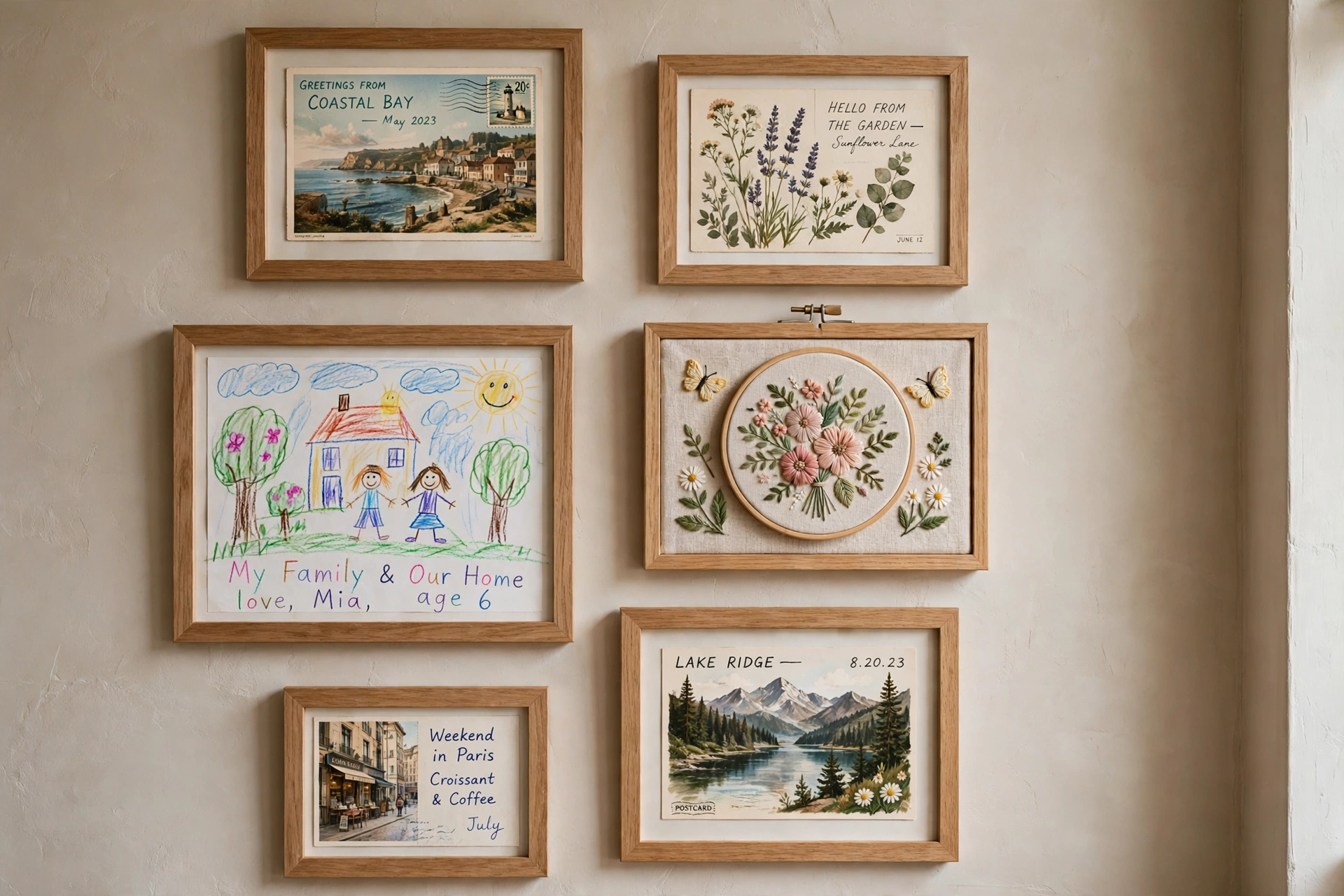
Postcards, a child’s drawing, a piece of beautiful fabric, a map from a trip — in a proper frame, each becomes art. Framing what you already own costs little and fills walls with meaning no print can match.
Styling, Storage & Finishing Touches
33. Style Surfaces With a Tray Vignette

Loose objects on a coffee table read as clutter; the same objects on a tray read as styling. Corral a candle, a vase and a book on one tray — every surface in the house can use this trick.
Tip: Trays make cleaning faster — lift one tray instead of ten objects.
34. Declutter One Surface Completely

Choose the surface you see first — entry console, kitchen counter, coffee table — clear it completely, then return only what is beautiful or used daily. One calm surface sets the tone for the whole home.
35. Hide Cords and Chargers in a Basket

Nothing cools a room faster than a tangle of chargers and cables. Route cords into one woven basket or cable box beside the sofa. The technology stays handy, the visual noise disappears, the corner looks finished.
36. Create a Welcoming Entryway Moment
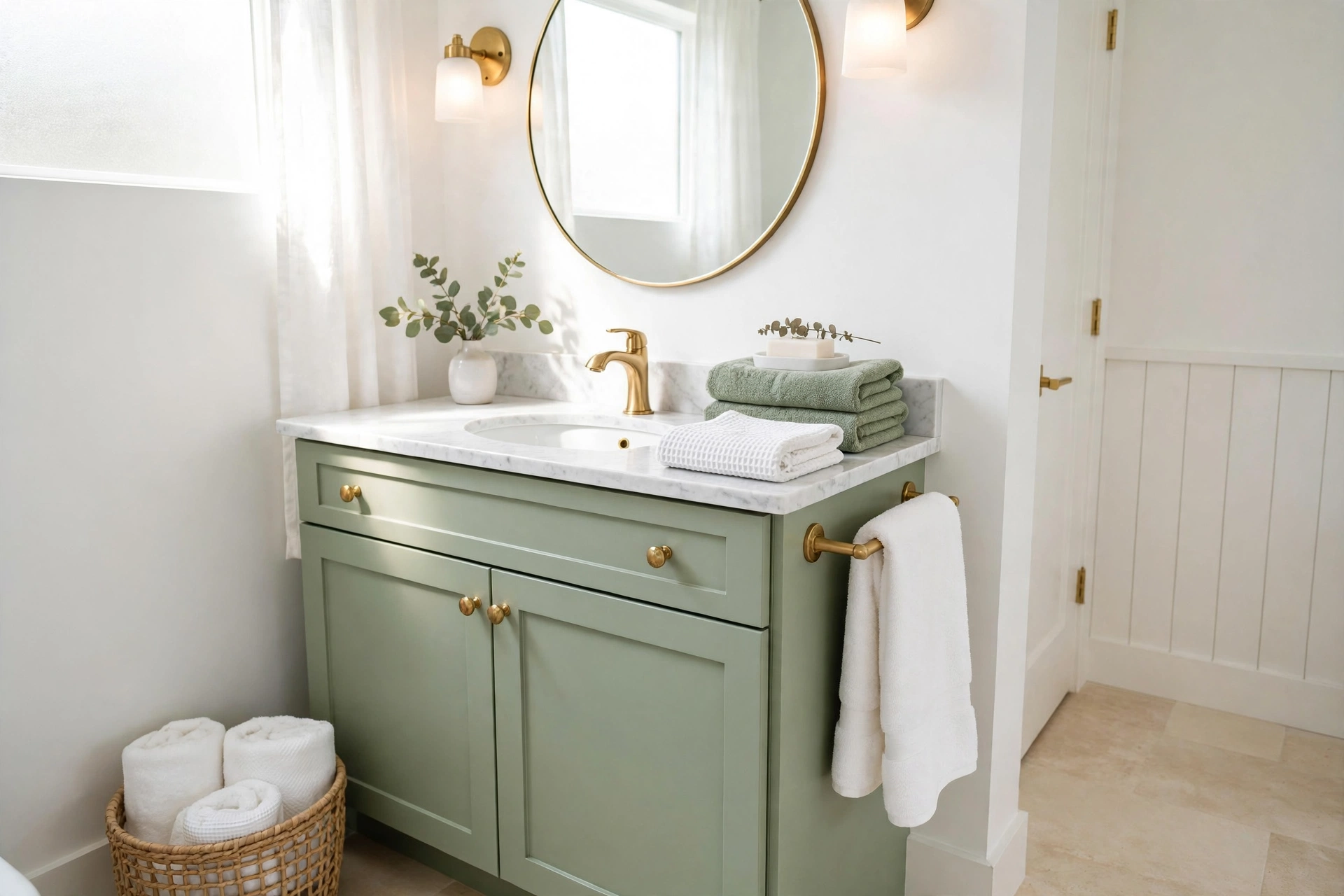
The entry is the first impression and the last goodbye. A bench or hooks, a mirror, one basket for shoes and a rug turn a narrow hallway into a welcome — five objects, felt immediately.
37. Keep a Simple Centerpiece Always Out

A dining table always set with a simple centerpiece — a bowl of fruit, a vase of branches, a runner, candles — looks inviting even on ordinary Tuesdays. Keep it low and movable so real dinners still fit.
38. Refresh With One Small Seasonal Swap
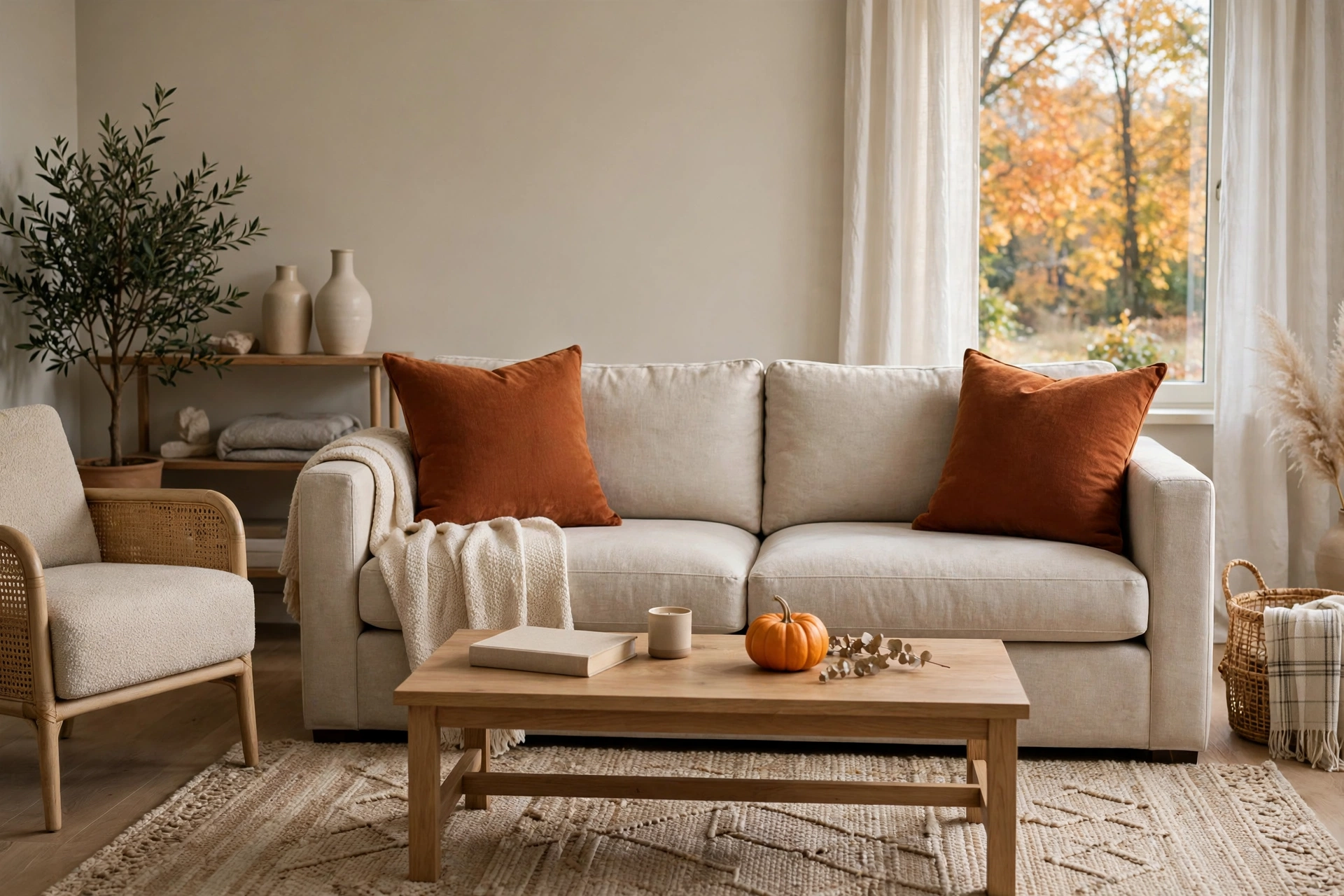
You do not need new decor four times a year — just a few swaps. Change cushion covers, the throw and one centerpiece with the seasons: lighter in spring, warmer in fall. Small rotations keep it feeling freshly decorated.
39. Set the Mood With Scent

Welcoming is partly invisible. A candle in the evening, a simmer pot on weekends, linen scents in the bathroom — scent tells guests a home is cared for at first breath. Repeat one scent family gently.
40. Finish Every Room With the Doorway Test
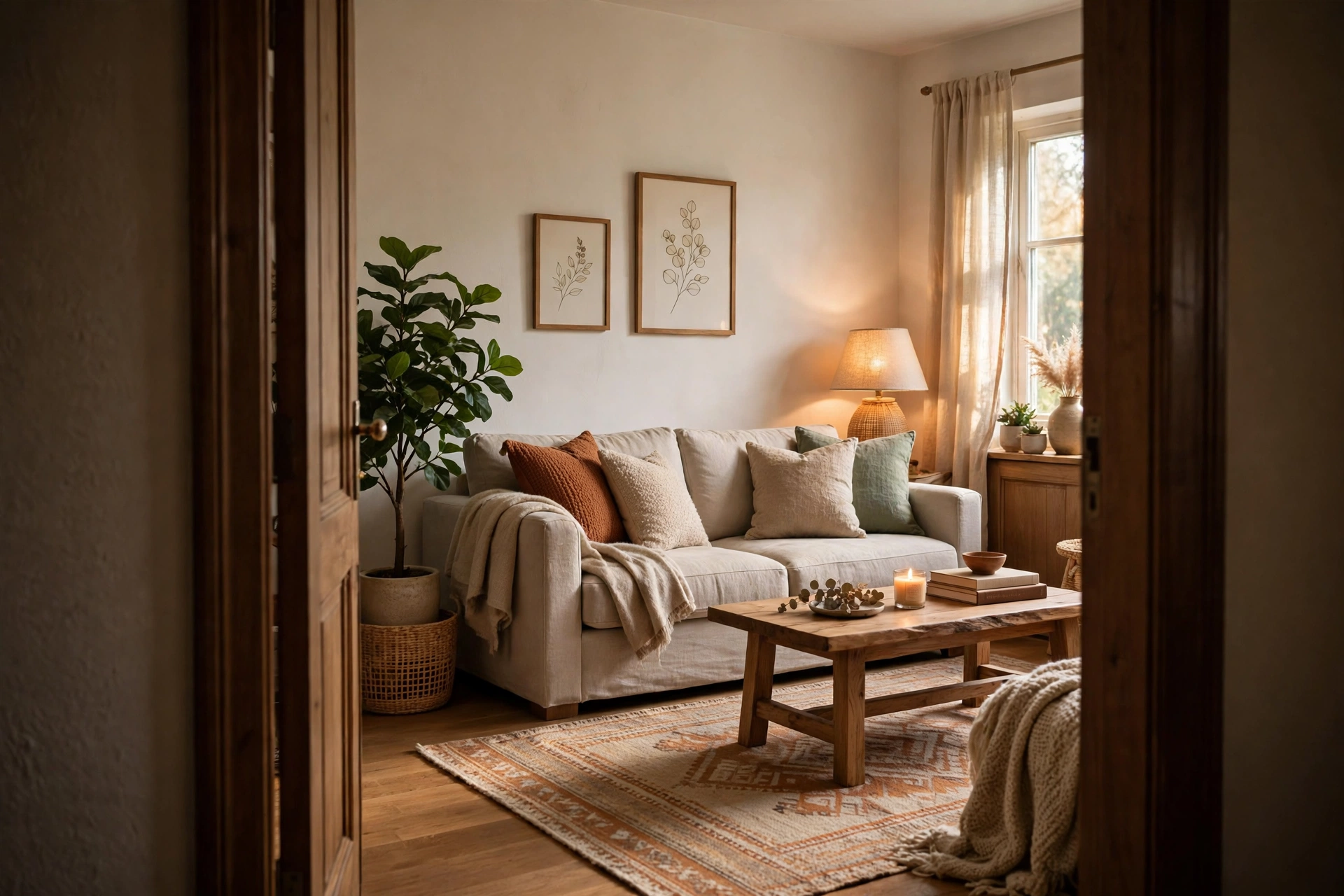
Finish every room the same way: stand in the doorway and study what a guest sees first. Fix that one view — straighten the throw, move the plant, clear the surface — before touching anything else.
Quick Glance: The 10 Fastest Whole-Home Refreshes
| Idea | Best For | Budget | Time |
|---|---|---|---|
| Warm-white bulbs everywhere | Instant warmth | Low | 10 minutes |
| One painted accent wall | The biggest mood change | Low | Half a day |
| Curtains hung high and wide | Taller windows, more light | Low | 1 hour |
| The largest rug that fits | Anchoring a living room | Medium | 30 minutes |
| A cushion-cover swap | A fresh sofa look | Low | 15 minutes |
| A tray vignette | Coffee-table clutter | Low | 10 minutes |
| Woven storage baskets | Everyday clutter | Low | 15 minutes |
| One big thrifted mirror | Dark or small rooms | Low | 30 minutes |
| A throw and layered cushions | A cold sofa corner | Low | 5 minutes |
| One surface cleared fully | A chaotic first impression | Free | 20 minutes |
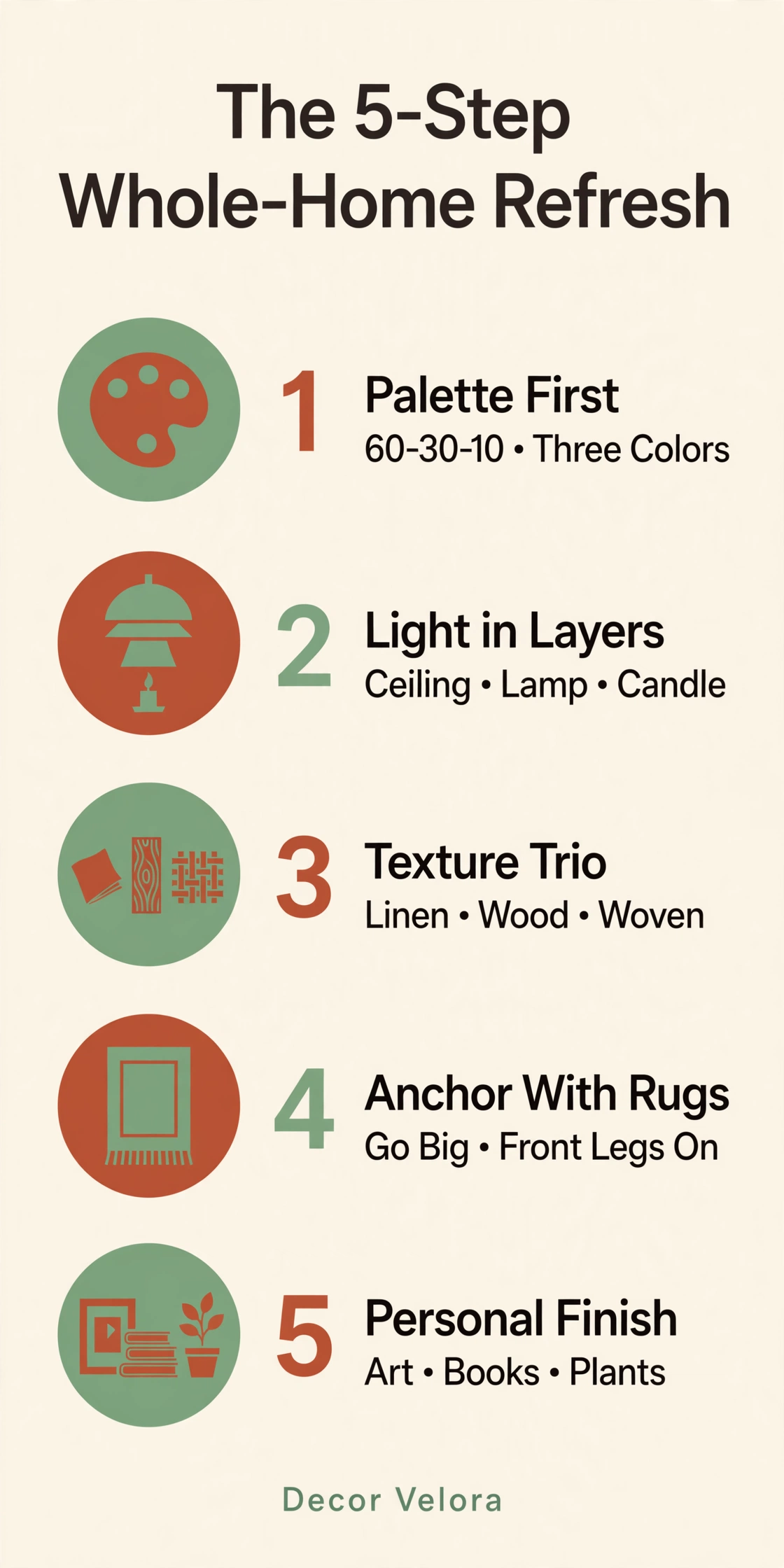
Pin it: refresh the whole home in five steps — palette, light, texture, rugs, personal touches.
Before You Start: 5 Rules That Save Regret
- Measure before you buy. Rug sizes, curtain lengths and mirror widths guessed at the shop are how refresh budgets leak.
- Decide your three colors first. Every later purchase gets easier — and cheaper — when it has to match a palette.
- Test light in the evening. Bulbs and paint look different after dark, which is when welcoming matters most.
- Shop your own home first. Moving a chair, lamp or artwork between rooms is a free refresh — try it before buying new.
- Do one room at a time. A finished room motivates; five half-finished rooms only drain the budget and the mood.
Frequently Asked Questions
How can I decorate my home on a budget?
Start with paint, warm-white bulbs and cushion-cover swaps — low-cost, high-impact. Then shop second-hand for mirrors and wood furniture, and rearrange what you own first.
How do I choose a color palette for my whole home?
Use the 60-30-10 rule: one soft main color for walls and big pieces, one supporting tone for textiles, one accent in small doses. Repeating the same three colors makes the whole home feel connected.
What makes a room feel warm and welcoming?
Three things: layered warm light instead of one ceiling bulb, natural textures like linen, wood and wool, and one personal object with a story. Missing any of them, rooms feel staged rather than lived in.
Where should I start if my home feels cold everywhere?
Start with the room you sit in most: light first, then the rug, then textiles. One fully warmed room teaches you the recipe — palette, light, texture — and the rest follows quickly.
The Bottom Line
A warm, welcoming home is rarely about buying more — it is about layering what matters: a calm palette, light at three heights, natural texture, and your own story on the walls. Work room by room, biggest pieces first.
Save this list for your next room refresh, and follow Decor Velora for 3 fresh home decor ideas every day — rugs, small apartment decor, mirrors, curtains and cozy room makeovers.